Gal Gyora, Monsa Yaakov, Ezersky Vladimir, Bar Ilana
Department of Chemistry, Nuclear Research Center Negev P.O. Box 9001 Beer-Sheva 8419001 Israel
Department of Physics, Ben-Gurion University of the Negev Beer-Sheva 8410501 Israel
RSC Adv. 2018 Sep 26;8(58):33291-33300. doi: 10.1039/c8ra07067a. eCollection 2018 Sep 24.
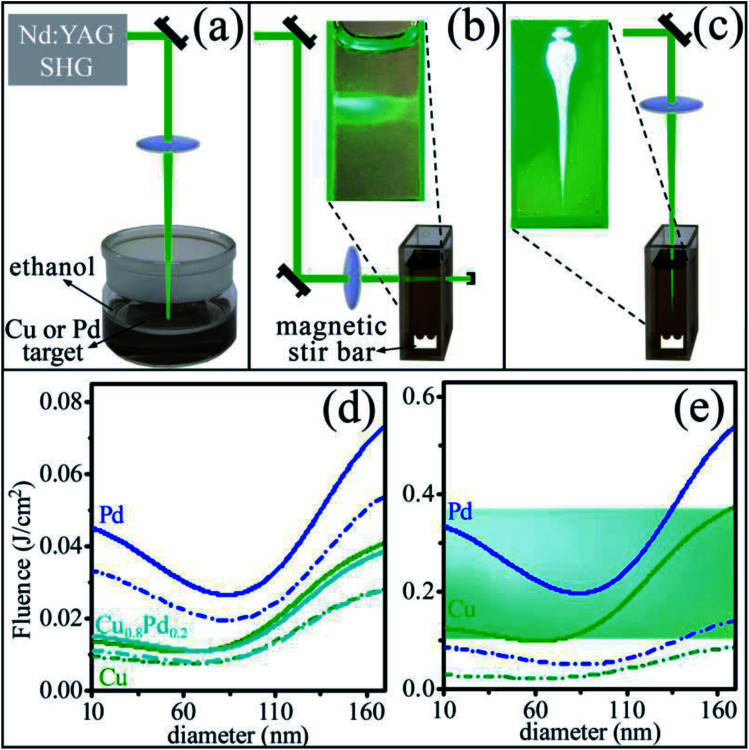
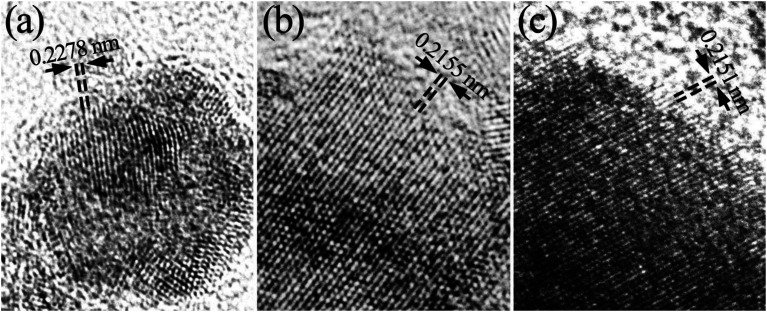
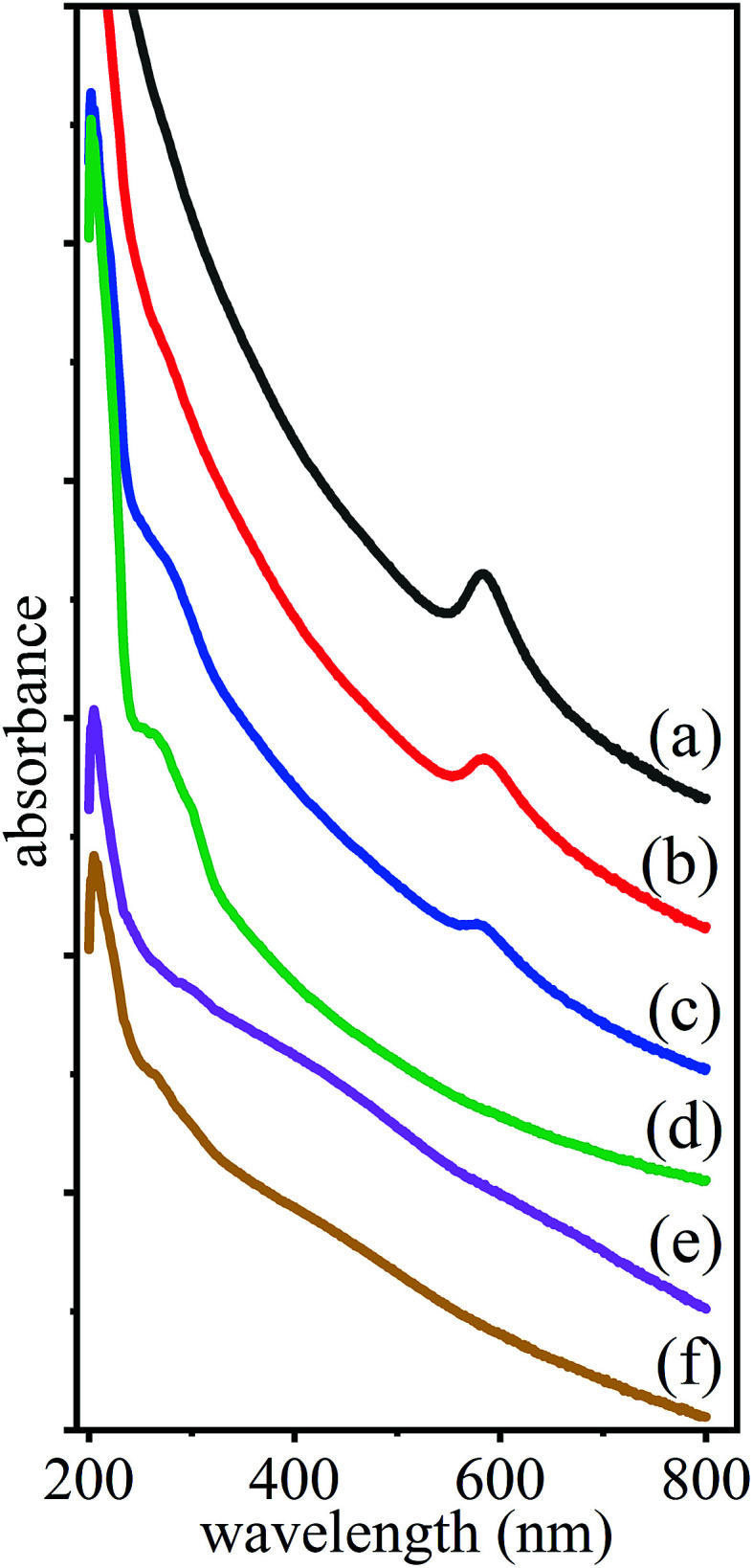
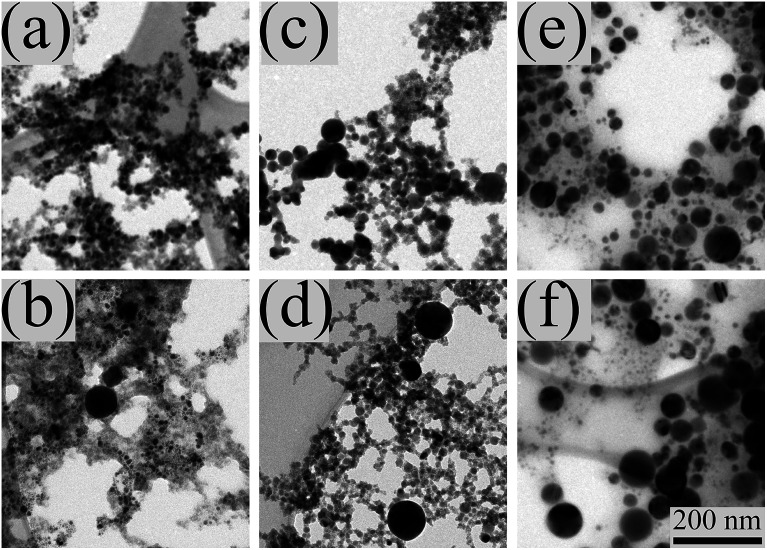
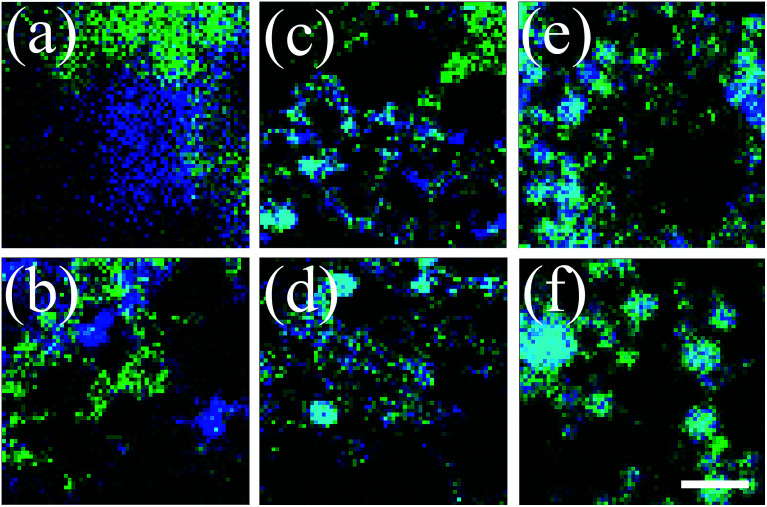
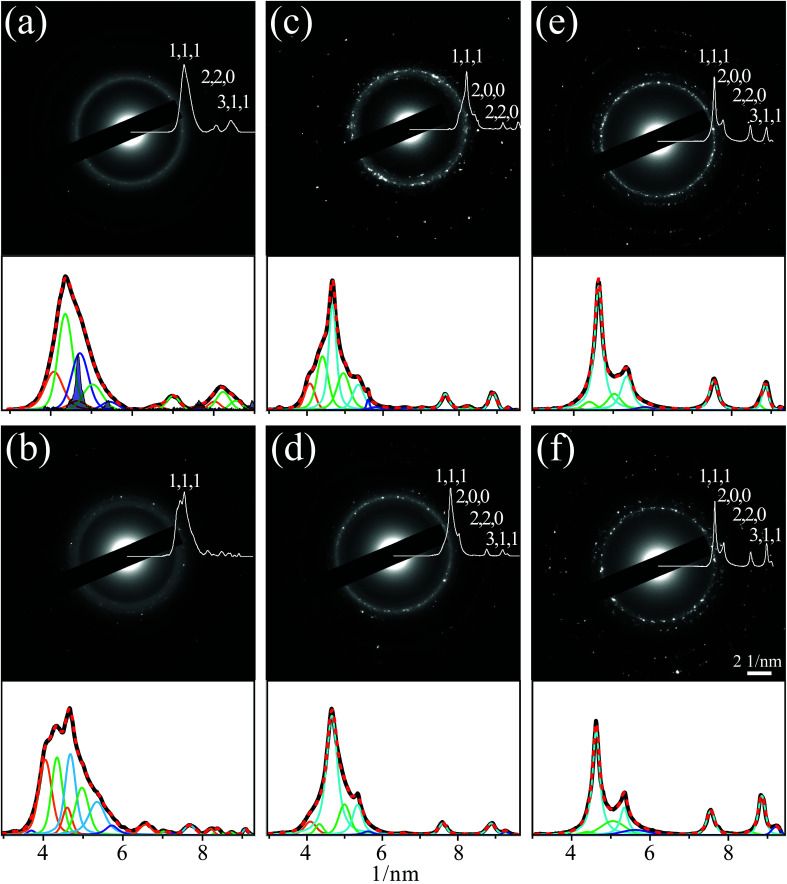
Nanoparticles (NPs) of copper, palladium and CuPd alloy have been prepared by pulsed laser ablation/irradiation in ethanol, by the second harmonic of a pulsed Nd : YAG laser (532 nm, ∼5 ns, 10 Hz). The monometallic NPs were synthesized by laser ablation of pure bulk targets immersed in ethanol and the alloyed ones by laser irradiation of stirred mixtures of suspended monometallic colloids. The suspensions were irradiated through two distinctive configurations, including lateral collimated and top focused beams that reached the corresponding fluences for NPs vaporization and for extensive plasma formation. The generated NPs were characterized by ultraviolet-visible absorption spectrometry, low and high-resolution transmission electron microscopy, energy-dispersive spectroscopy and selected area electron diffraction. The first fluence regime afforded the synthesis of alloyed NPs in the few nm diameter range, where alloying was somewhat disturbed by agglomeration, while the second led to larger size NPs and faster alloying, due to laser scattering by the plasma. These findings were supported and interpreted by the particle heating-melting-evaporation model. The approach developed here, assisted by the model and the various characterization methods, proved to control the alloying process and the size distribution of the NPs and to give the best indication for its progress.
通过脉冲Nd:YAG激光(532nm,~5ns,10Hz)的二次谐波,在乙醇中采用脉冲激光烧蚀/辐照制备了铜、钯和铜钯合金纳米颗粒(NPs)。通过激光烧蚀浸没在乙醇中的纯块状靶材合成单金属纳米颗粒,通过激光辐照悬浮单金属胶体的搅拌混合物合成合金纳米颗粒。悬浮液通过两种不同的配置进行辐照,包括横向准直光束和顶部聚焦光束,它们达到了纳米颗粒汽化和大量等离子体形成所需的相应能量密度。通过紫外可见吸收光谱、低分辨率和高分辨率透射电子显微镜、能量色散光谱和选区电子衍射对生成的纳米颗粒进行了表征。第一种能量密度范围合成了直径在几纳米范围内的合金纳米颗粒,其中合金化受到团聚的一定干扰,而第二种能量密度范围由于等离子体的激光散射导致纳米颗粒尺寸更大且合金化更快。这些发现得到了颗粒加热-熔化-蒸发模型的支持和解释。本文开发的方法,在模型和各种表征方法的辅助下,证明可以控制纳米颗粒的合金化过程和尺寸分布,并为其进展提供最佳指示。