Onishi Hirokazu, Izumo Masaki, Naganuma Toru, Nakamura Sunao, Akashi Yoshihiro J
Division of Cardiology, Department of Internal Medicine, St. Marianna University School of Medicine, Kawasaki, Japan.
Department of Cardiology, New Tokyo Hospital, Matsudo, Japan.
Front Cardiovasc Med. 2022 Apr 25;9:883450. doi: 10.3389/fcvm.2022.883450. eCollection 2022.
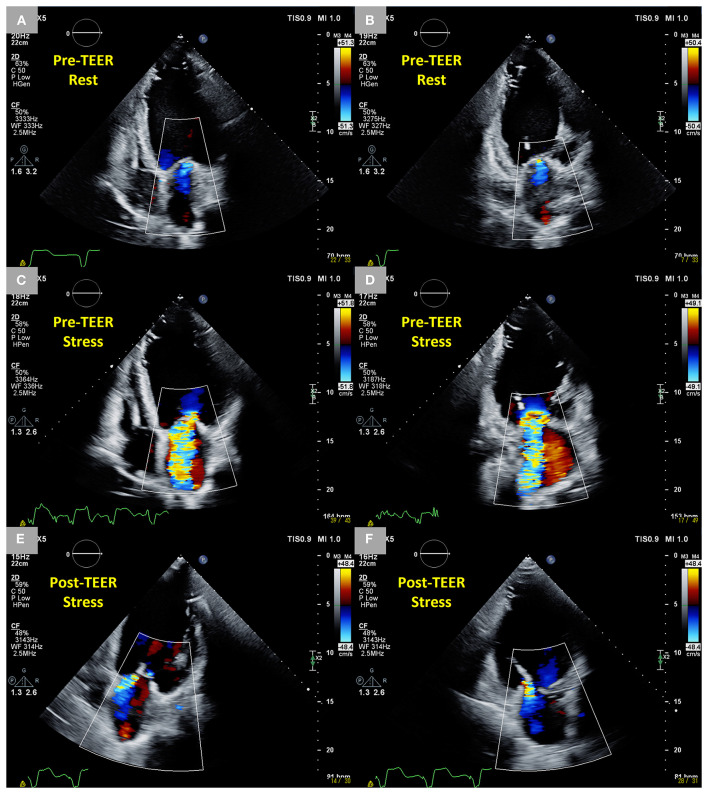
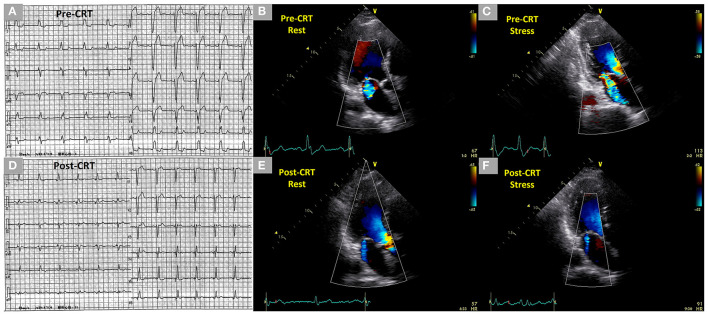
Heart failure (HF) is a challenging situation in healthcare worldwide. Secondary mitral regurgitation (SMR) is a common condition in HF patients with reduced ejection fraction (HFrEF) and tends to be increasingly associated with unfavorable clinical outcomes as the severity of SMR increases. It is worth noting that SMR can deteriorate dynamically under stress. Over the past three decades, the characteristics of dynamic SMR have been studied. Dynamic SMR contributes to the reduction in exercise capacity and adverse clinical outcomes. Current guidelines refer to the indication of transcatheter edge-to-edge repair (TEER) for significant SMR based on data from the Cardiovascular Outcomes Assessment of the MitraClip Percutaneous Therapy for Heart Failure Patients with Functional Mitral Regurgitation (COAPT) trial if symptomatic despite optimal guideline-directed medical therapy (GDMT) and cardiac resynchronization therapy (CRT), but nonpharmacological treatment for dynamic SMR remains challenging. In HFrEF patients with LV dyssynchrony and dynamic SMR, CRT can improve LV dyssynchrony and subsequently attenuate SMR at rest and during exercise. Also, a recent study suggests that TEER with GDMT and CRT is more effective in symptomatic patients with HFrEF and dynamic SMR than GDMT and CRT alone. Further studies are needed to evaluate the safety and efficacy of nonpharmacological treatments for dynamic SMR. In this review, current evidence and challenges for the future of dynamic SMR are discussed.
心力衰竭(HF)是全球医疗保健领域面临的一项具有挑战性的情况。继发性二尖瓣反流(SMR)在射血分数降低的心力衰竭(HFrEF)患者中很常见,并且随着SMR严重程度的增加,往往越来越多地与不良临床结局相关。值得注意的是,SMR在应激状态下会动态恶化。在过去三十年中,已经对动态SMR的特征进行了研究。动态SMR会导致运动能力下降和不良临床结局。当前指南根据心力衰竭功能性二尖瓣反流患者经皮MitraClip治疗的心血管结局评估(COAPT)试验的数据,提及对于有症状的严重SMR患者,在尽管进行了最佳的指南指导药物治疗(GDMT)和心脏再同步治疗(CRT)的情况下,行经导管缘对缘修复(TEER)的适应症,但对动态SMR的非药物治疗仍然具有挑战性。在伴有左心室不同步和动态SMR的HFrEF患者中,CRT可以改善左心室不同步,随后减轻静息和运动时的SMR。此外,最近的一项研究表明,对于有症状的HFrEF和动态SMR患者,TEER联合GDMT和CRT比单独使用GDMT和CRT更有效。需要进一步研究来评估动态SMR非药物治疗的安全性和有效性。在这篇综述中,讨论了动态SMR的当前证据和未来面临的挑战。