Qi Chang, Zhao Hongwei, Li Wenyang, Li Xing, Xiang Haiying, Zhang Ge, Liu Haobao, Wang Qian, Wang Yi, Xian Mo, Zhang Haibo
CAS Key Laboratory of Biobased Materials, Qingdao Institute of Bioenergy and Bioprocess Technology, Chinese Academy of Sciences No. 189 Songling Road, Laoshan District Qingdao 266101 P. R. China
School of Mechanical and Power Engineering, Dalian Ocean University No. 52 Heishijiao street, Shahekou District Dalian Liaoning 116023 P. R. China
RSC Adv. 2018 Sep 3;8(54):30851-30859. doi: 10.1039/c8ra02076k. eCollection 2018 Aug 30.
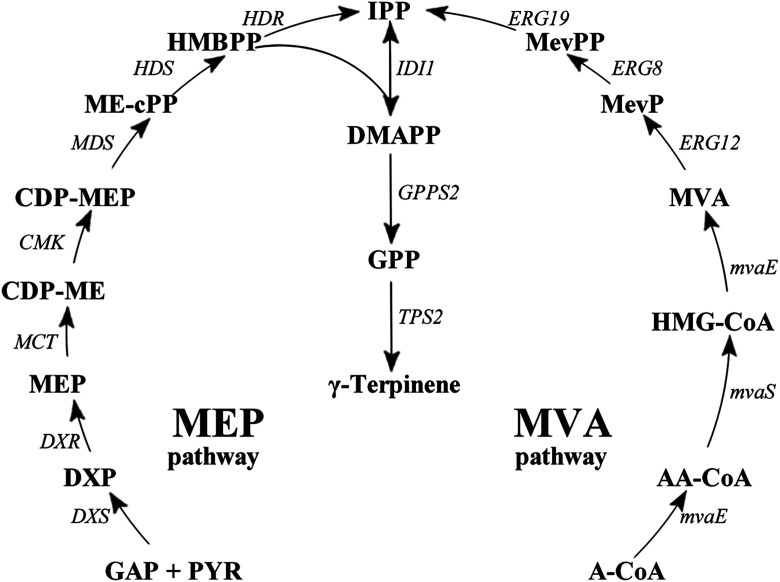
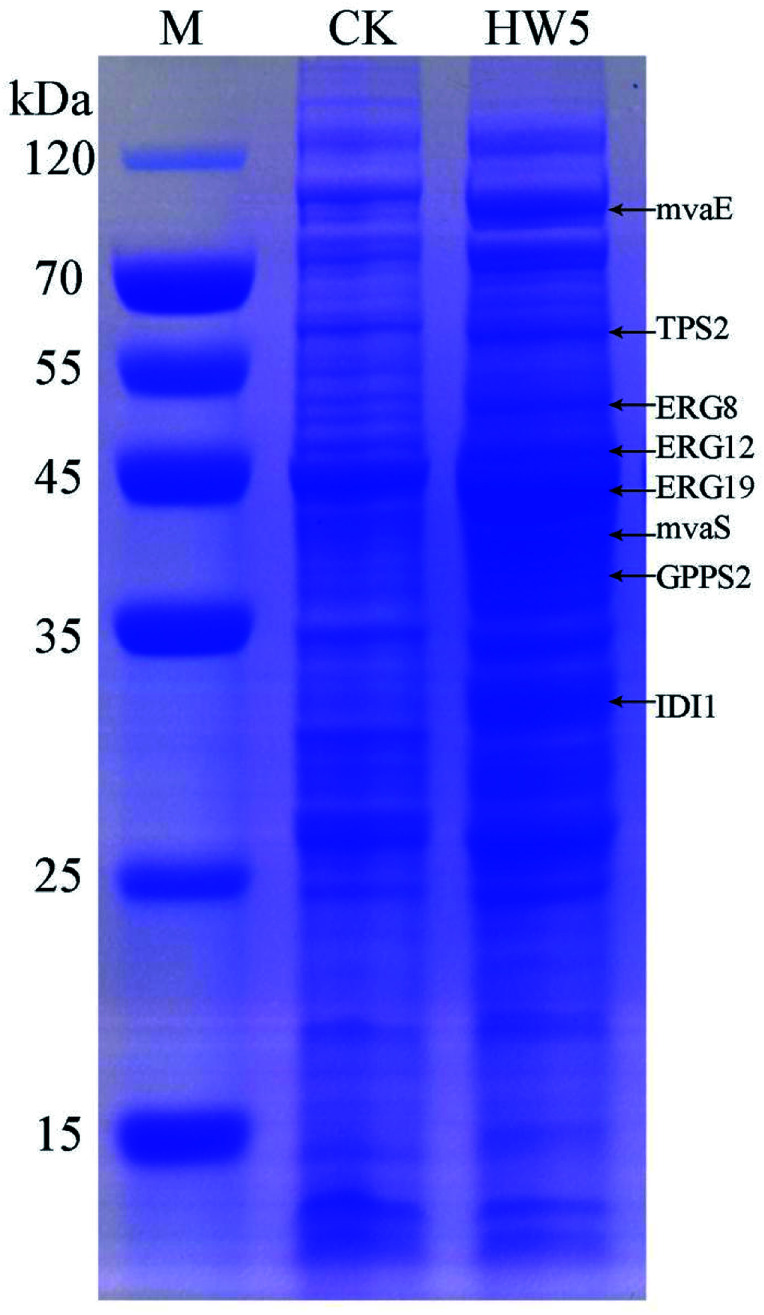
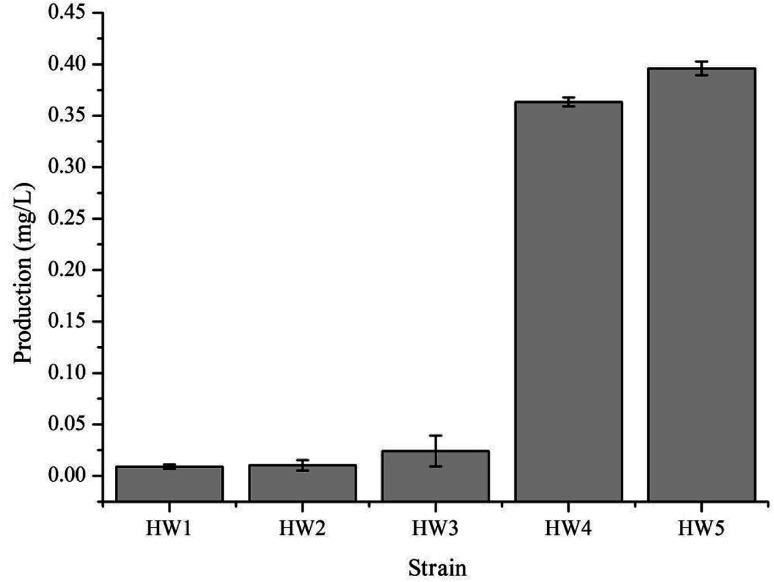
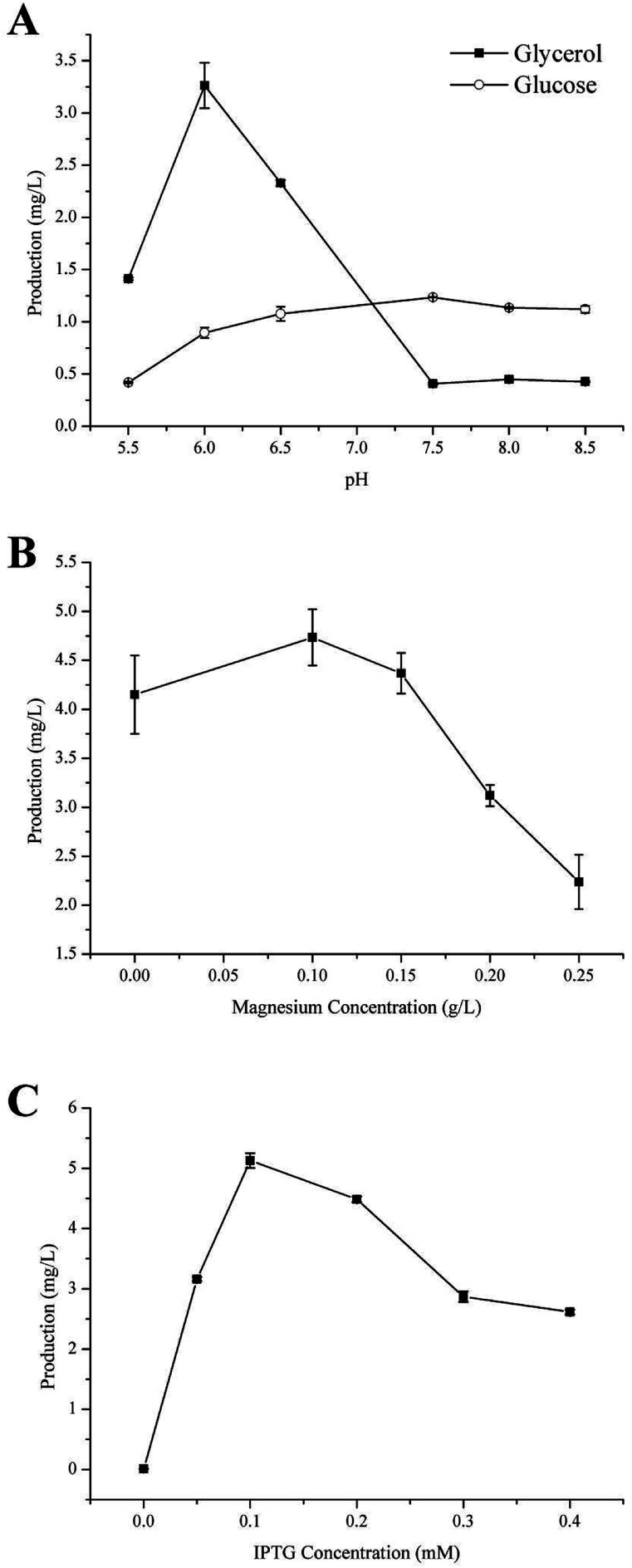
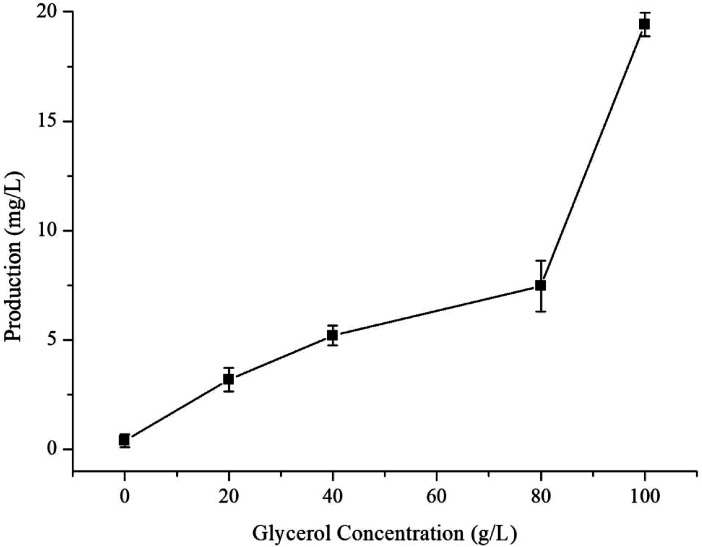
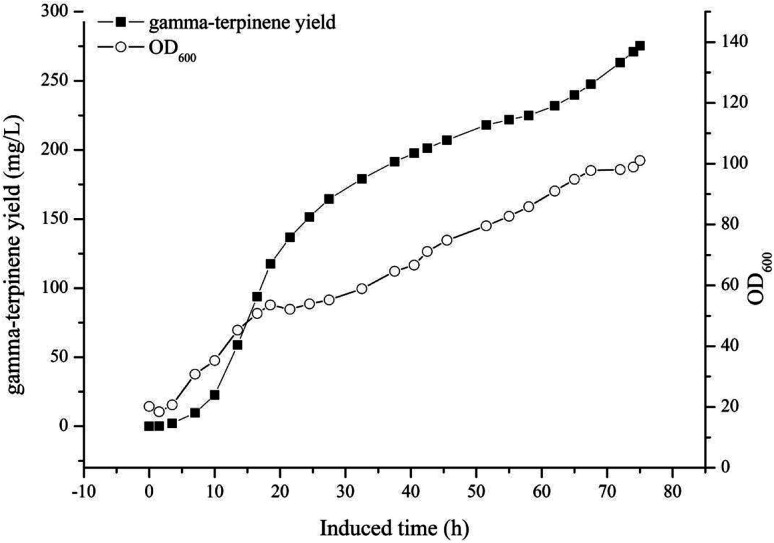
Gamma (γ)-terpinene, a monoterpene compound, which is generally used in the pharmaceutical and cosmetics industries, due to its physical and chemical properties, is expected to become one of the more influential compounds used as an alternative biofuel in the future. It is necessary to seek more sustainable technologies such as microbial engineering for γ-terpinene production. In this study, we metabolically engineered to produce γ-terpinene by introducing a heterologous mevalonate (MVA) pathway combined with the geranyl diphosphate synthase gene and γ-terpinene synthase gene. Subsequently, the culture medium and process conditions were optimised with a titre of 19.42 mg L obtained. Additionally, in-depth analysis at translation level for the engineered strain and intermediate metabolites were detected for further analysis. Finally, the fed-batch fermentation of γ-terpinene was evaluated, where a maximum concentration of 275.41 mg L with a maintainable feedstock of glycerol was achieved.
γ-萜品烯是一种单萜化合物,由于其物理和化学性质,通常用于制药和化妆品行业,有望在未来成为更具影响力的用作替代生物燃料的化合物之一。有必要寻求更可持续的技术,如用于生产γ-萜品烯的微生物工程。在本研究中,我们通过引入异源甲羟戊酸(MVA)途径并结合香叶基二磷酸合酶基因和γ-萜品烯合酶基因进行代谢工程改造以生产γ-萜品烯。随后,对培养基和工艺条件进行了优化,获得了19.42 mg/L的产量。此外,对工程菌株进行了翻译水平的深入分析,并检测了中间代谢产物以进行进一步分析。最后,对γ-萜品烯的补料分批发酵进行了评估,在使用甘油作为可持续原料的情况下,实现了275.41 mg/L的最大浓度。