Pan Zhe, Xie Yunpeng, Bai Jie, Lin Qiuyue, Cui Xiaonan, Zhang Ningning
The First Affiliated Hospital, Dalian Medical University 116021 Dalian Liaoning China
School of Public Health, Dalian Medical University 116044 Dalian Liaoning China.
RSC Adv. 2018 Nov 19;8(68):38910-38918. doi: 10.1039/c8ra06566g. eCollection 2018 Nov 16.
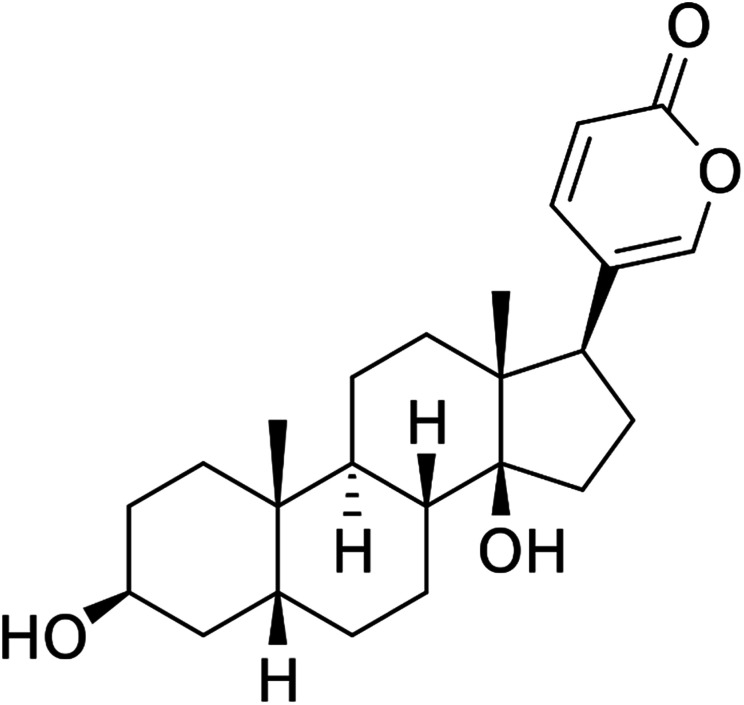
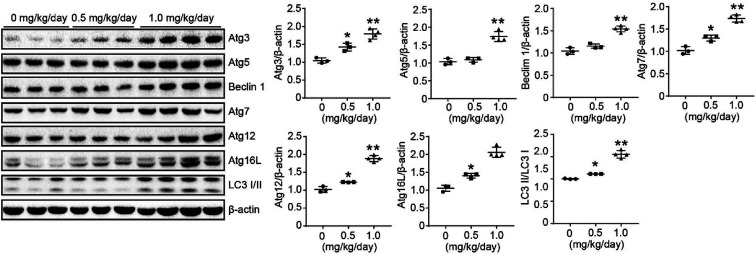
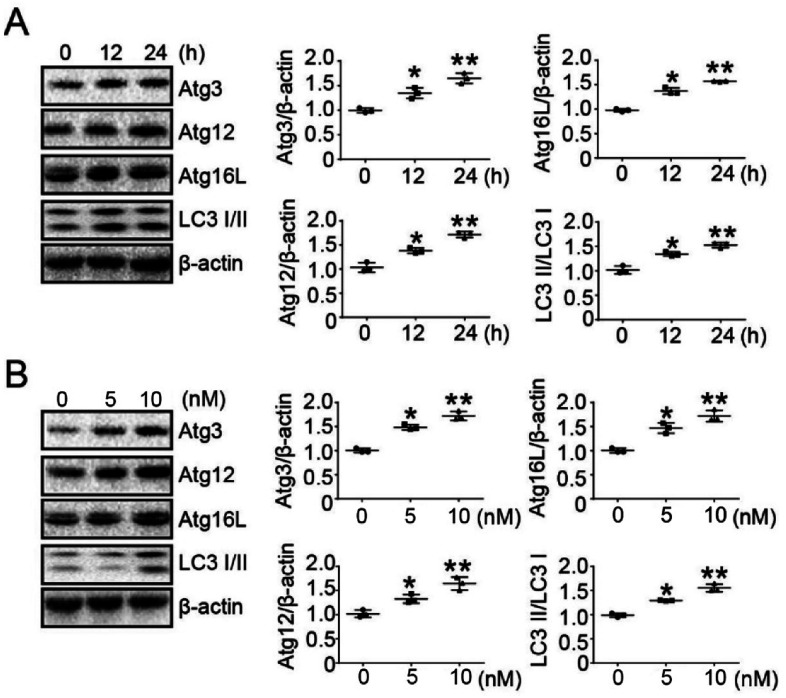
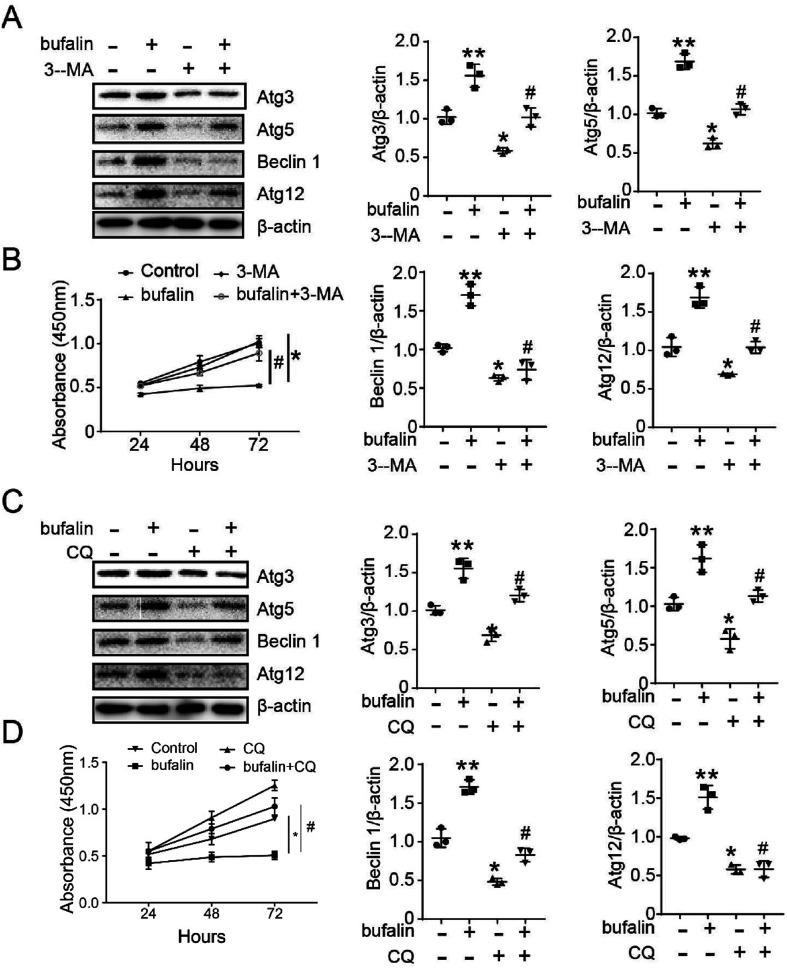
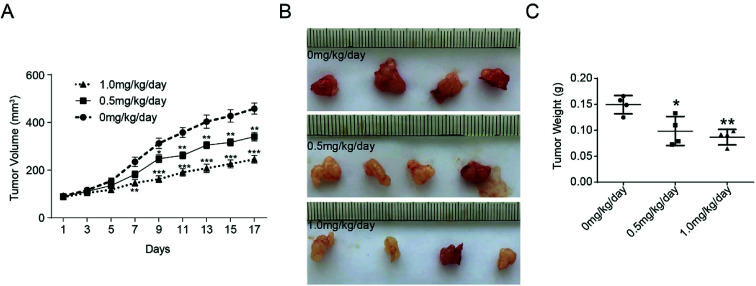
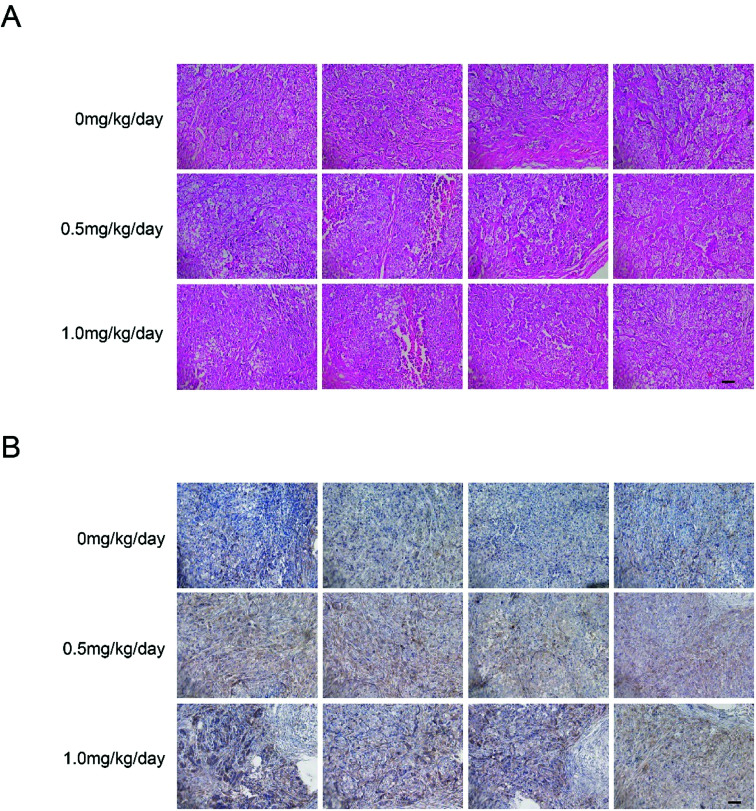
Specific groups in Asia, including the Chinese, are more susceptible to colorectal cancer (CRC). The best strategy for anticancer drug action is to induce cancer cell apoptosis and autophagy. Bufalin is a potent inducer of apoptosis in some human cancer cell lines, but bufalin has barely been evaluated in colorectal cancer cells as a potent autophagy inducing agent. The aim of this study was to investigate the roles and interactions of bufalin in autophagy and the effects of the drug on human colorectal cancer. We applied bufalin and autophagy inhibitors (CQ and 3-MA) in LoVo cells to investigate their potential anticancer bioactivity under certain concentrations of bufalin to monitor autophagy and cell proliferation and . Bufalin induced autophagy of LoVo and inhibited proliferation of LoVo cells. Bufalin inhibited the expression of autophagy-related (ATG) proteins and tumor growth . Our studies identified that bufalin could potentially be a small molecule inhibitor for cancer therapy.
亚洲的特定群体,包括中国人,更容易患结直肠癌(CRC)。抗癌药物作用的最佳策略是诱导癌细胞凋亡和自噬。蟾毒灵是一些人类癌细胞系中一种有效的凋亡诱导剂,但蟾毒灵作为一种有效的自噬诱导剂在结直肠癌细胞中几乎未得到评估。本研究的目的是探讨蟾毒灵在自噬中的作用及相互作用,以及该药物对人类结直肠癌的影响。我们在LoVo细胞中应用蟾毒灵和自噬抑制剂(氯喹和3-甲基腺嘌呤),在一定浓度的蟾毒灵下研究它们潜在的抗癌生物活性,以监测自噬和细胞增殖。蟾毒灵诱导LoVo细胞自噬并抑制LoVo细胞增殖。蟾毒灵抑制自噬相关(ATG)蛋白的表达和肿瘤生长。我们的研究表明,蟾毒灵可能是一种用于癌症治疗的小分子抑制剂。