Attwa Mohamed W, Kadi Adnan A, Abdelhameed Ali S
Department of Pharmaceutical Chemistry, College of Pharmacy, King Saud University P. O. Box 2457 Riyadh 11451 Saudi Arabia
RSC Adv. 2018 Nov 19;8(68):38733-38744. doi: 10.1039/c8ra06709k. eCollection 2018 Nov 16.
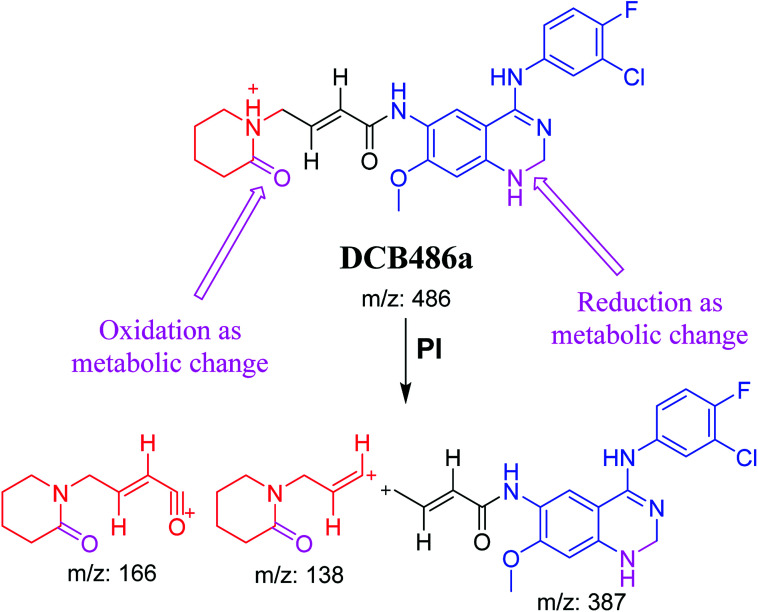
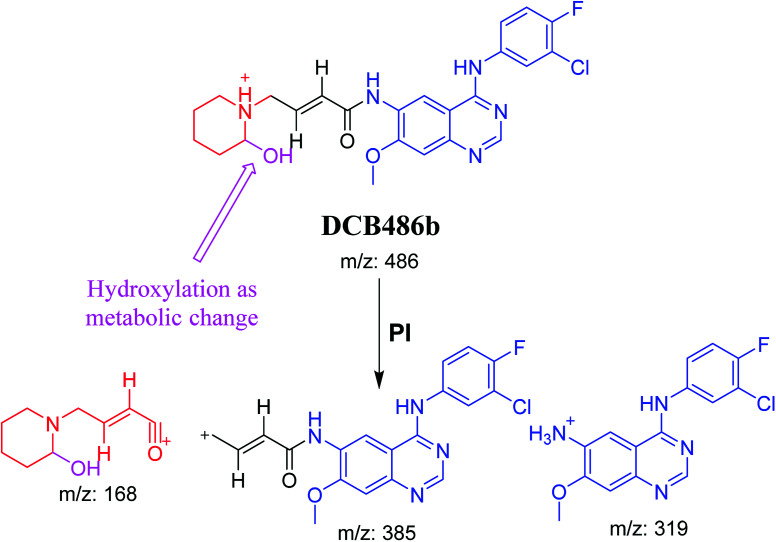
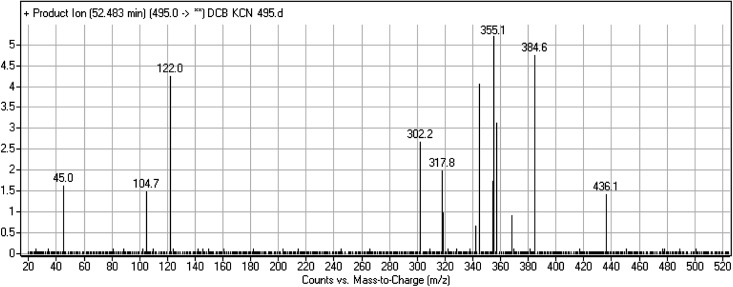
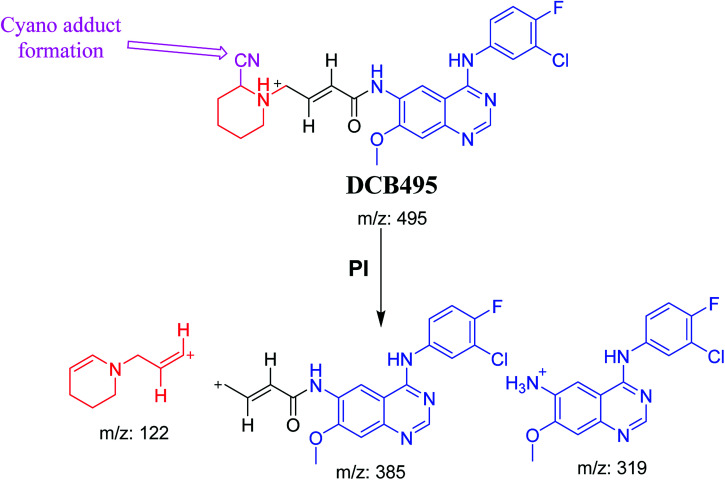
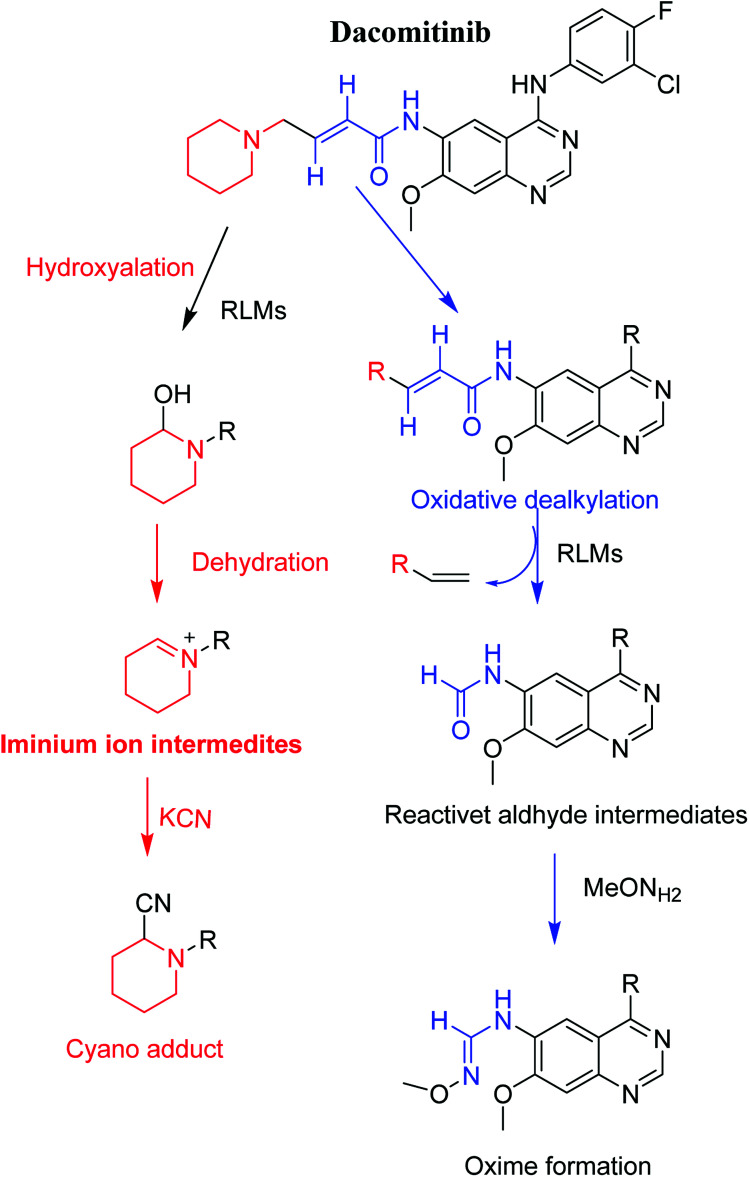
Dacomitinib (DCB) is a second generation irreversible tyrosine kinase inhibitor (TKI) that is claimed to overcome the disadvantages of the resistance developed by the first line epidermal growth factor receptor (EGFR) TKIs. In the current study, metabolites of phase I for DCB were systematically explored. DCB reactive metabolites were also investigated in rat liver microsomes in presence of potassium cyanide or methoxylamine that were employed as capturing agents for iminium reactive intermediates and aldehyde, respectively, to form stable complexes which can be detected by LC-MS/MS. As a result, four phase I metabolites were observed with major pathway of piperidine ring hydroxylation. Additionally, two potentially reactive intermediates, one aldehyde and one iminium ions were characterized. Two different pathways of bioactivation were ultimately proposed.
达可替尼(DCB)是一种第二代不可逆酪氨酸激酶抑制剂(TKI),据称可克服一线表皮生长因子受体(EGFR)TKI产生耐药性的缺点。在本研究中,对DCB的Ⅰ期代谢产物进行了系统研究。还在大鼠肝微粒体中,分别使用氰化钾或甲氧基胺作为亚胺离子反应中间体和醛的捕获剂,研究了DCB的反应性代谢产物,以形成可通过LC-MS/MS检测的稳定络合物。结果,观察到四种Ⅰ期代谢产物,其主要途径为哌啶环羟基化。此外,还鉴定了两种潜在的反应性中间体、一种醛和一种亚胺离子。最终提出了两种不同的生物活化途径。