College of Physical Education, Southwest University, Chongqing, China.
Front Public Health. 2022 Apr 26;10:847740. doi: 10.3389/fpubh.2022.847740. eCollection 2022.
To explore the relationships between multidimensional self-esteems and health behaviors among adolescents by demographic background factors, so as to provide an important reference for the intervention of health promotion behavior and self-esteem education in the future.
Taking adolescents in Chongqing as the object, this paper investigates the students in 24 primary and secondary schools (half of health promotion schools and half of non-promotion schools) by means of Stratified random sampling, and Using SPSS 21.0 and AMOS 19.0 statistical analysis software to process the collected data.
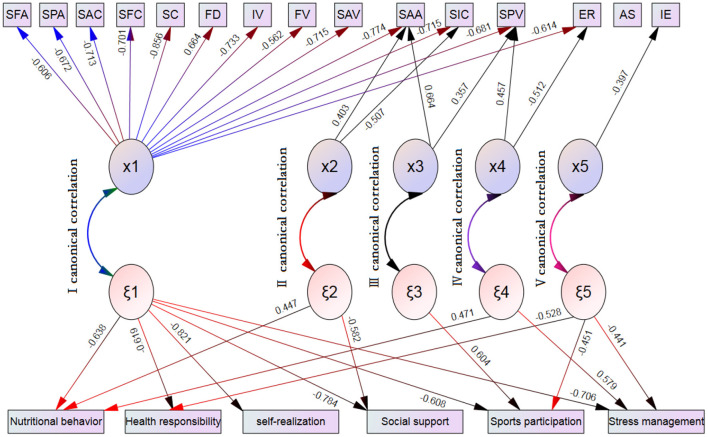
Socio-economic background can indeed have a direct or indirect impact on adolescent health promotion behavior, and multidimensional self-esteem can explain about 70% of the variation of health promotion behavior, which seems to suggest that improving adolescent self-esteem is the focus of health promotion and health education in the future.
探讨青少年多维自尊与健康行为的关系,按人口统计学背景因素进行分析,为今后促进健康行为和自尊教育的干预提供重要参考。
以重庆市青少年为对象,采用分层随机抽样方法对 24 所中小学(一半为健康促进学校,一半为非促进学校)的学生进行调查,运用 SPSS21.0 和 AMOS19.0 统计分析软件对收集的数据进行处理。
1)性别和年龄显著影响青少年的自尊和促进健康行为,表现为男生对自尊的感知低于女生,而女生比男生更有可能实施促进健康行为;2)来自双亲家庭或父母受教育程度较高的儿童更有可能实施促进健康行为并享有较高的自尊,而家庭经济状况对青少年的自尊和促进健康行为没有影响;3)与普通学校的学生相比,健康促进学校(HPS)的青少年自尊心更高,能够更有效地实施促进健康行为;4)青少年自尊心越高,促进健康行为越好;人际能力感越强,越能实施社会支持行为;身体能力感和生理价值观越高,越能实施体育行为;学业能力感越高,越能实施营养行为;外部认可和生理价值观越高,营养行为和压力管理表现越好;内部评价越高,越能实施健康责任和锻炼行为。
社会经济背景确实可以直接或间接地影响青少年的促进健康行为,多维自尊可以解释约 70%的促进健康行为的变化,这似乎表明提高青少年的自尊是今后促进健康和健康教育的重点。