Suwannakham Parichart, Chaiwongwattana Sermsiri, Sagarik Kritsana
School of Chemistry, Institute of Science, Suranaree University of Technology Nakhon Ratchasima 30000 Thailand
RSC Adv. 2018 Oct 31;8(64):36731-36744. doi: 10.1039/c8ra06095a. eCollection 2018 Oct 26.
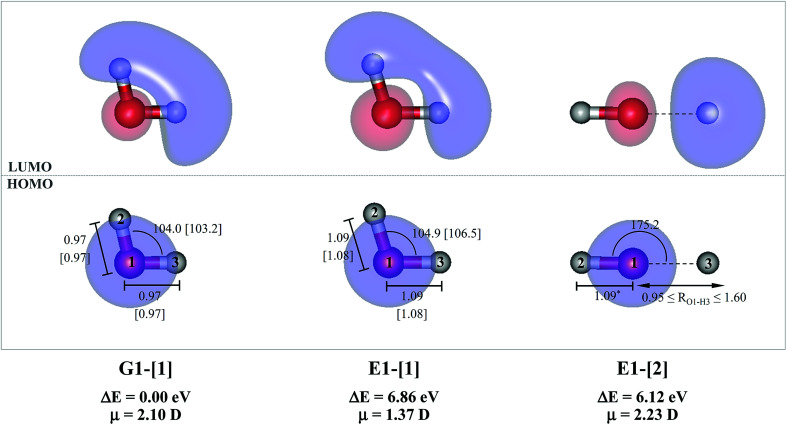
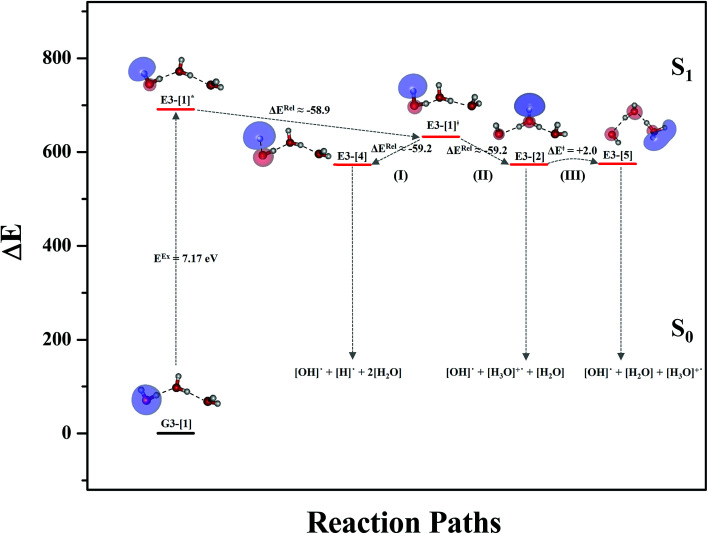
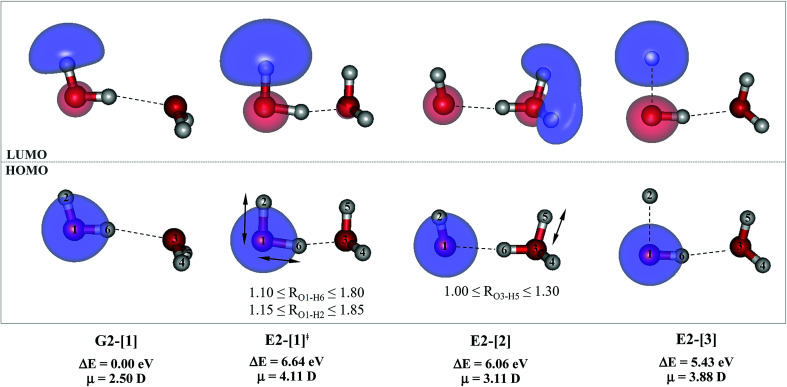
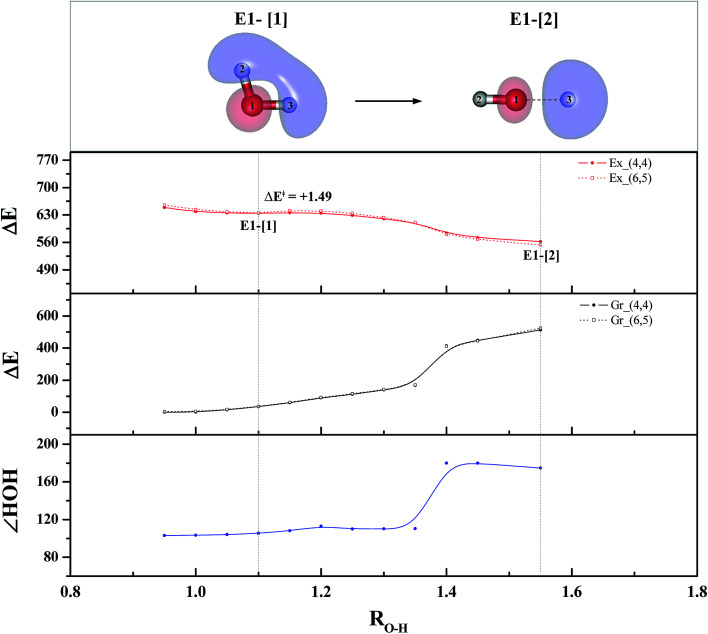
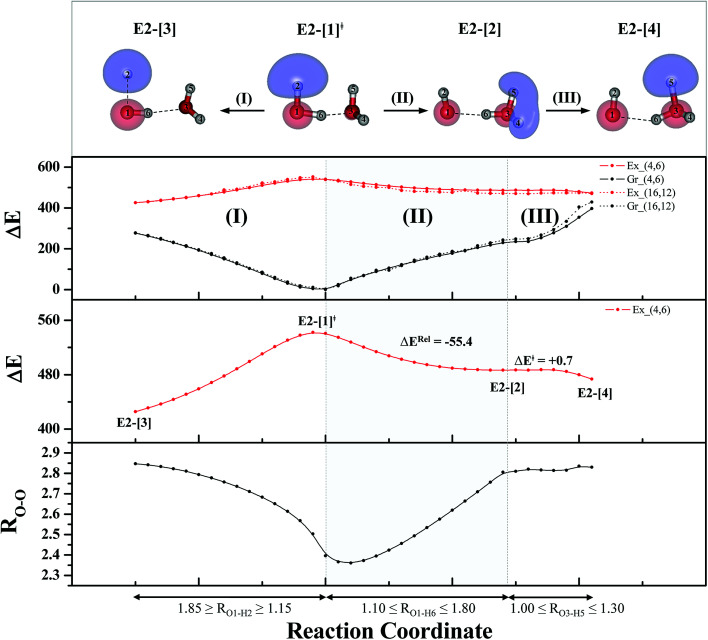
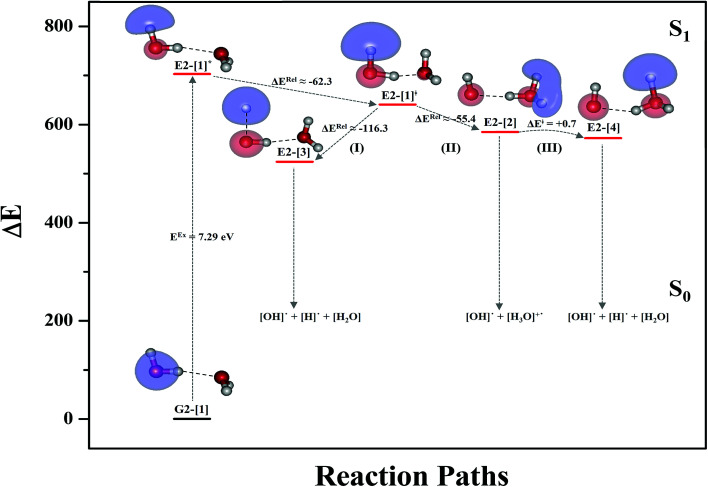
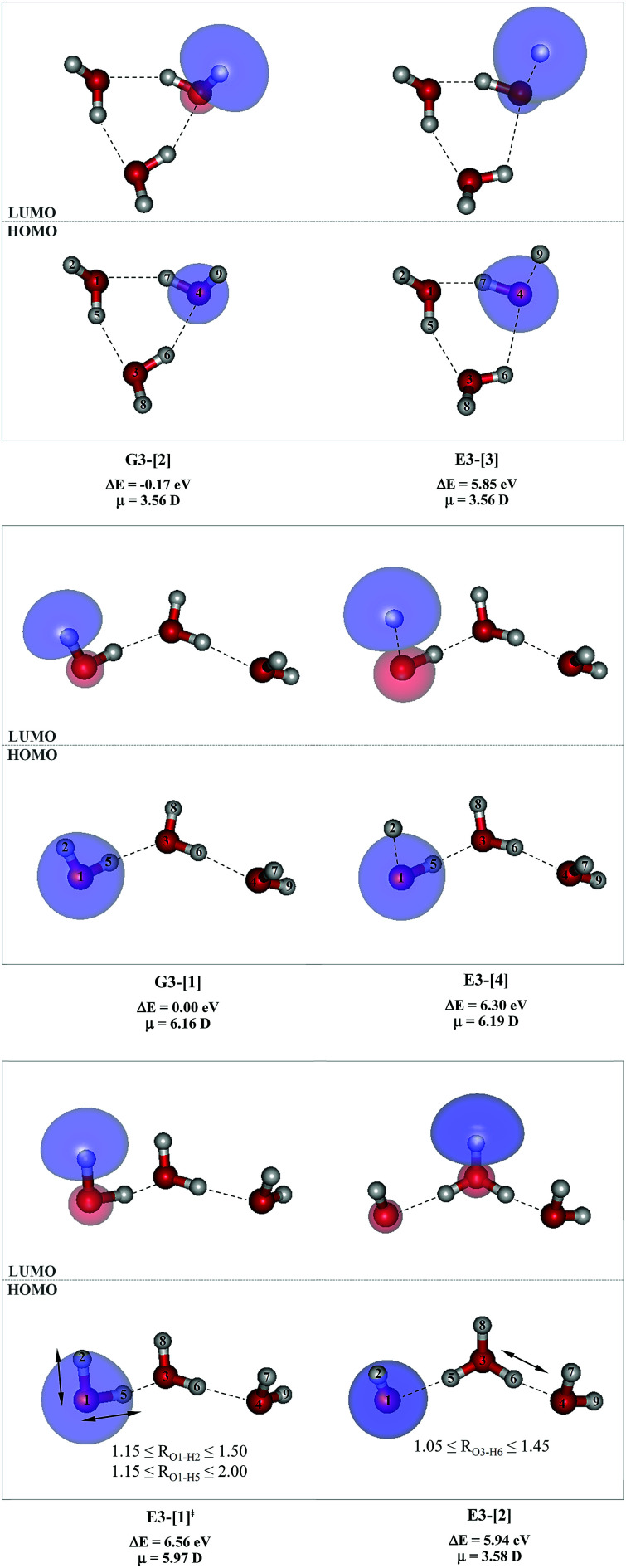
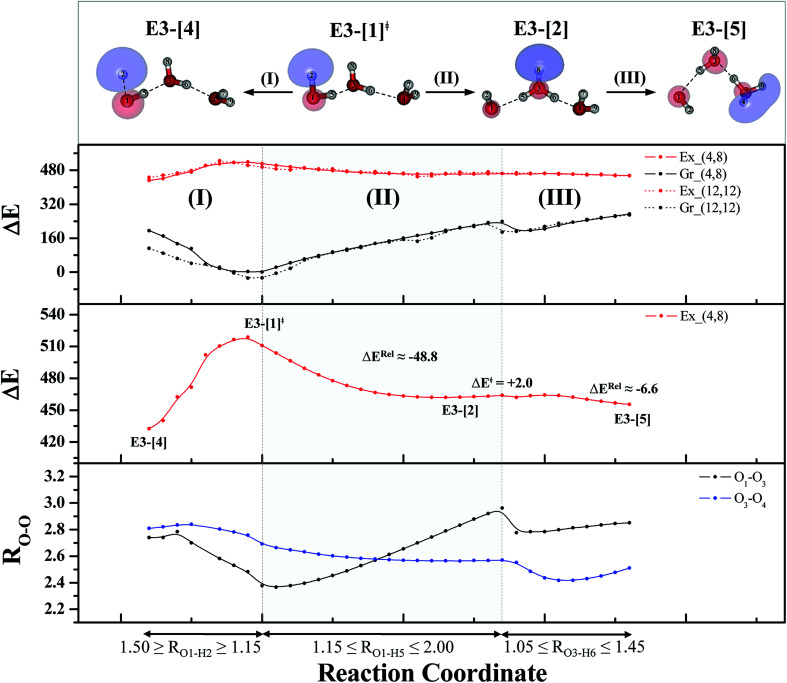
The mechanisms of photoexcitation and photoionization in small water clusters in gas phase, (HO) ; = 2-3, are studied using the complete active-space second-order perturbation theory (CASPT2) with the aug-cc-pVDZ basis set. The present study characterizes for the first time the structures and energetics of common transition and intermediate complexes in the photoexcitation and photoionization mechanisms in the lowest singlet-excited state. The results showed that the photoexcitation of the water monomer by a single photon can directly generate [OH]˙ and [H]˙ in their respective electronic-ground states, and a single photon with approximately the same energy can similarly lead to the photoexcitation and also to the photoionization in the water clusters. The S → S excitation leads to strong polarization of the O-H⋯O H-bond and to the formation of the water dimer radical cation transition state complex [(HO)]˙, from which [OH]˙, [H]˙, and [HO]˙ can be generated. These products are obtained from [(HO)]˙ by the direct dissociation of the O-H bond upon photoexcitation and by proton transfer and the formation of a metastable charge-separated Rydberg-like H-bond complex ([HO]˙⋯[OH]˙) upon photoionization. The proposed mechanisms suggest that in the gas phase, the photoexcitation and photoionization processes are most likely bimolecular reactions, in which all the transition and intermediate charged species are more stabilized than in a unimolecular reaction. The theoretical results provide insights into the photoexcitation and photoionization mechanisms of molecular clusters and can be used as guidelines for further theoretical and experimental studies.
利用完全活性空间二阶微扰理论(CASPT2)和aug-cc-pVDZ基组,研究了气相中小水簇(HO) ; = 2 - 3中的光激发和光电离机制。本研究首次表征了最低单重激发态下光激发和光电离机制中常见过渡态和中间体配合物的结构和能量。结果表明,单个光子对水单体的光激发可直接在其各自的电子基态产生[OH]˙和[H]˙,具有大致相同能量的单个光子同样可导致水簇中的光激发和光电离。S→S激发导致O - H⋯O氢键强烈极化,并形成水二聚体自由基阳离子过渡态配合物[(HO)]˙,从中可产生[OH]˙、[H]˙和[HO]˙。这些产物是通过光激发时O - H键的直接解离以及光电离时的质子转移和形成亚稳电荷分离的类里德堡氢键配合物([HO]˙⋯[OH]˙)从[(HO)]˙获得的。所提出的机制表明,在气相中,光激发和光电离过程很可能是双分子反应,其中所有过渡态和中间体带电物种比单分子反应中更稳定。理论结果为分子簇的光激发和光电离机制提供了见解,可作为进一步理论和实验研究的指导。