Son Myoungsun
Institute of Molecular Medicine, The Feinstein Institutes for Medical Research, Manhasset, New York, USA.
Department of Molecular Medicine, Donald and Barbara Zucker School of Medicine at Hofstra/Northwell, Hempstead, New York, USA.
Exp Mol Med. 2022 May;54(5):567-572. doi: 10.1038/s12276-022-00774-4. Epub 2022 May 13.
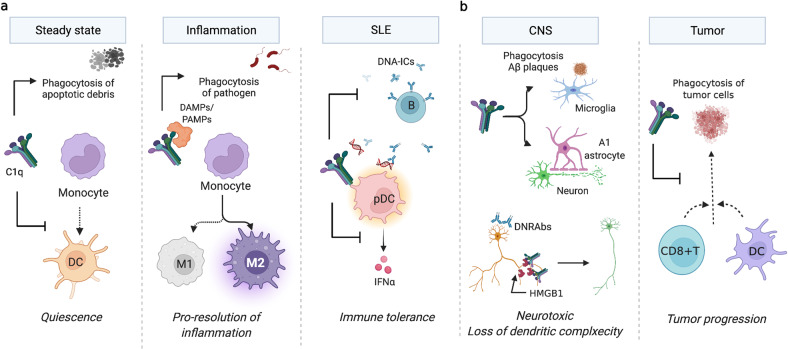
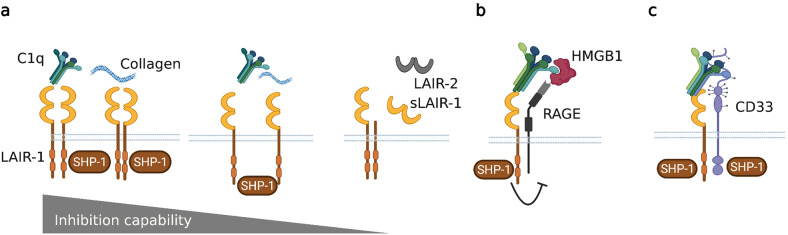
The importance of the complement component C1q has been highlighted by its involvement in autoimmunity, infection, inflammatory diseases, and tumors. The unique tulip-like structure of C1q has both a collagen-like stalk (C1q tail) and heterotrimeric globular head (gC1q), each with different binding specificities, and the binding of these components to their respective receptors leads to functional complexities in the body and bridges innate and adaptive immunity. This review describes the fundamental roles of C1q in various microenvironments and focuses on the importance of the interactions of C1q and its receptors with the inhibitory receptor LAIR-1 in maintaining homeostasis. Current therapeutic opportunities modulating LAIR-1 are also discussed.
补体成分C1q参与自身免疫、感染、炎症性疾病和肿瘤,其重要性已得到凸显。C1q独特的郁金香样结构既有胶原样柄(C1q尾部)又有三聚体球形头部(gC1q),二者具有不同的结合特异性,这些成分与其各自受体的结合导致体内功能的复杂性,并连接天然免疫和适应性免疫。本综述描述了C1q在各种微环境中的基本作用,并着重探讨了C1q及其受体与抑制性受体LAIR-1相互作用在维持体内平衡中的重要性。还讨论了目前调节LAIR-1的治疗机会。