Basic Forestry and Proteomics Center (BFPC), Fujian Provincial Key Laboratory of Haixia Applied Plant Systems Biology, College of Forestry, Fujian Agriculture and Forestry University, Fuzhou 350002, China.
Center for Genomics and Biotechnology, Fujian Provincial Key Laboratory of Haixia Applied Plant Systems Biology, College of Life Science, Fujian Agriculture and Forestry University, Fuzhou 350002, China.
Int J Mol Sci. 2022 Apr 24;23(9):4700. doi: 10.3390/ijms23094700.
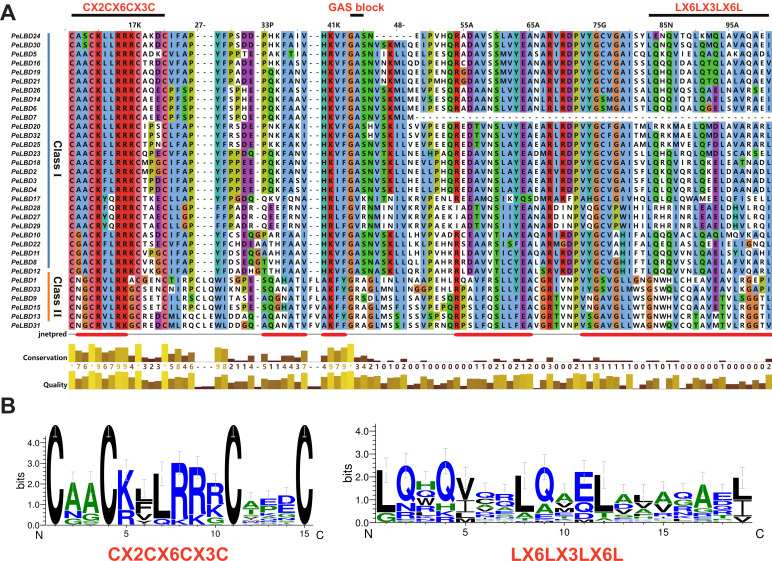
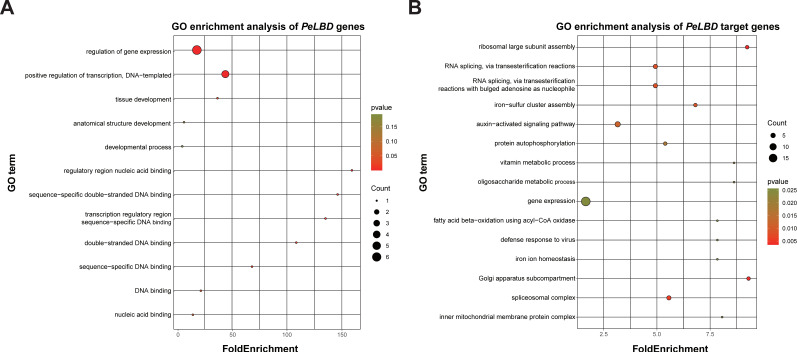
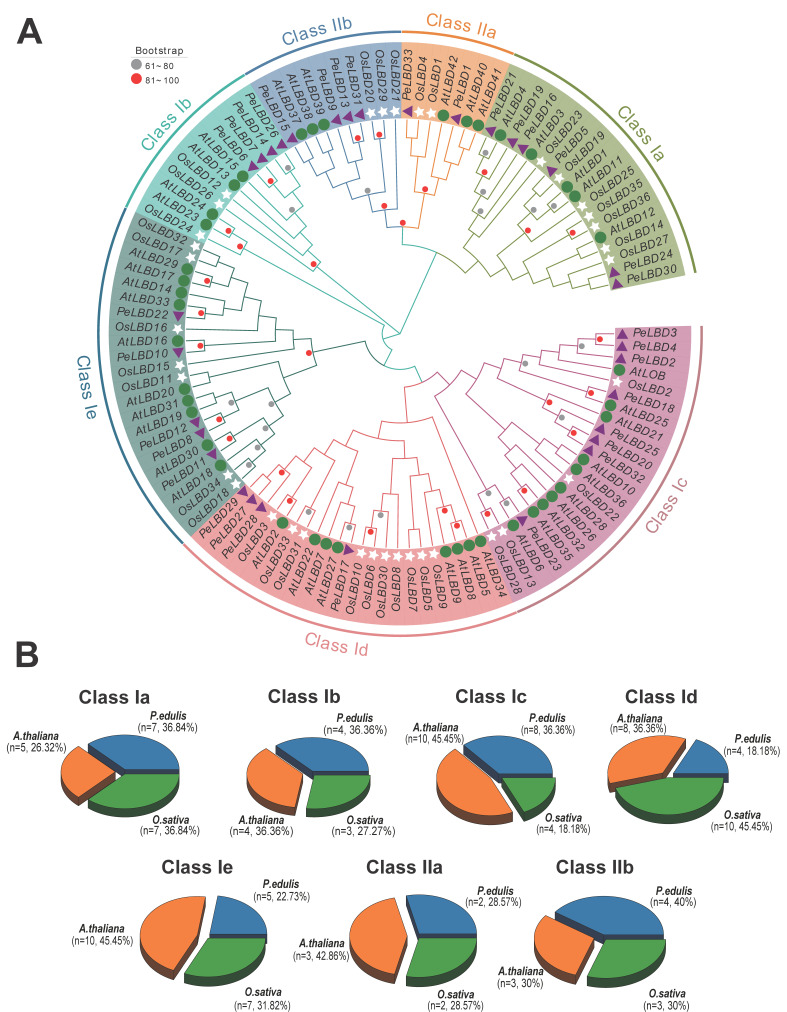
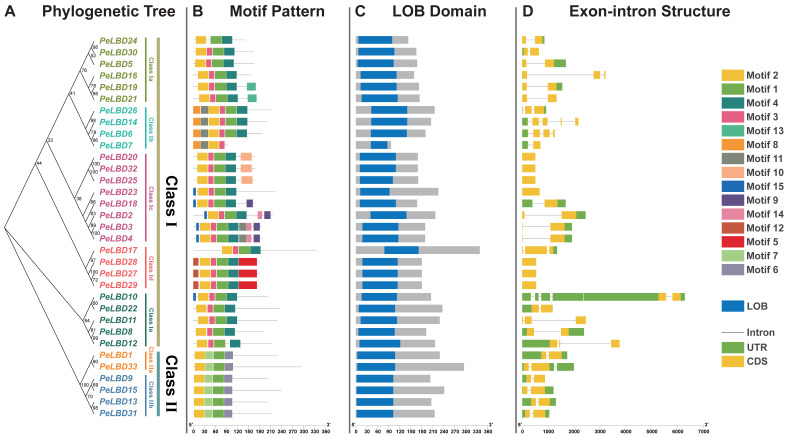
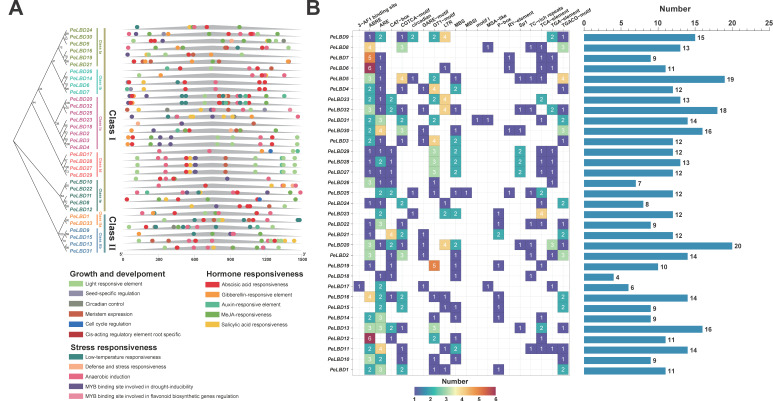
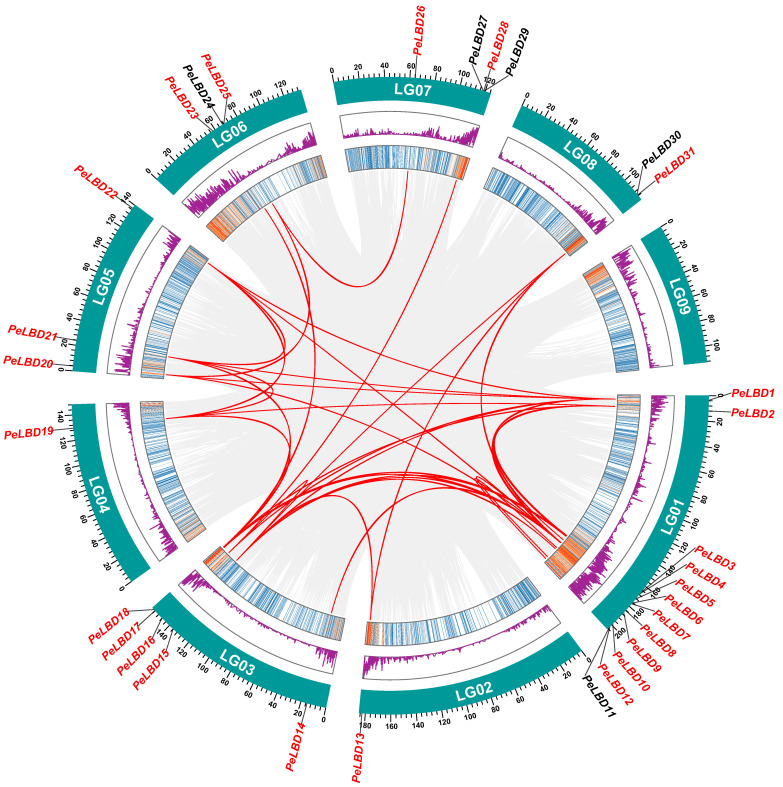
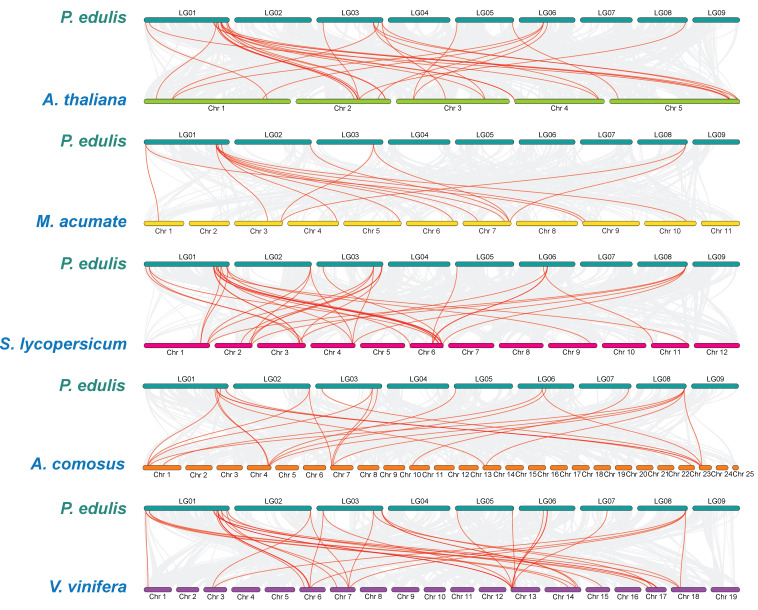
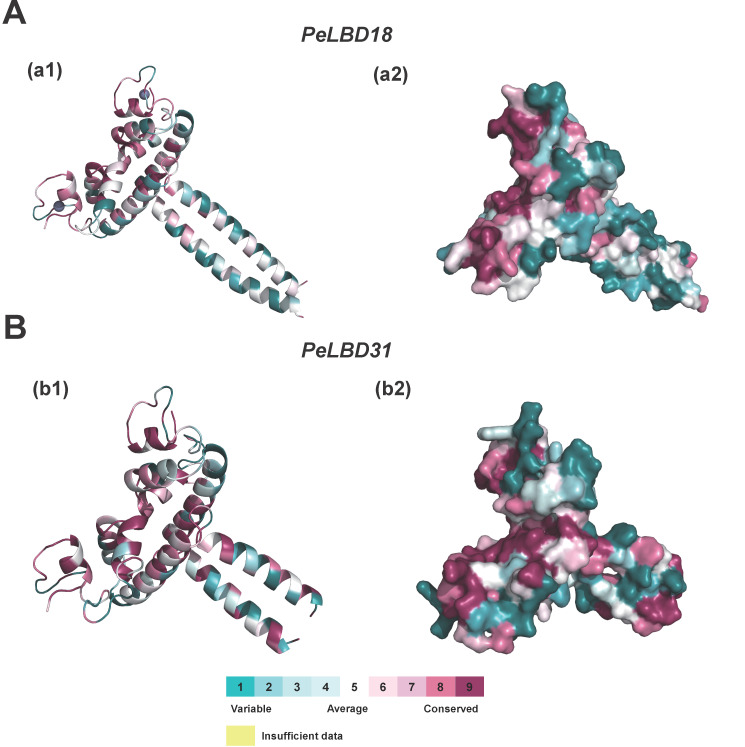
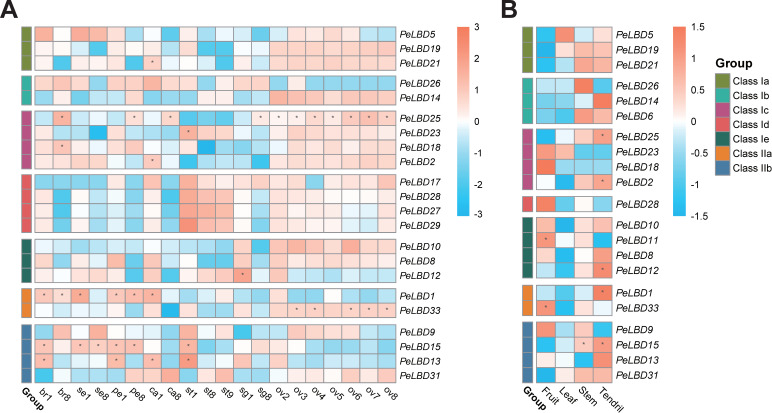
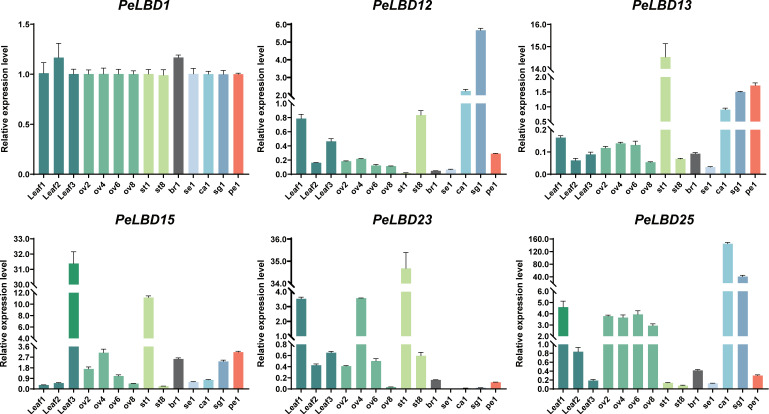
The lateral organ boundary domain () gene is a plant-specific transcription factor that plays a crucial role in plant growth and development, including the development of lateral vegetative organs such as leaf and root development, as well as floral organs such as sepal, petal, and pollen development. Passion fruit is a tropical fruit with important agricultural, economic and ornamental value. However, there is no systematic research report available on the gene family of passion fruit. In this study, a genome-wide analysis of passion fruit genes identified 33 that were unevenly distributed across nine chromosomes. According to phylogenetic and gene structure analysis, were divided into two categories: Class I (27) and Class II (6). Homologous protein modeling results showed that the gene members of the two subfamilies were structurally and functionally similar. -acting element and target gene prediction analysis suggested that might participate in various biological processes by regulating diverse target genes involved in growth and development, metabolism, hormones and stress response. Collinearity analysis indicated that the expansion of the gene family likely took place mainly by segmental duplication, and some duplicated gene pairs such as might show functional redundancy, while most duplicated gene pairs such as showed different expression profiles indicating their functional diversification. After filtering low expressed genes, all Class Id s were more highly expressed during pollen development. At the same, all Class Ic and many other were relatively highly expressed during ovule development, similar with their homologous genes in Arabidopsis, indicating their potential regulatory roles in reproductive tissue development in passion fruit. that were highly expressed in floral tissues were also expressed at a higher level in tendrils with some differences, indicating the close relationships of tendrils to floral tissues. Some genes such as might be simultaneously related to floral development and leaf early formation in passion fruit, while other showed a strong tissue-specific expression. For example, were specifically expressed in floral tissues, while were only highly expressed in fruit, suggesting their specific function in the development of certain tissues. A qRT-PCR was conducted to verify the expression levels of six in different tissues. Our analysis provides a basis for the functional analysis of genes and new insights into their regulatory roles in floral and vegetative tissue development.
侧翼器官边界域(LATERAL ORGAN BOUNDARY DOMAIN)基因是一种植物特异性转录因子,在植物生长和发育中发挥着关键作用,包括侧生营养器官的发育,如叶片和根的发育,以及花器官的发育,如花萼、花瓣和花粉的发育。百香果是一种具有重要农业、经济和观赏价值的热带水果。然而,目前还没有关于百香果 LATERAL ORGAN BOUNDARY DOMAIN 基因家族的系统研究报告。在这项研究中,对百香果 LATERAL ORGAN BOUNDARY DOMAIN 基因进行了全基因组分析,鉴定出 33 个基因,这些基因不均匀分布在 9 条染色体上。根据系统发育和基因结构分析,将 LATERAL ORGAN BOUNDARY DOMAIN 基因分为两类:I 类(27 个)和 II 类(6 个)。同源蛋白建模结果表明,这两个亚家族的基因成员在结构和功能上是相似的。启动子顺式作用元件和靶基因预测分析表明,LATERAL ORGAN BOUNDARY DOMAIN 可能通过调节参与生长发育、代谢、激素和应激反应的不同靶基因,参与各种生物学过程。共线性分析表明,LATERAL ORGAN BOUNDARY DOMAIN 基因家族的扩张主要是通过片段复制发生的,一些复制基因对,如 LATERAL ORGAN BOUNDARY DOMAIN1 和 LATERAL ORGAN BOUNDARY DOMAIN2,可能表现出功能冗余,而大多数复制基因对,如 LATERAL ORGAN BOUNDARY DOMAIN3 和 LATERAL ORGAN BOUNDARY DOMAIN4,表现出不同的表达谱,表明它们的功能多样化。过滤低表达基因后,所有的 I 类 LATERAL ORGAN BOUNDARY DOMAIN 基因在花粉发育过程中表达水平更高。与此同时,所有的 Ic 类 LATERAL ORGAN BOUNDARY DOMAIN 基因和许多其他 LATERAL ORGAN BOUNDARY DOMAIN 基因在胚珠发育过程中表达水平较高,这与它们在拟南芥中的同源基因相似,表明它们在百香果生殖组织发育中可能具有潜在的调控作用。在花组织中高表达的 LATERAL ORGAN BOUNDARY DOMAIN 基因在卷须中也有较高的表达水平,有些差异,表明卷须与花组织密切相关。一些基因,如 LATERAL ORGAN BOUNDARY DOMAIN10,可能与百香果的花发育和早期叶片形成同时相关,而其他 LATERAL ORGAN BOUNDARY DOMAIN 基因则表现出强烈的组织特异性表达。例如,LATERAL ORGAN BOUNDARY DOMAIN6 基因仅在果实中高度表达,而 LATERAL ORGAN BOUNDARY DOMAIN7 基因仅在花中表达,这表明它们在某些组织发育中的特定功能。通过 qRT-PCR 检测了 6 个 LATERAL ORGAN BOUNDARY DOMAIN 基因在不同组织中的表达水平。我们的分析为 LATERAL ORGAN BOUNDARY DOMAIN 基因的功能分析提供了基础,并为它们在花和营养组织发育中的调控作用提供了新的见解。