Department of Neurosurgery and Paediatric Neurosurgery, Medical University of Lublin, Jaczewskiego 8, 20-090 Lublin, Poland.
Independent Laboratory of Cancer Diagnostics and Immunology, Department of Oncological Gynaecology and Gynaecology, Medical University of Lublin, Chodźki 4a, 20-093 Lublin, Poland.
Int J Mol Sci. 2022 May 5;23(9):5173. doi: 10.3390/ijms23095173.
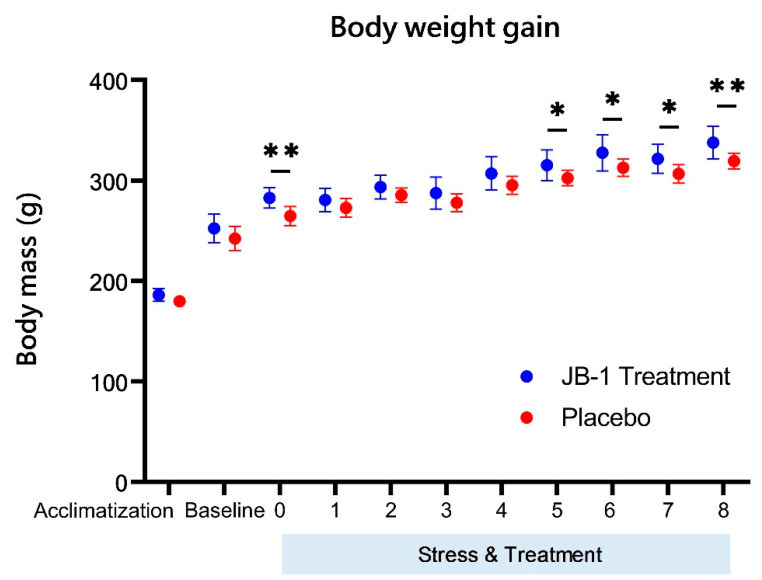
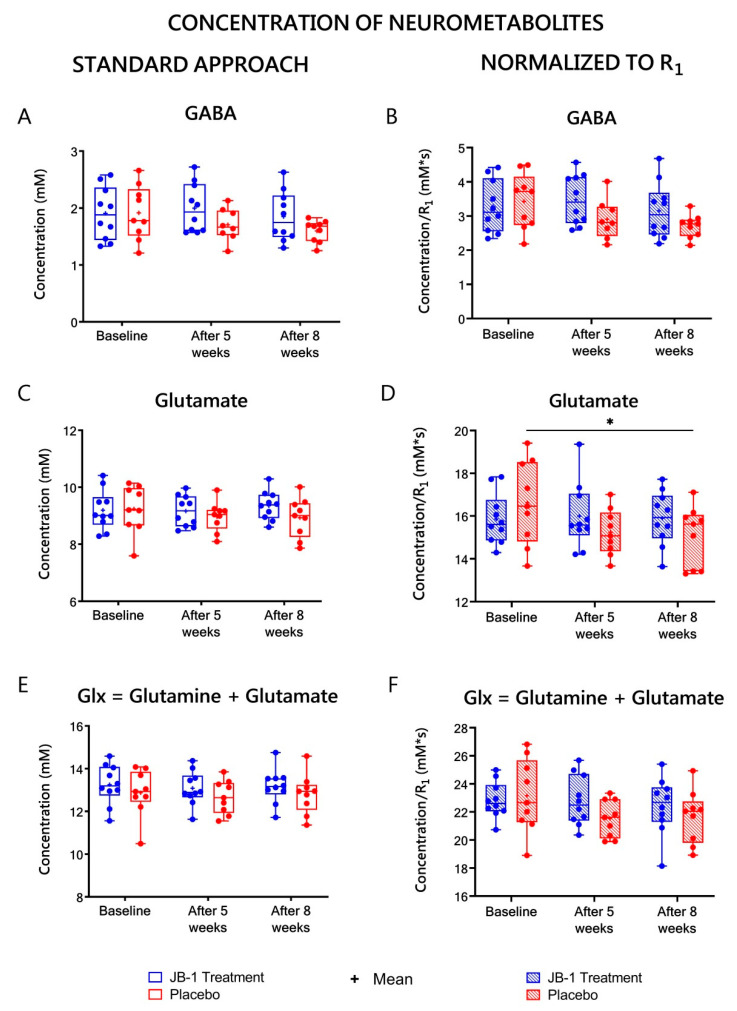
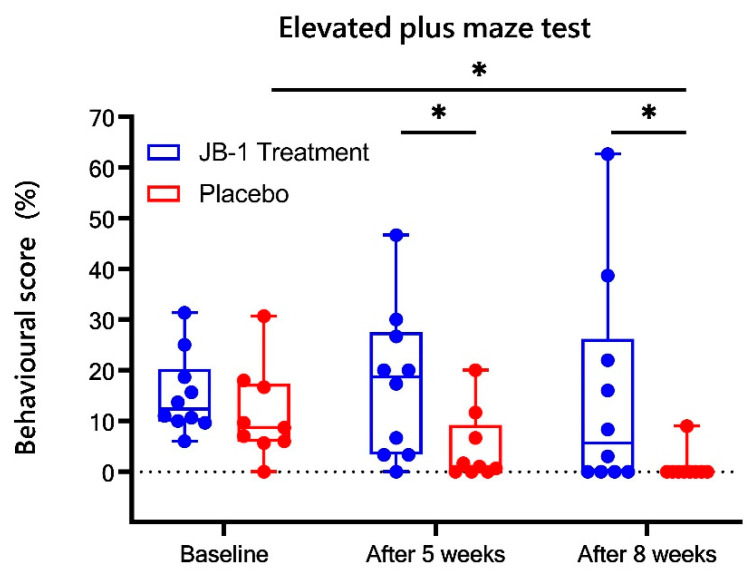
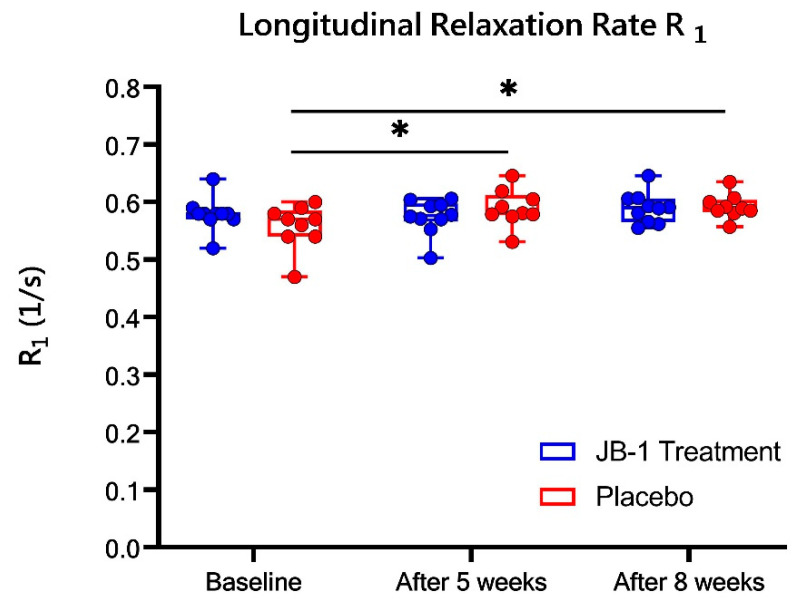
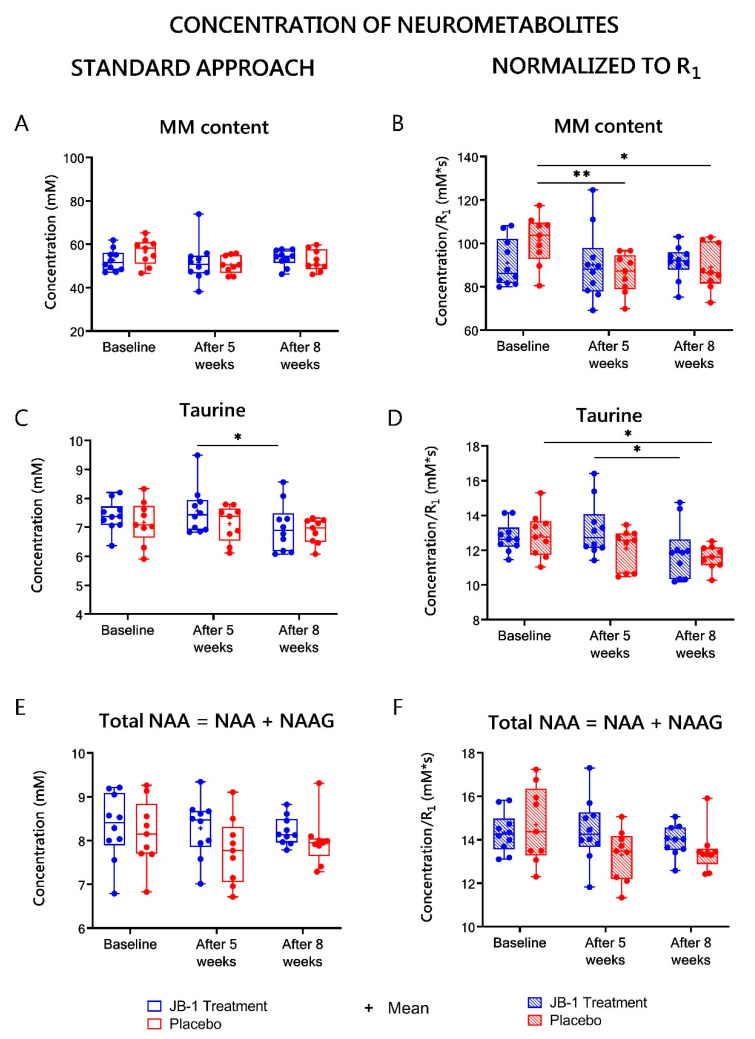
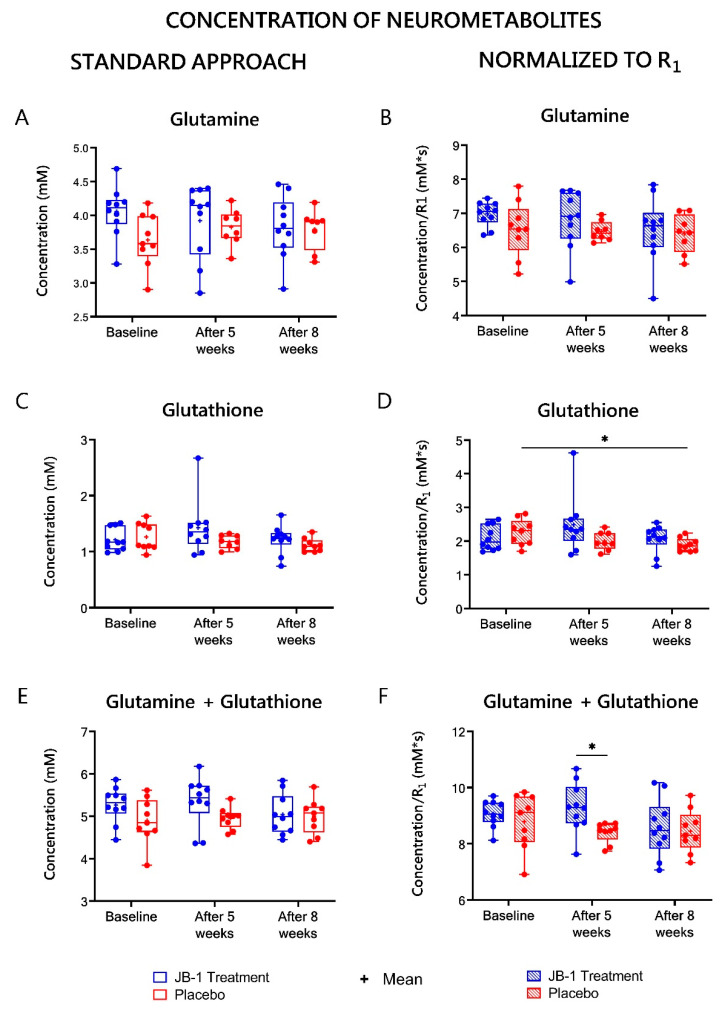
The intestinal microbiome composition and dietary supplementation with psychobiotics can result in neurochemical alterations in the brain, which are possible due to the presence of the brain-gut-microbiome axis. In the present study, magnetic resonance spectroscopy (MRS) and behavioural testing were used to evaluate whether treatment with JB-1 (JB‑1) bacteria alters brain metabolites' levels and behaviour during continuous exposure to chronic stress. Twenty Wistar rats were subjected to eight weeks of a chronic unpredictable mild stress protocol. Simultaneously, half of them were fed with JB-1 bacteria, and the second half was given a daily placebo. Animals were examined at three-time points: before starting the stress protocol and after five and eight weeks of stress onset. In the elevated plus maze behavioural test the placebo group displayed increased anxiety expressed by almost complete avoidance of exploration, while the JB-1 dietary supplementation mitigated anxiety which resulted in a longer exploration time. Hippocampal MRS measurements demonstrated a significant decrease in glutamine + glutathione concentration in the placebo group compared to the JB-1 bacteria-supplemented group after five weeks of stress. With the progression of stress the decrease of glutamate, glutathione, taurine, and macromolecular concentrations were observed in the placebo group as compared to baseline. The level of brain metabolites in the JB-1-supplemented rats were stable throughout the experiment, with only the taurine level decreasing between weeks five and eight of stress. These data indicated that the JB-1 bacteria diet might stabilize levels of stress-related neurometabolites in rat brain and could prevent the development of anxiety/depressive-like behaviour.
肠道微生物群组成和心理益生菌的饮食补充可以导致大脑中的神经化学改变,这可能是由于存在大脑-肠道-微生物群轴。在本研究中,使用磁共振波谱(MRS)和行为测试来评估 JB-1(JB-1)细菌治疗是否会在持续暴露于慢性应激时改变大脑代谢物的水平和行为。20 只 Wistar 大鼠接受了八周的慢性不可预测轻度应激方案。同时,其中一半用 JB-1 细菌喂养,另一半给予每日安慰剂。动物在三个时间点进行检查:在开始应激方案之前,以及在应激开始后五周和八周。在高架十字迷宫行为测试中,安慰剂组表现出明显的焦虑,几乎完全避免探索,而 JB-1 饮食补充减轻了焦虑,导致更长的探索时间。海马 MRS 测量显示,在应激五周后,安慰剂组的谷氨酰胺+谷胱甘肽浓度与 JB-1 细菌补充组相比显著降低。随着应激的进展,安慰剂组中谷氨酸、谷胱甘肽、牛磺酸和大分子浓度与基线相比下降。在整个实验过程中,补充 JB-1 的大鼠的脑代谢物水平保持稳定,只有牛磺酸水平在应激的第五周到第八周之间下降。这些数据表明,JB-1 细菌饮食可能稳定大鼠大脑中与应激相关的神经代谢物水平,并可预防焦虑/抑郁样行为的发展。