Department of Gastroenterology and Hepatology, the First Affiliated Hospital of Henan University, Kaifeng, China.
Department of Infectious Diseases, Jining No.1 People's Hospital, Jining, China.
Front Cell Infect Microbiol. 2022 Dec 12;12:1040749. doi: 10.3389/fcimb.2022.1040749. eCollection 2022.
The effect of chronic psychological stress on hepatitis and liver fibrosis is concerned. However, its mechanism remains unclear. We investigated the effect and mechanism of chronic psychological stress in promoting liver injury and fibrosis through gut.
Sixty male SD rats were randomly assigned to 6 groups. Rat models of chronic psychological stress (4 weeks) and liver fibrosis (8 weeks) were established. The diversity of gut microbiota in intestinal feces, permeability of intestinal mucosa, pathologies of intestinal and liver tissues, collagen fibers, protein expressions of toll-like receptor 4 (TLR4), myeloid differentiation factor 88 (MyD88), nuclear factor kappa β (NF-κβ), tumor necrosis factor α (TNF-α) and interleukin 1 (IL-1) in liver tissue, liver function and coagulation function in blood and lipopolysaccharide (LPS) in portal vein blood were detected and analyzed.
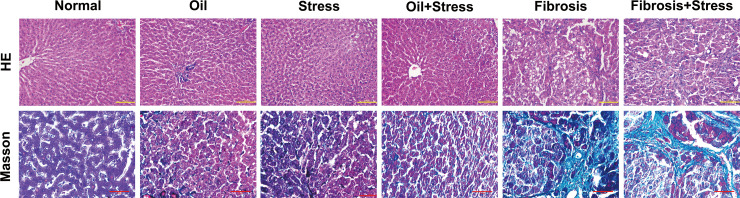
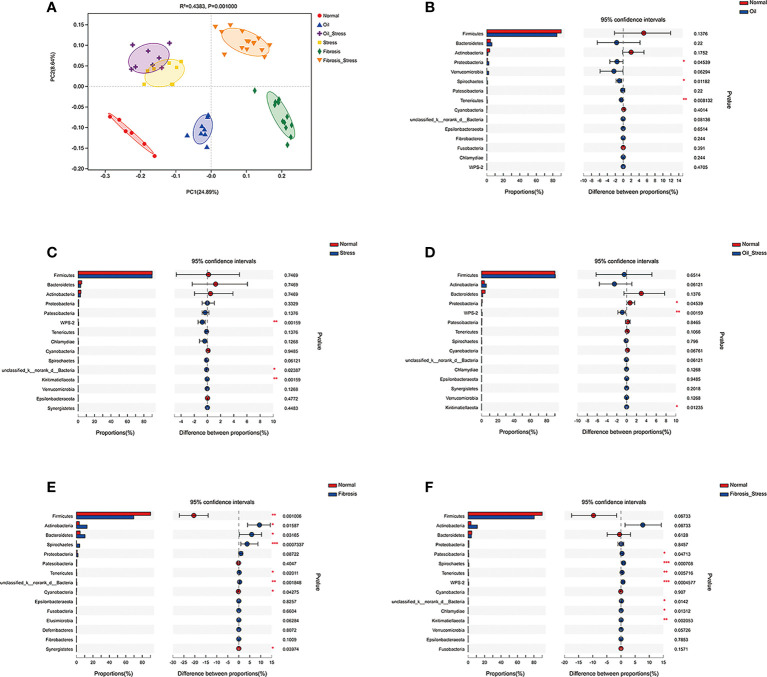
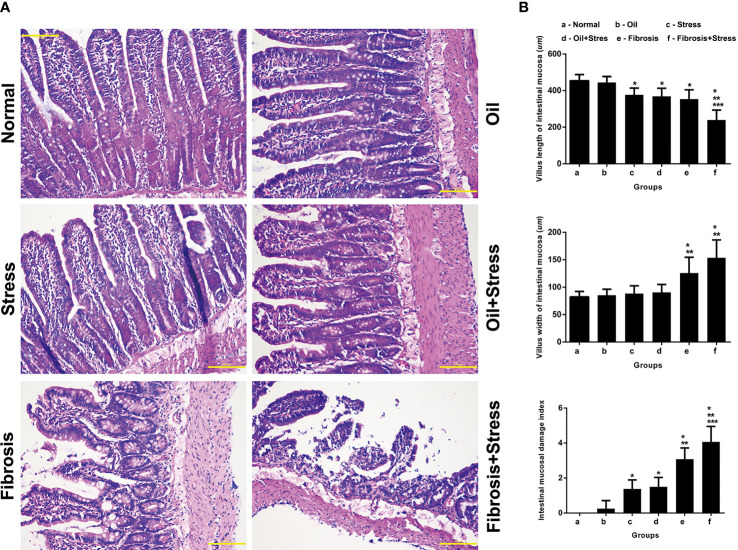
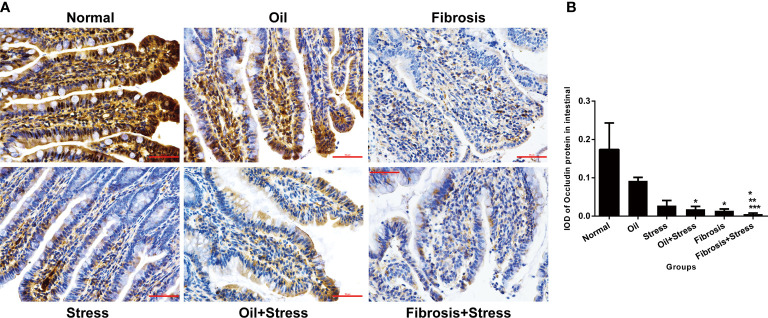
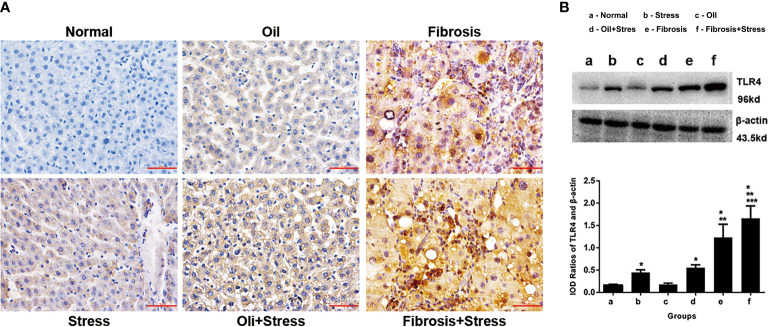
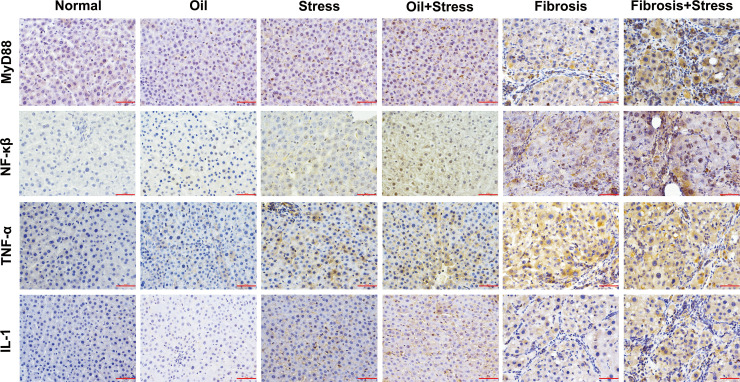
The diversities and abundances of gut microbiota were significant differences in rats among each group. The pathological lesions of intestinal and liver tissues, decreased expression of occludin protein in intestinal mucosa, deposition of collagen fibers and increased protein expression of TLR4, MyD88, NF-κβ, TNF-α and IL-1 in liver tissue, increased LPS level in portal vein blood, and abnormalities of liver function and coagulation function, were observed in rats exposed to chronic psychological stress or liver fibrosis. There were significant differences with normal rats. When the dual intervention factors of chronic psychological stress and liver fibrosis were superimposed, the above indicators were further aggravated.
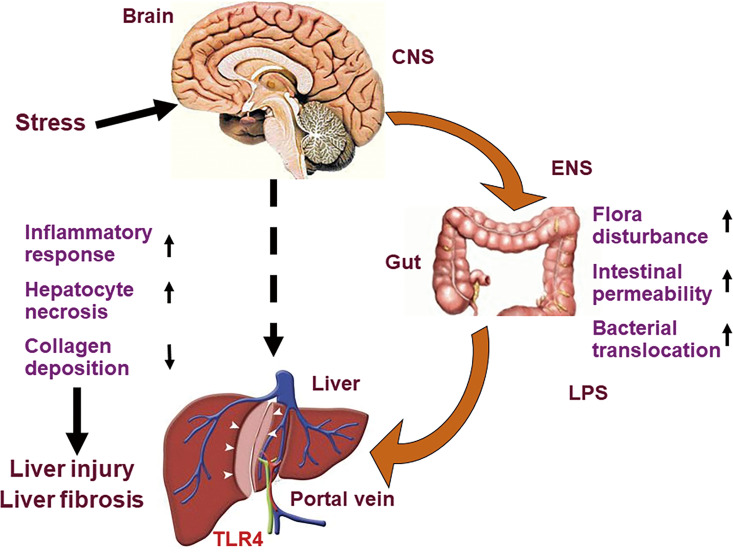
Chronic psychological stress promotes liver injury and fibrosis, depending on changes in the diversity of gut microbiota and increased intestinal permeability caused by psychological stress, LPS that enters liver and acts on TLR4, and active LPS-TLR4 pathway depend on MyD88. It demonstrates the possibility of existence of brain-gut-liver axis.
慢性心理应激对肝炎和肝纤维化的影响受到关注。然而,其机制尚不清楚。我们通过肠道研究了慢性心理应激促进肝损伤和纤维化的作用及其机制。
将 60 只雄性 SD 大鼠随机分为 6 组。建立慢性心理应激(4 周)和肝纤维化(8 周)大鼠模型。检测和分析肠道粪便中肠道微生物多样性、肠黏膜通透性、肠肝组织病理变化、胶原纤维、肝组织中 toll 样受体 4(TLR4)、髓样分化因子 88(MyD88)、核因子 kappa B(NF-κB)、肿瘤坏死因子α(TNF-α)和白细胞介素 1(IL-1)的蛋白表达、血液中肝功能和凝血功能以及门静脉血中内毒素(LPS)。
各组大鼠肠道微生物多样性和丰度存在显著差异。暴露于慢性心理应激或肝纤维化的大鼠出现肠肝组织病理损伤,肠黏膜闭合蛋白表达降低,胶原纤维沉积,肝组织 TLR4、MyD88、NF-κB、TNF-α和 IL-1 蛋白表达增加,门静脉血 LPS 水平升高,肝功能和凝血功能异常。与正常大鼠相比,差异均有统计学意义。当慢性心理应激和肝纤维化的双重干预因素叠加时,上述指标进一步加重。
慢性心理应激通过心理应激引起的肠道微生物多样性改变和肠通透性增加、进入肝脏并作用于 TLR4 的 LPS 以及活跃的 LPS-TLR4 途径,促进肝损伤和纤维化,该途径依赖于 MyD88。这表明存在脑-肠-肝轴的可能性。