Division of Digestive Surgery, University Hospitals of Geneva, 1205 Geneva, Switzerland.
Department of Surgery, Clinical Medicine Section, Faculty of Medicine, University of Geneva, 1206 Geneva, Switzerland.
Cells. 2022 Apr 19;11(9):1379. doi: 10.3390/cells11091379.
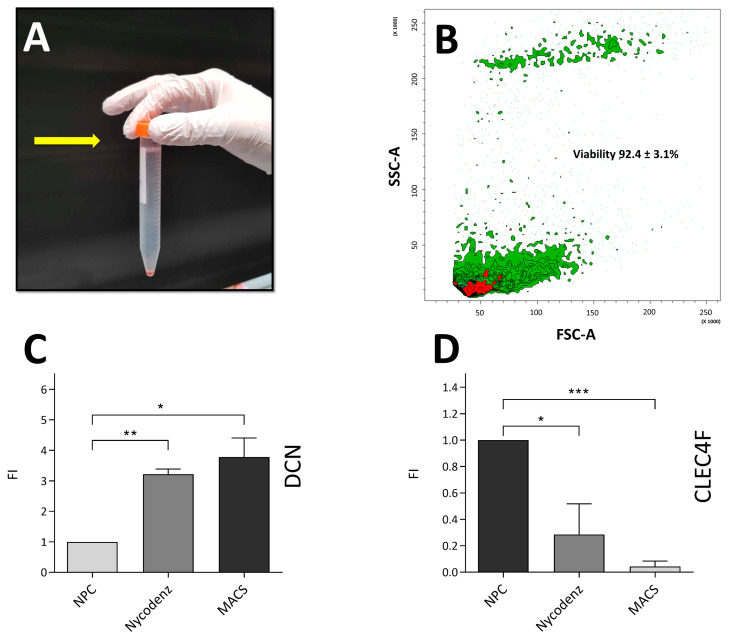
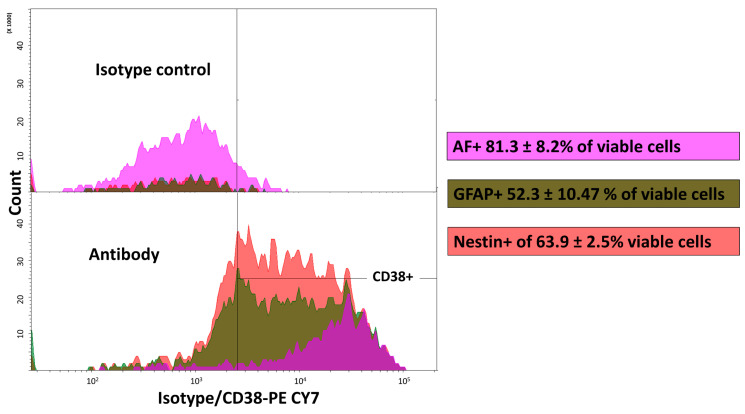
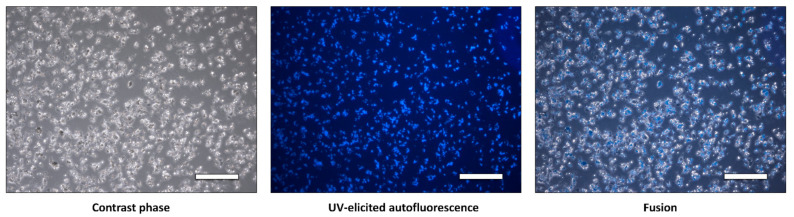
To obtain meaningful results of hepatic stellate cell (HSC) function, it is crucial to use highly pure HSC populations. Our aim was to optimize HSC isolation from mice livers without exploiting the characteristically transient vitamin A autofluorescence of HSC. HSCs were isolated from C57BL/6 mice using a two-step collagenase digestion and Nycodenz gradient separation followed by CD11b-negative sorting step in order to remove contaminating macrophages and dendritic cells. Isolated cells were analyzed for yield, viability, purity, and potential new markers using immunofluorescence and flow cytometry. We obtained a yield of 350,595 ± 100,773 HSC per mouse liver and a viability of isolated cells of 92.4 ± 3.1%. We observed a low macrophage/dendritic cell contamination of 1.22 ± 0.54%. Using flow cytometry, we demonstrated that CD38 was expressed at the surface of HSC subpopulations and that all expressed intracellular markers specific for HSC in the liver. This isolation method, avoiding fluorescent activated cell sorting (FACS), allowed isolation of HSCs with high purity. Further, flow cytometry analysis suggests that CD38 may be a reliable marker of HSCs and may include subpopulations of HSCs without retinoid droplets.
为了获得有意义的肝星状细胞(HSC)功能结果,使用高度纯化的 HSC 群体至关重要。我们的目的是优化从没有利用 HSC 特征性瞬时光学 A 自动荧光的小鼠肝脏中分离 HSC。使用两步胶原酶消化和 Nycodenz 梯度分离,然后进行 CD11b 阴性分选步骤,从 C57BL/6 小鼠中分离 HSC,以去除污染的巨噬细胞和树突状细胞。使用免疫荧光和流式细胞术分析分离细胞的产量、活力、纯度和潜在的新标记物。我们从每只小鼠肝脏中获得 350,595 ± 100,773 个 HSC 的产量,分离细胞的活力为 92.4 ± 3.1%。我们观察到巨噬细胞/树突状细胞污染低至 1.22 ± 0.54%。通过流式细胞术,我们证明 CD38 在 HSC 亚群的表面表达,并且所有表达肝内 HSC 的特异性细胞内标记物。这种避免荧光激活细胞分选(FACS)的分离方法允许高度纯化的 HSC 分离。此外,流式细胞术分析表明 CD38 可能是 HSC 的可靠标记物,并且可能包括没有视黄醇液滴的 HSC 亚群。