Department of Otorhinolaryngology-Head and Neck Surgery, Perelman School of Medicine, University of Pennsylvania, Philadelphia, PA 19104, USA.
Department of Physiology, Perelman School of Medicine, University of Pennsylvania, Philadelphia, PA 19104, USA.
Cells. 2022 Apr 27;11(9):1478. doi: 10.3390/cells11091478.
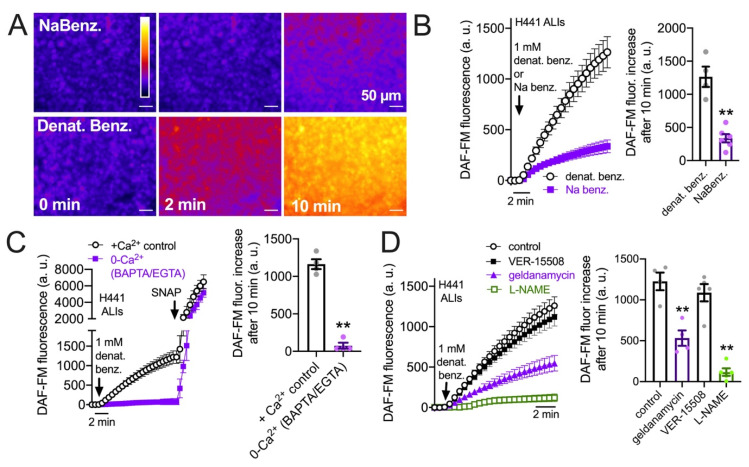
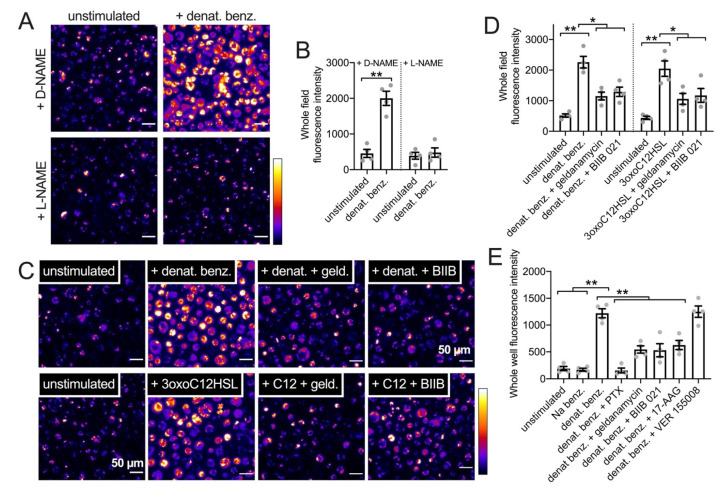
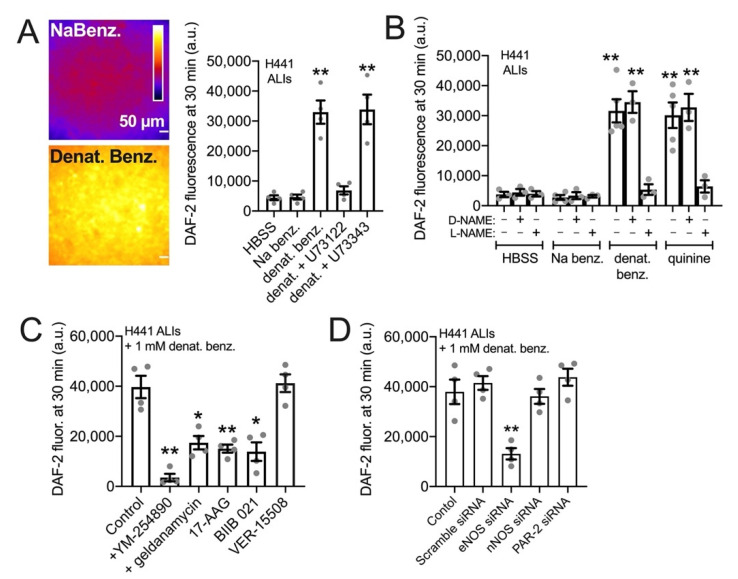
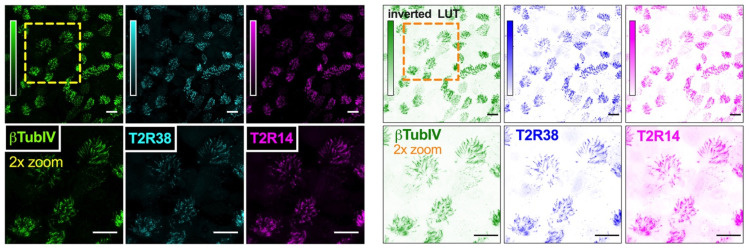
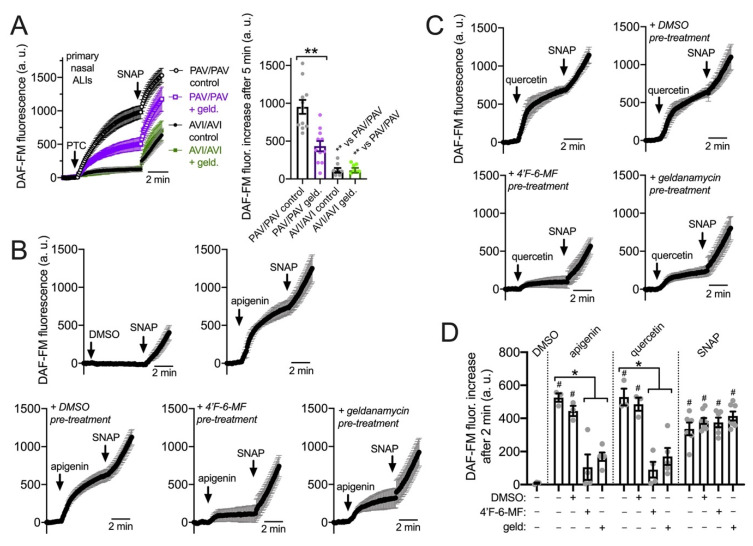
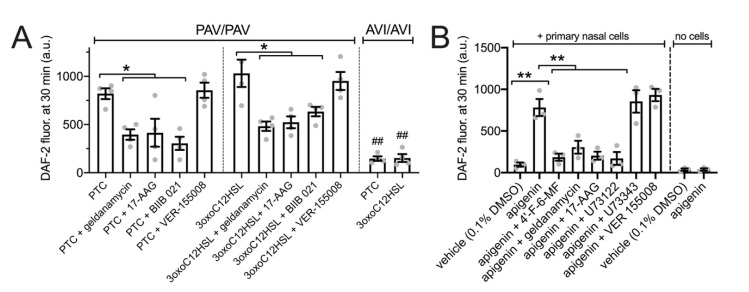
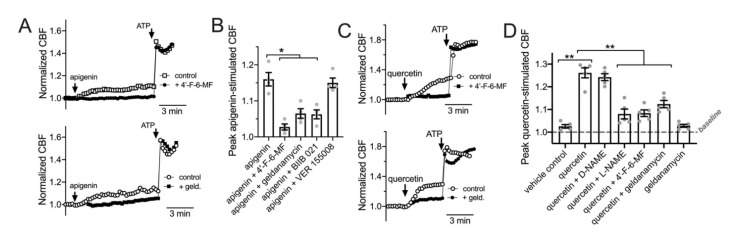
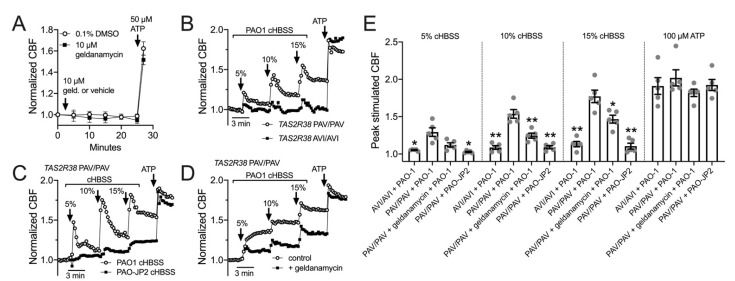
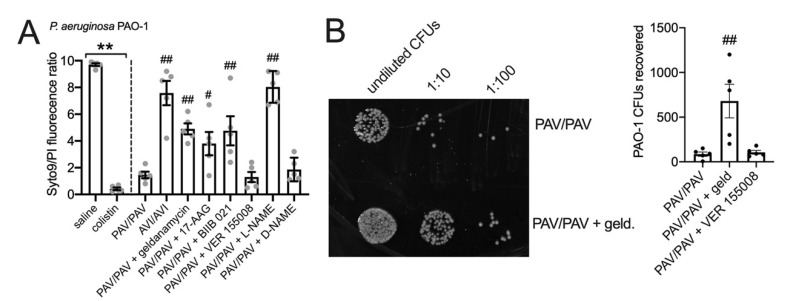
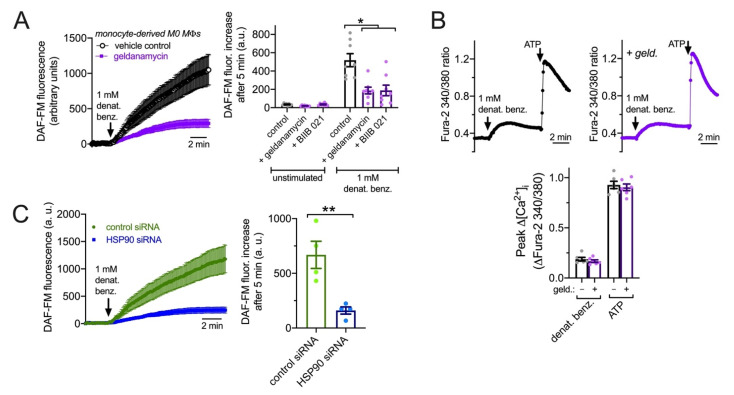
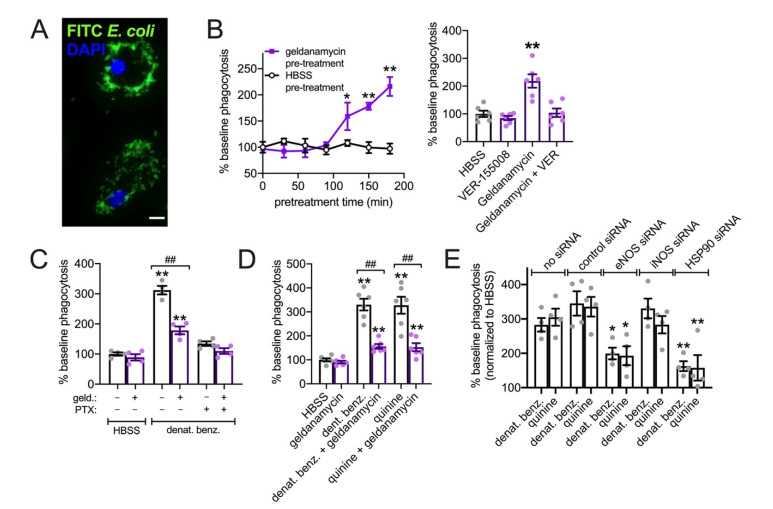
Bitter taste receptors (T2Rs) are G protein-coupled receptors (GPCRs) expressed in various cell types including ciliated airway epithelial cells and macrophages. T2Rs in these two innate immune cell types are activated by bitter products, including those secreted by , leading to Ca-dependent activation of endothelial nitric oxide (NO) synthase (eNOS). NO enhances mucociliary clearance and has direct antibacterial effects in ciliated epithelial cells. NO also increases phagocytosis by macrophages. Using biochemistry and live-cell imaging, we explored the role of heat shock protein 90 (HSP90) in regulating T2R-dependent NO pathways in primary sinonasal epithelial cells, primary monocyte-derived macrophages, and a human bronchiolar cell line (H441). Immunofluorescence showed that H441 cells express eNOS and T2Rs and that the bitter agonist denatonium benzoate activates NO production in a Ca- and HSP90-dependent manner in cells grown either as submerged cultures or at the air-liquid interface. In primary sinonasal epithelial cells, we determined that HSP90 inhibition reduces T2R-stimulated NO production and ciliary beating, which likely limits pathogen clearance. In primary monocyte-derived macrophages, we found that HSP-90 is integral to T2R-stimulated NO production and phagocytosis of FITC-labeled and pHrodo-. Our study demonstrates that HSP90 serves as an innate immune modulator by regulating NO production downstream of T2R signaling by augmenting eNOS activation without impairing upstream Ca signaling. These findings suggest that HSP90 plays an important role in airway antibacterial innate immunity and may be an important target in airway diseases such as chronic rhinosinusitis, asthma, or cystic fibrosis.
苦味受体 (T2R) 是 G 蛋白偶联受体 (GPCR),表达于多种细胞类型,包括纤毛气道上皮细胞和巨噬细胞。这两种先天免疫细胞类型中的 T2R 可被苦味产物激活,包括 分泌的产物,导致内皮型一氧化氮合酶 (eNOS) 的 Ca 依赖性激活。NO 增强黏液纤毛清除功能,并且在纤毛上皮细胞中具有直接的抗菌作用。NO 还增加巨噬细胞的吞噬作用。我们使用生物化学和活细胞成像技术,探讨了热休克蛋白 90 (HSP90) 在调节主要鼻-鼻窦上皮细胞、原代单核细胞衍生的巨噬细胞和人支气管细胞系 (H441) 中 T2R 依赖性 NO 通路中的作用。免疫荧光显示,H441 细胞表达 eNOS 和 T2R,苦味激动剂苯甲地那铵以 Ca 和 HSP90 依赖性方式激活细胞在浸没培养或气液界面培养时的 NO 产生。在主要鼻-鼻窦上皮细胞中,我们确定 HSP90 抑制减少 T2R 刺激的 NO 产生和纤毛摆动,这可能限制病原体清除。在原代单核细胞衍生的巨噬细胞中,我们发现 HSP90 是 T2R 刺激的 NO 产生和 FITC 标记的 和 pHrodo-吞噬作用所必需的。我们的研究表明,HSP90 通过增强 eNOS 激活来调节 T2R 信号下游的 NO 产生,而不损害上游 Ca 信号,从而作为先天免疫调节剂发挥作用。这些发现表明,HSP90 在气道抗菌先天免疫中发挥重要作用,并且可能是慢性鼻-鼻窦炎、哮喘或囊性纤维化等气道疾病的重要靶点。