
短期强化型认知行为疗法干预对中国大学生网络成瘾的影响:一项随机对照试验。
Impact of Short-Term Intensive-Type Cognitive Behavioral Therapy Intervention on Internet Addiction among Chinese College Students: A Randomized Controlled Trial.
机构信息
The Mental Health Center, Yunnan University, Kunming 650091, China.
Department of Social Psychiatry and Mental Health, Faculty of Medicine, University of Tsukuba, Tsukuba 305-0006, Japan.
出版信息
Int J Environ Res Public Health. 2022 Apr 25;19(9):5212. doi: 10.3390/ijerph19095212.
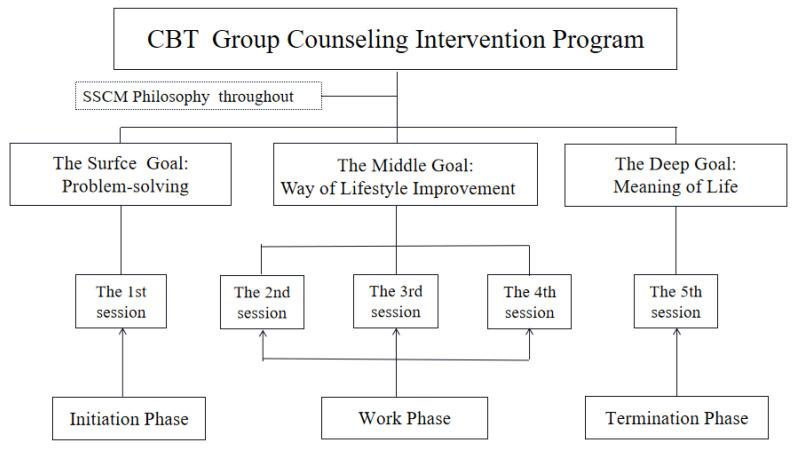
The object of this study is to examine the effects of a short-term intensive-type Cognitive Behavioral Therapy (CBT) intervention to prevent internet addiction among Chinese college students. We conducted a randomized controlled trial applying a group counseling intervention program based on CBT. Data included 21 participants in the intervention group and 22 participants in the control group. The results showed that the intervention program reduced college students' internet addiction symptoms and procrastination and improved their sense of coherence. Regarding the sustained effect, internet addiction symptoms decreased and perceived social support from significant others improved in college students. However, the intervention program did not significantly reduce their average daily internet use time and psychological stress. Overall, this study developed a short-term intensive-type intervention program based on CBT theory, which is complementary for Chinese college students with internet addiction.
本研究旨在探讨短期密集型认知行为疗法(CBT)干预对预防中国大学生网络成瘾的效果。我们采用基于 CBT 的团体辅导干预方案进行了一项随机对照试验。数据包括 21 名干预组参与者和 22 名对照组参与者。结果表明,干预方案降低了大学生的网络成瘾症状和拖延行为,提高了他们的整体感。关于持续效果,大学生的网络成瘾症状减轻,来自重要他人的感知社会支持增加。然而,干预方案并未显著减少他们的平均每日上网时间和心理压力。总的来说,本研究基于 CBT 理论开发了一种短期密集型干预方案,对有网络成瘾问题的中国大学生具有补充作用。

 Zotero 插件