Neuroscience Research Unit, School of Life Sciences, University of Technology Sydney, Broadway, Sydney, NSW 2007, Australia.
School of Nursing and Midwifery, Western Sydney University, Penrith, NSW 2747, Australia.
Int J Environ Res Public Health. 2022 May 9;19(9):5770. doi: 10.3390/ijerph19095770.
The autonomic nervous system plays a vital role in the modulation of many vital bodily functions, one of which is sleep and wakefulness. Many studies have investigated the link between autonomic dysfunction and sleep cycles; however, few studies have investigated the links between short-term sleep health, as determined by the Pittsburgh Quality of Sleep Index (PSQI), such as subjective sleep quality, sleep latency, sleep duration, habitual sleep efficiency, sleep disturbances, use of sleeping medication, and daytime dysfunction, and autonomic functioning in healthy individuals.
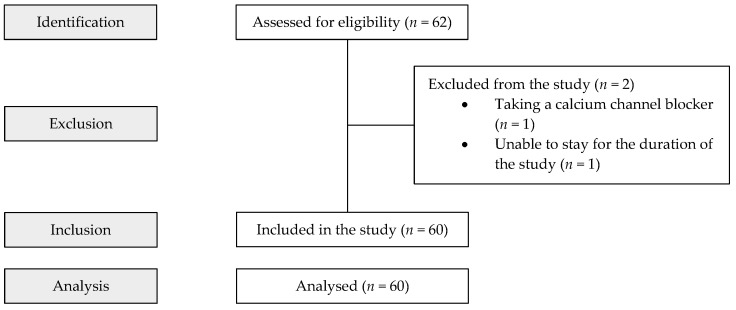
In this cross-sectional study, the aim was to investigate the links between short-term sleep quality and duration, and heart rate variability in 60 healthy individuals, in order to provide useful information about the effects of stress and sleep on heart rate variability (HRV) indices, which in turn could be integrated into biological models for wearable devices.
Sleep parameters were collected from participants on commencement of the study, and HRV was derived using an electrocardiogram (ECG) during a resting and stress task (Trier Stress Test).
Low-frequency to high-frequency (LF:HF) ratio was significantly higher during the stress task than during the baseline resting phase, and very-low-frequency and high-frequency HRV were inversely related to impaired sleep during stress tasks.
Given the ubiquitous nature of wearable technologies for monitoring health states, in particular HRV, it is important to consider the impacts of sleep states when using these technologies to interpret data. Very-low-frequency HRV during the stress task was found to be inversely related to three negative sleep indices: sleep quality, daytime dysfunction, and global sleep score.
自主神经系统在调节许多重要身体功能方面起着至关重要的作用,其中之一是睡眠和觉醒。许多研究已经调查了自主功能障碍与睡眠周期之间的联系;然而,很少有研究调查短期睡眠健康与自主功能之间的联系,短期睡眠健康由匹兹堡睡眠质量指数(PSQI)确定,如主观睡眠质量、睡眠潜伏期、睡眠时间、习惯性睡眠效率、睡眠障碍、使用睡眠药物和白天功能障碍,以及健康个体的自主功能。
在这项横断面研究中,目的是调查 60 名健康个体短期睡眠质量和持续时间与心率变异性之间的联系,以便提供有关压力和睡眠对心率变异性(HRV)指数影响的有用信息,这些信息可以整合到可穿戴设备的生物模型中。
在研究开始时从参与者那里收集睡眠参数,并使用心电图(ECG)在休息和应激任务(特里尔应激测试)期间得出 HRV。
在应激任务期间,低频与高频(LF:HF)比值显着高于基线休息阶段,极低频和高频 HRV与应激任务期间睡眠受损呈负相关。
鉴于可穿戴技术在监测健康状态方面的普遍存在,特别是 HRV,在使用这些技术来解释数据时,考虑睡眠状态的影响非常重要。在应激任务期间的极低频 HRV 与三个负面睡眠指标呈负相关:睡眠质量、白天功能障碍和总体睡眠评分。