Ferreira Luane S, Sábato Victor, Pinheiro Thiago A, Neto Edvaldo, Rocha Luciana H, Baumgarten Júlio, Rodrigues Flávio H, Sousa-Lima Renata S
Laboratory of Bioacoustics, Department of Physiology & Behavior, Universidade Federal do Rio Grande do Norte, Natal 59078-970, RN, Brazil.
Applied Ecology and Conservation Lab, Universidade Estadual de Santa Cruz, Ilhéus 45662-900, BA, Brazil.
Animals (Basel). 2022 Apr 21;12(9):1081. doi: 10.3390/ani12091081.
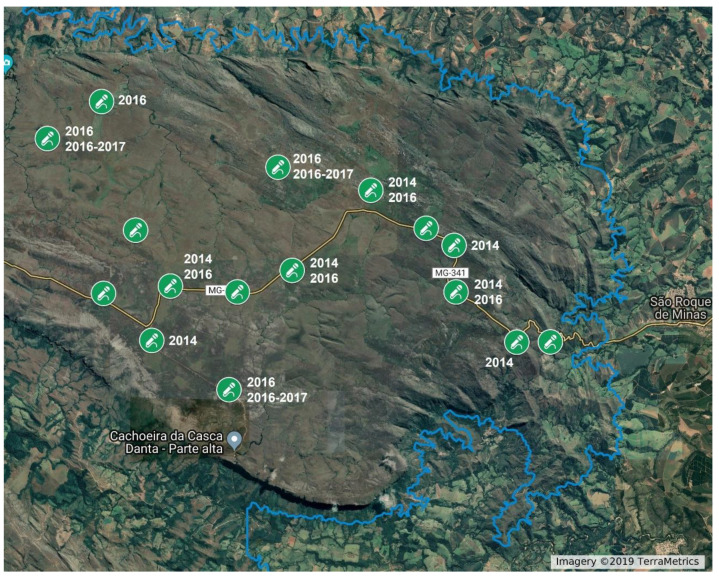
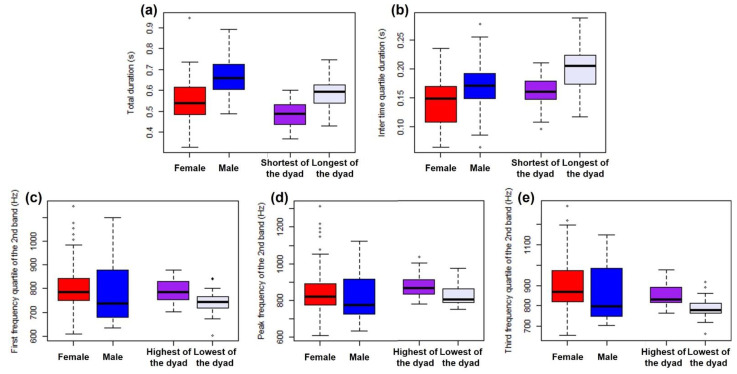
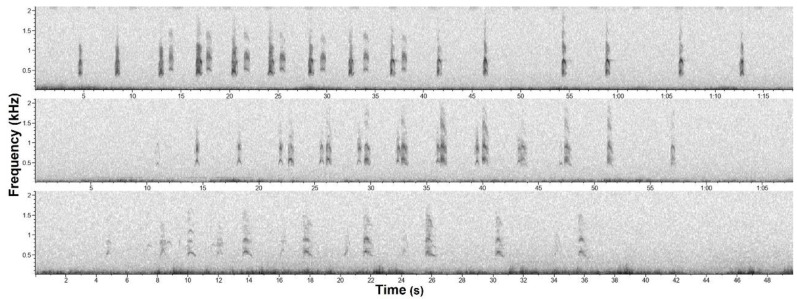
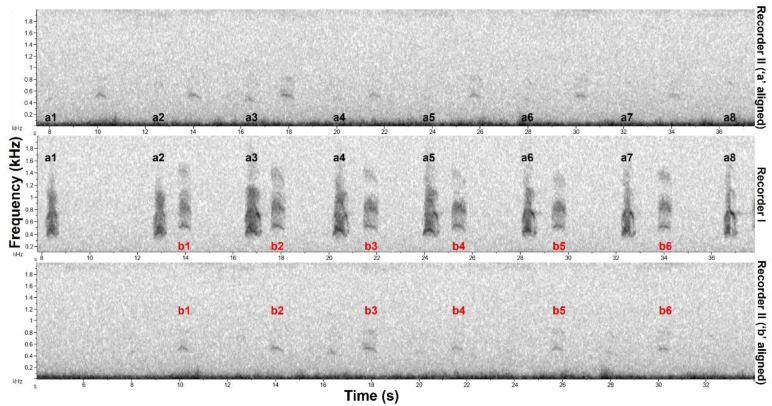
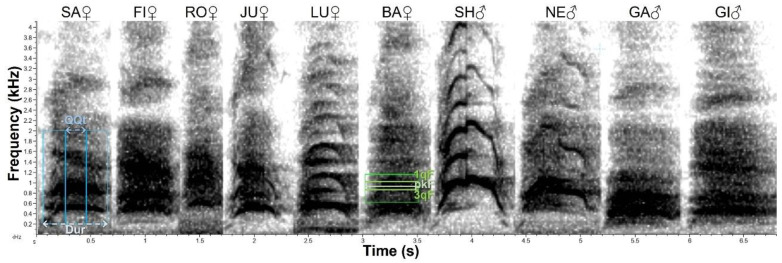
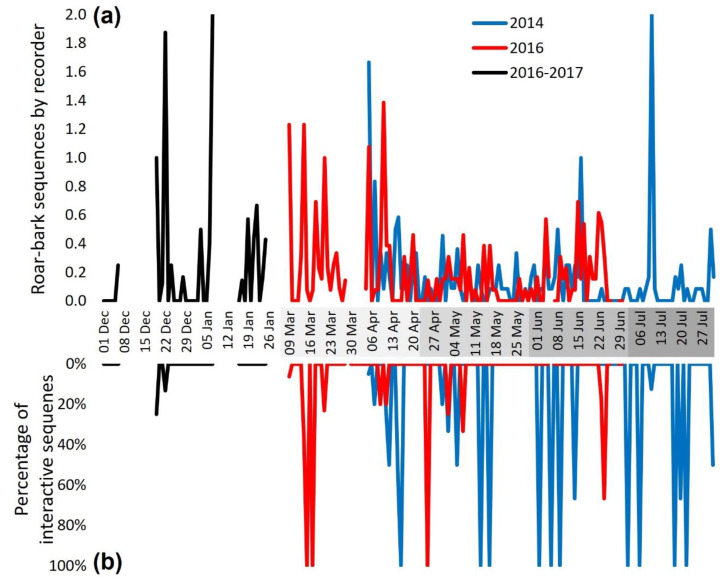
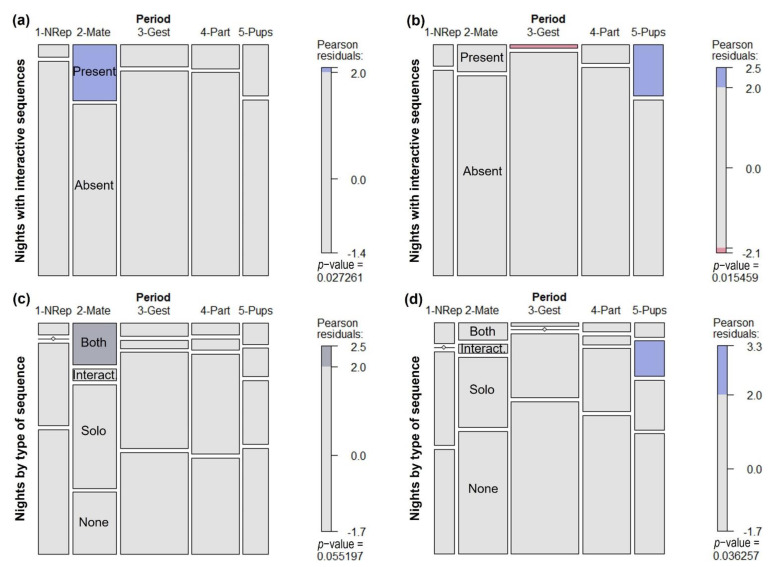
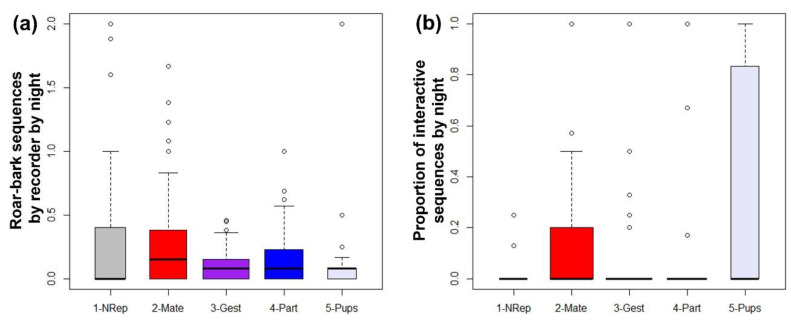
Maned wolves (Chrysocyon brachyurus) are monogamous and display biparental care for their young, although adults rarely spend time in close proximity. To better understand vocal interactions of maned wolves over long-distances, we passively recorded >10 months of audio data in the species’ natural habitat and analyzed manual recordings of captive animals, covering the reproductive and non-reproductive seasons. In the natural habitat recordings, we found that maned wolves engage in vocal exchanges (termed interactive sequences) more often during the mating season, suggesting the existence of a partner attraction/reunion/guarding function, and also during the initial parental care period, suggesting communication among caregivers. We analyzed 21 interactive sequences, which were the only instances in which we could distinguish individuals, and found that the individuals interacting differed significantly in their roar-bark parameters, including duration, which also differed between males and females in captivity (male vocalizations were, on average, 0.124 s longer). We also found that interactive sequences in captive animals, involving two or more participants, almost always involved both sexes. These results suggest that acoustic interacting maned wolves are most likely male−female dyads.
鬃狼(Chrysocyon brachyurus)实行一夫一妻制,对幼崽表现出双亲照料行为,不过成年鬃狼很少长时间近距离相处。为了更好地了解鬃狼在远距离的声音互动情况,我们在该物种的自然栖息地被动记录了超过10个月的音频数据,并分析了圈养动物的人工记录,涵盖繁殖季节和非繁殖季节。在自然栖息地的记录中,我们发现鬃狼在交配季节更频繁地进行声音交流(称为互动序列),这表明存在伴侣吸引/团聚/守护功能,在育幼初期也更频繁,这表明照料者之间存在交流。我们分析了21个互动序列,这是我们唯一能够区分个体的情况,发现互动个体的吼叫声参数存在显著差异,包括时长,圈养中的雄性和雌性也存在差异(雄性叫声平均长0.124秒)。我们还发现,圈养动物中涉及两个或更多参与者的互动序列几乎总是涉及两性。这些结果表明,进行声音互动的鬃狼很可能是雌雄配对。