Li Haixia, Wang Jie, Zhang Xu, Hu Yu, Cai Qinglin, Liu Ying, Ma Zhen
Key Laboratory of Environment Controlled Aquaculture, Ministry of Education, Dalian 116023, China.
College of Marine Technology and Environment, Dalian Ocean University, #52. Heishijiao Street, Shahekou District, Dalian 116023, China.
Animals (Basel). 2022 May 7;12(9):1205. doi: 10.3390/ani12091205.
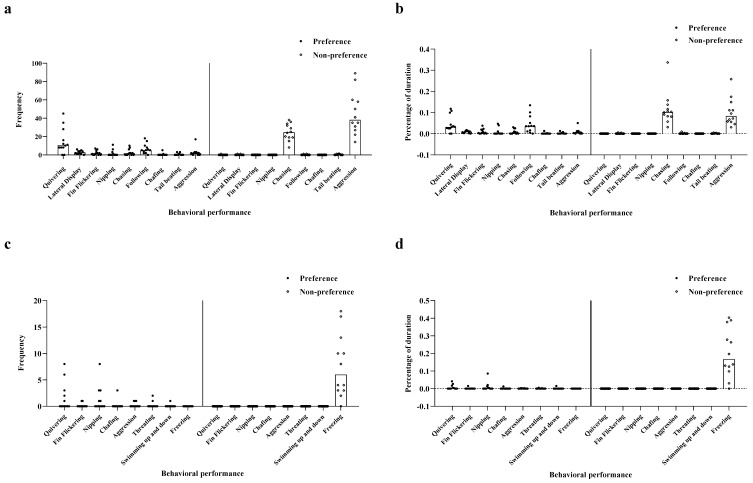
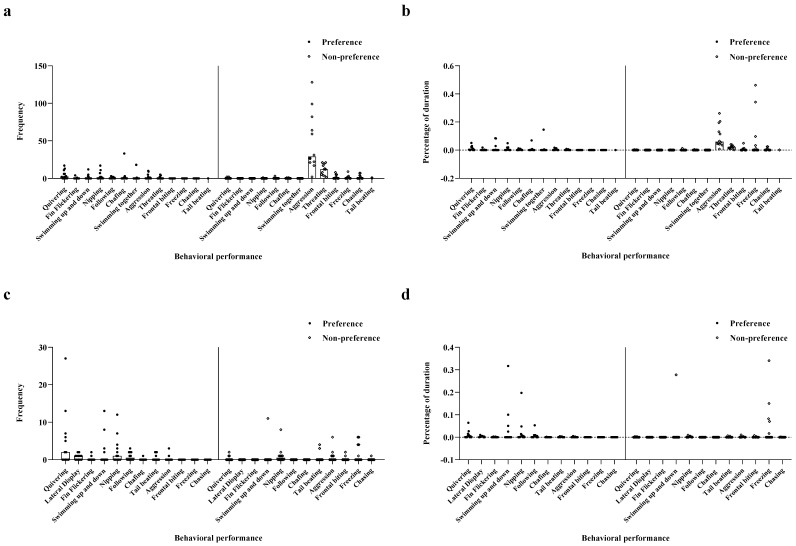
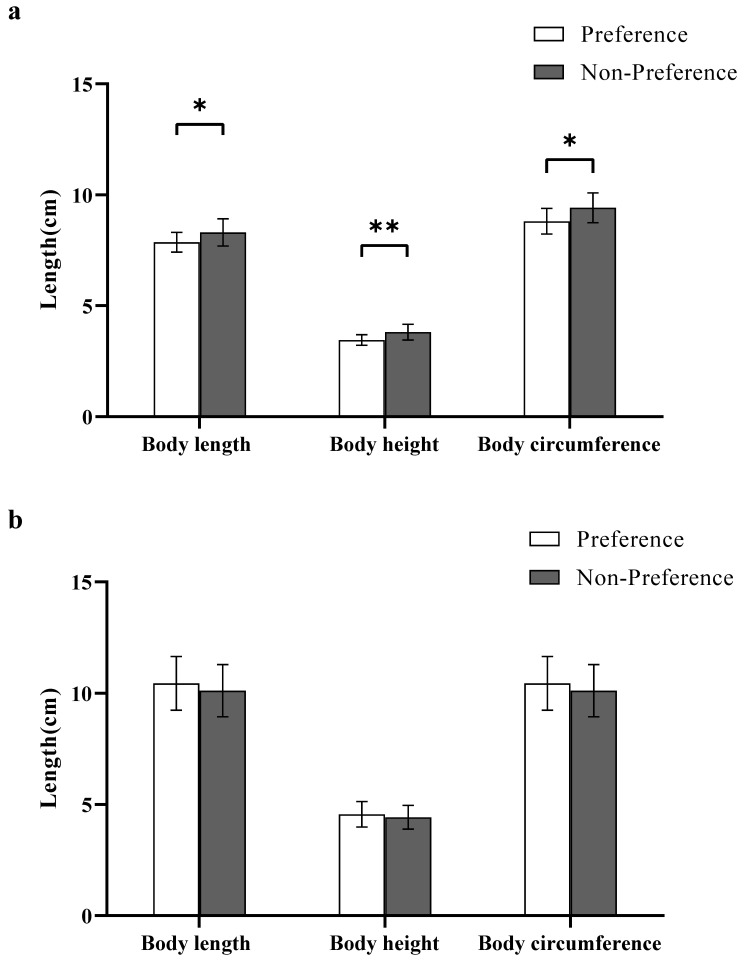
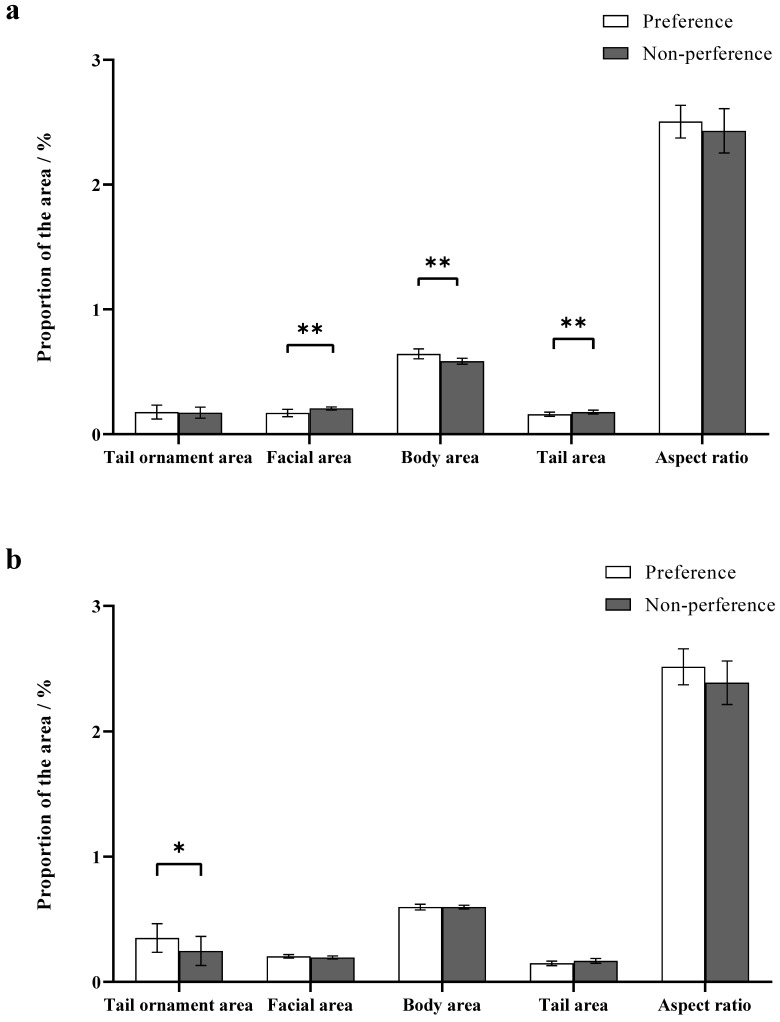
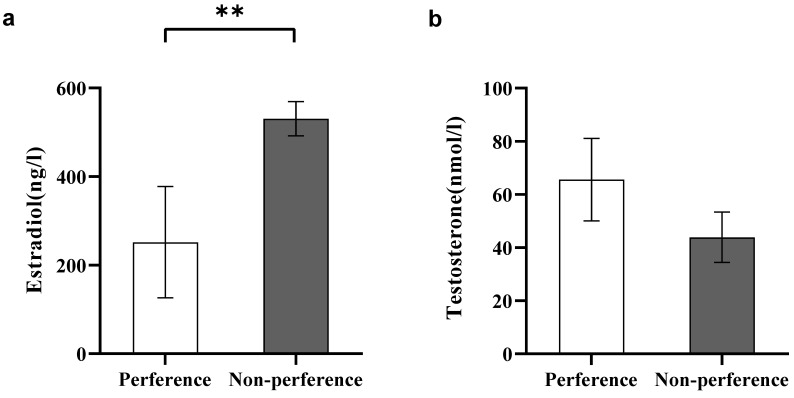
The mating roles of males and females, to a certain extent, are dynamic and variable. Several factors influence the mate choice process. Nonetheless, the main preference features have not yet been fully understood in . In this study, because of its natural pairing characteristics, was selected to explore the mate choice preferences of different sexes. Specifically, male and female behavioral performances were described and quantified through a "no-choice paradigm" during mate choice. A total of 12 behavioral performances were defined in male mate choice (experiment 1), whereas 14 behavioral performances were defined in female mate choice (experiment 2). According to the obtained results, unselected females did not display any proactive behaviors in experiment 1, whereas unselected males exhibited proactive behaviors in experiment 2, including quivering, nipping, tail beating, swimming up and down, and aggression. It was also found that both male and female individuals tend to express dislike rather than like. Those behaviors with higher frequencies (e.g., quivering) often mean less energy expenditure, thus easier repeatability. Moreover, principal component analysis (PCA) was employed to extract and identify mate choice preference features. Preliminary results indicated that male preferences for a mate were mainly associated with body size, behavioral intention, and appearance, whereas the intensity of female preferences was in the order of body size, appearance, and behavioral intention. In addition, sex hormone levels were associated with mate choices.
在一定程度上,雄性和雌性的交配角色是动态且可变的。有几个因素会影响配偶选择过程。然而,在……中,主要的偏好特征尚未得到充分理解。在本研究中,由于其自然配对特性,……被选来探究不同性别的配偶选择偏好。具体而言,在配偶选择过程中,通过“无选择范式”对雄性和雌性的行为表现进行了描述和量化。在雄性配偶选择中定义了总共12种行为表现(实验1),而在雌性配偶选择中定义了14种行为表现(实验2)。根据所得结果,在实验1中未被选中的雌性没有表现出任何主动行为,而在实验2中未被选中的雄性表现出主动行为,包括颤抖、轻咬、摆尾、上下游动和攻击行为。还发现雄性和雌性个体都倾向于表达不喜欢而非喜欢。那些频率较高的行为(如颤抖)通常意味着能量消耗较少,因此更容易重复。此外,采用主成分分析(PCA)来提取和识别配偶选择偏好特征。初步结果表明,雄性对配偶的偏好主要与体型、行为意图和外貌有关,而雌性偏好的强度顺序为体型、外貌和行为意图。此外,性激素水平与配偶选择有关。