Lucas José A, García-Villaraco Ana, Ramos-Solano Beatriz, Akdi Khalid, Gutierrez-Mañero Francisco Javier
Plant Physiology, Pharmaceutical and Health Sciences Department, Faculty of Pharmacy, Universidad San Pablo-CEU Universities, 28668 Boadilla del Monte, Spain.
Trichodex S.A., Polígono Industrial La Isla, Rio Viejo 57-59, 41703 Sevilla, Spain.
Plants (Basel). 2022 May 5;11(9):1246. doi: 10.3390/plants11091246.
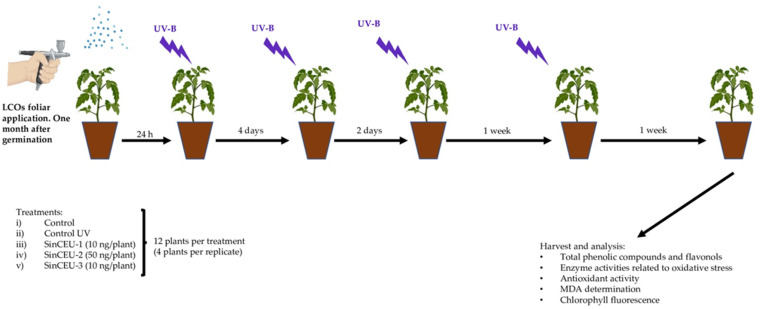
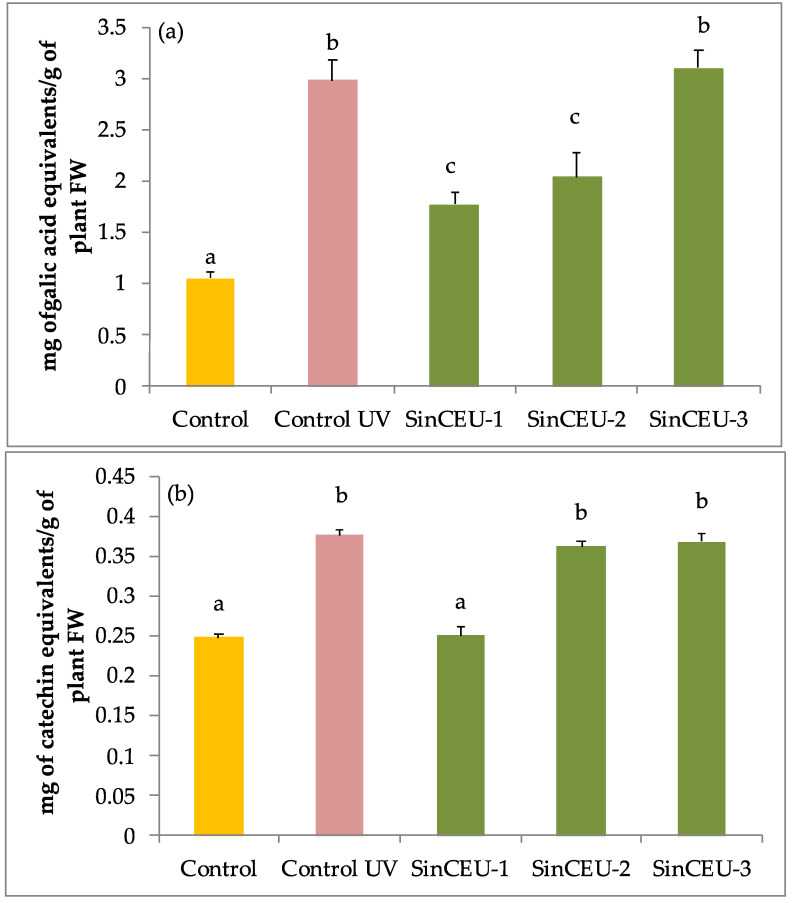
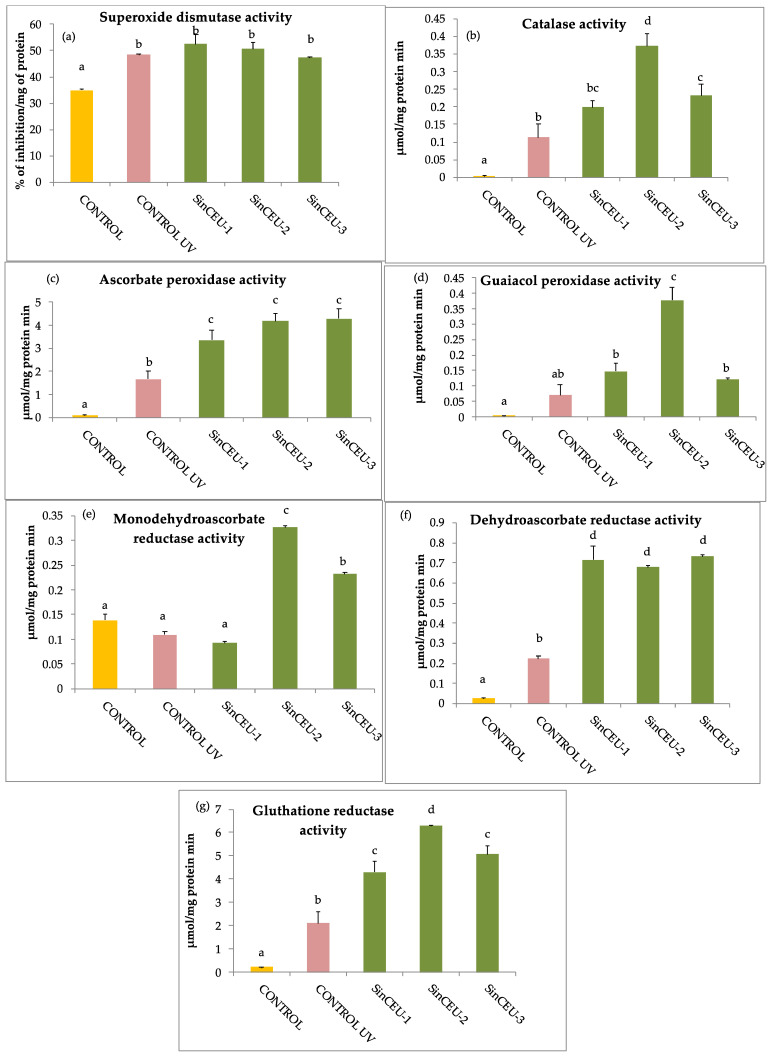
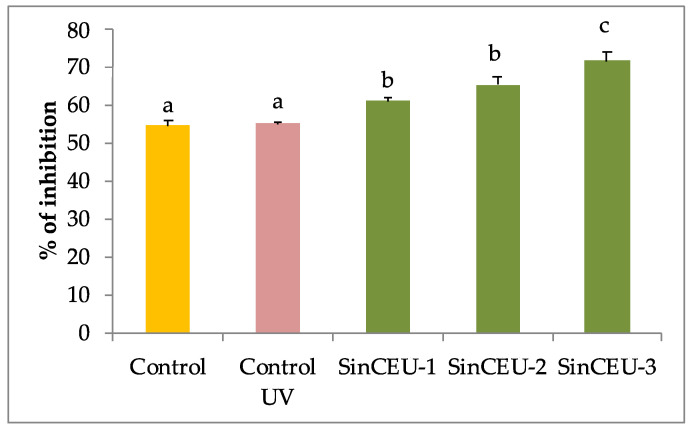
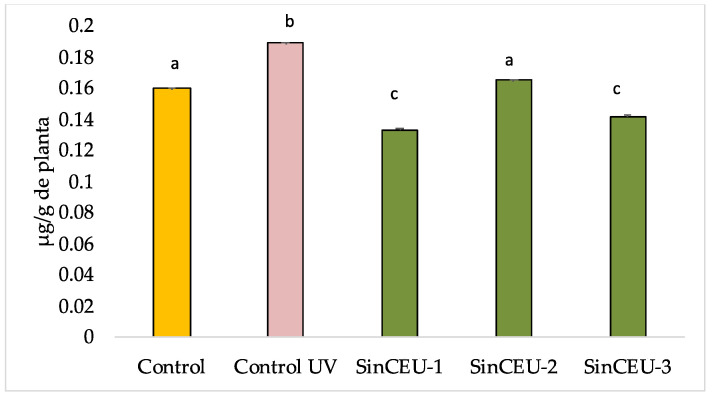
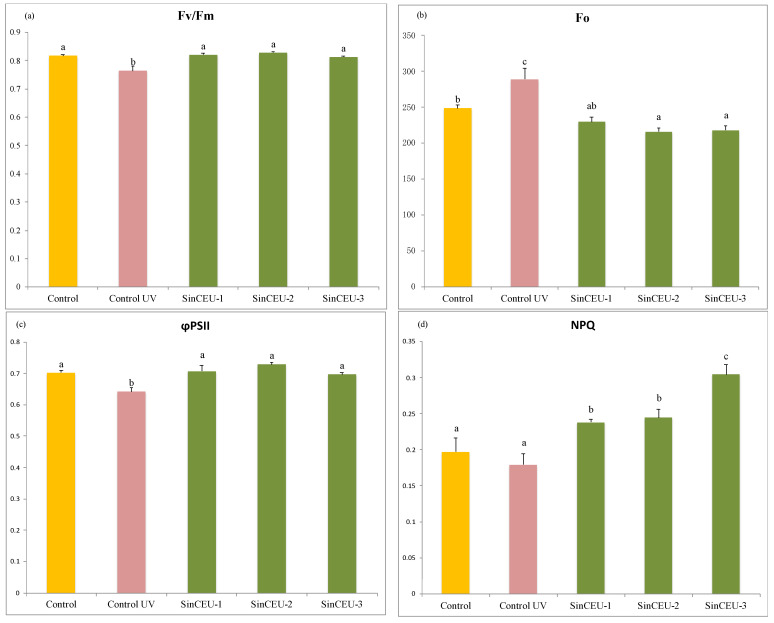
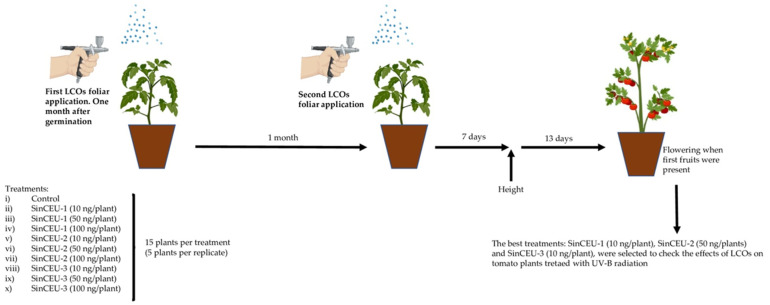
Exposure to ultraviolet-B (UV-B) radiation can lead to oxidative damage in plants, increasing reactive oxygen species (ROS) production. To overcome ROS burst, plants have antioxidant mechanisms related to ROS scavenging which can be improved by elicitation with biological agents or derived molecules (elicitors), as they can trigger a physiological alert state called "priming". This work describes the effects of lipo-chitooligosaccharides (LCOs) treatment applied to tomato plants under UV-B stress. The LCOs used in the study are produced by three species of the genus Ensifer (formerly ) (SinCEU-1, SinCEU-2, and SinCEU-3) were assayed on tomato plants under UV-B stress. LCOs were able to significantly increase most of the enzymatic activities related to ROS scavenging while non-enzymatic antioxidants were not modified. This response was associated with a lower oxidative stress, according to malondialdehyde (MDA) levels and the higher antioxidant capacity of the plants. Furthermore, the photosynthetic efficiency of LCOs-treated plants indicated a better physiological state than the control plants. Therefore, although more studies and deepening of certain aspects are necessary, LCOs have shown great potential to protect plants from high UV-B radiation conditions.
暴露于紫外线B(UV-B)辐射会导致植物发生氧化损伤,增加活性氧(ROS)的产生。为了克服ROS爆发,植物具有与ROS清除相关的抗氧化机制,这种机制可以通过生物制剂或衍生分子(诱导子)的诱导来改善,因为它们可以触发一种称为“引发”的生理警戒状态。这项工作描述了在UV-B胁迫下,脂壳寡糖(LCOs)处理对番茄植株的影响。本研究中使用的LCOs由Ensifer属(以前的 )的三个物种产生(SinCEU-1、SinCEU-2和SinCEU-3),在UV-B胁迫下对番茄植株进行了测定。LCOs能够显著提高大多数与ROS清除相关的酶活性,而非酶抗氧化剂没有改变。根据丙二醛(MDA)水平和植物较高的抗氧化能力,这种反应与较低的氧化应激有关。此外,LCOs处理植株的光合效率表明其生理状态优于对照植株。因此,尽管有必要进行更多的研究并深入某些方面,但LCOs已显示出在保护植物免受高UV-B辐射条件影响方面的巨大潜力。