Department of Biological Sciences and Biotechnology, Faculty of Science and Technology, Universiti Kebangsaan Malaysia, 43600 UKM BANGI, Malaysia.
Int J Mol Sci. 2020 Jul 23;21(15):5208. doi: 10.3390/ijms21155208.
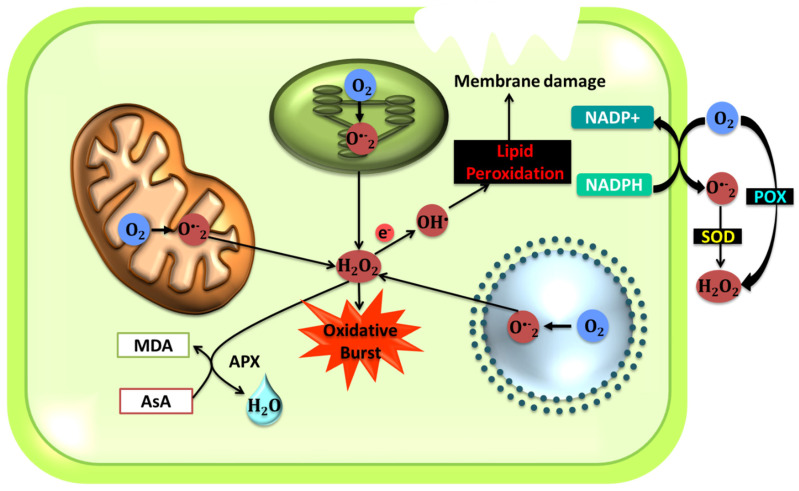
Climate change-induced abiotic stress results in crop yield and production losses. These stresses result in changes at the physiological and molecular level that affect the development and growth of the plant. Reactive oxygen species (ROS) is formed at high levels due to abiotic stress within different organelles, leading to cellular damage. Plants have evolved mechanisms to control the production and scavenging of ROS through enzymatic and non-enzymatic antioxidative processes. However, ROS has a dual function in abiotic stresses where, at high levels, they are toxic to cells while the same molecule can function as a signal transducer that activates a local and systemic plant defense response against stress. The effects, perception, signaling, and activation of ROS and their antioxidative responses are elaborated in this review. This review aims to provide a purview of processes involved in ROS homeostasis in plants and to identify genes that are triggered in response to abiotic-induced oxidative stress. This review articulates the importance of these genes and pathways in understanding the mechanism of resistance in plants and the importance of this information in breeding and genetically developing crops for resistance against abiotic stress in plants.
气候变化引起的非生物胁迫导致作物产量和生产损失。这些胁迫会导致植物在生理和分子水平上发生变化,从而影响其发育和生长。由于不同细胞器内的非生物胁迫,活性氧(ROS)会在高水平形成,导致细胞损伤。植物已经进化出通过酶和非酶抗氧化过程来控制 ROS 的产生和清除的机制。然而,ROS 在非生物胁迫中有双重功能,即在高水平下,ROS 对细胞有毒,而同一分子可以作为信号转导分子,激活植物对胁迫的局部和系统防御反应。本文综述了 ROS 及其抗氧化反应的效应、感知、信号转导和激活。本综述旨在提供植物中 ROS 动态平衡相关过程的概述,并确定对非生物诱导氧化胁迫响应的基因。本文阐述了这些基因和途径在理解植物抗性机制中的重要性,以及这些信息在培育和遗传改良作物以提高植物对非生物胁迫抗性方面的重要性。