Martínez Maria Teresa, Suárez Sonia, Moncaleán Paloma, Corredoira Elena
Misión Biológica de Galicia (MBG-CSIC), Sede Santiago de Compostela, Avda de Vigo s/n, 15705 Santiago de Compostela, Spain.
Neiker-BRTA, Centro de Arkaute, Campus Agroalimentario de Arkaute, 01213 Arkaute, Spain.
Plants (Basel). 2022 May 8;11(9):1266. doi: 10.3390/plants11091266.
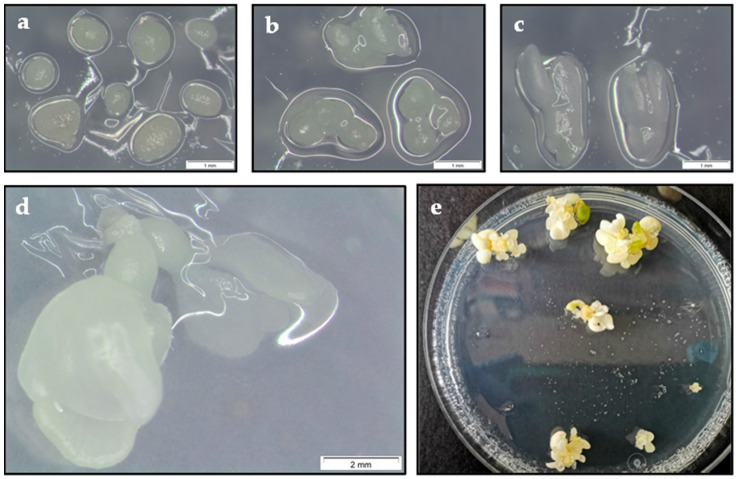
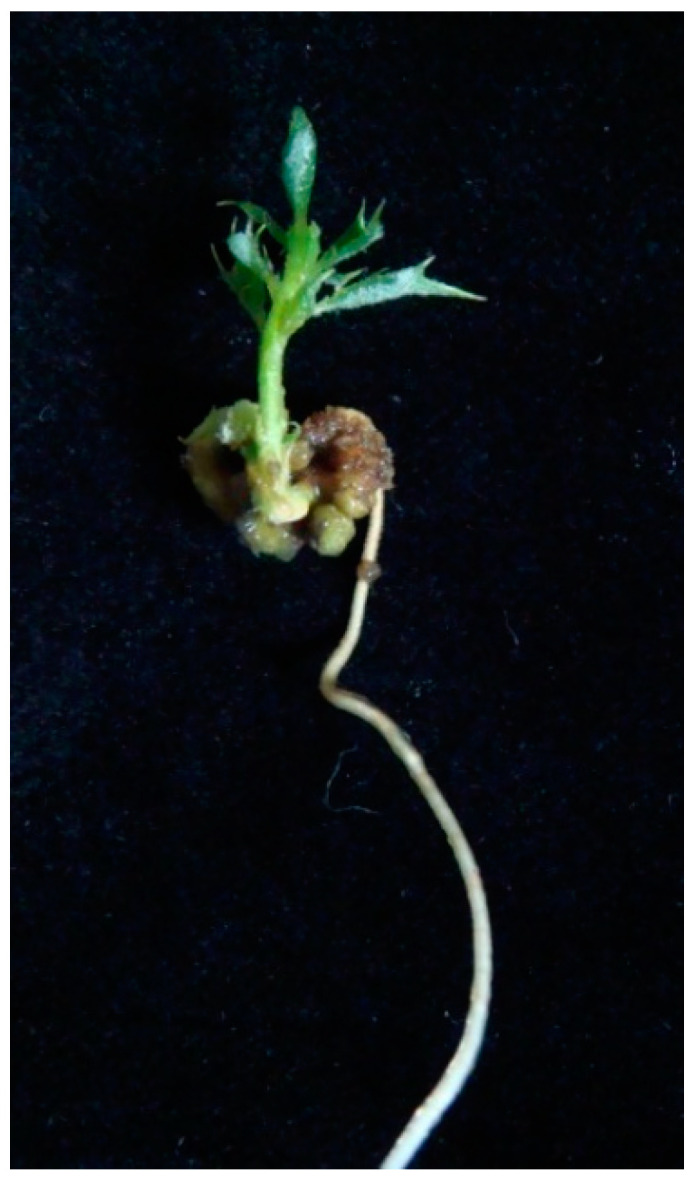
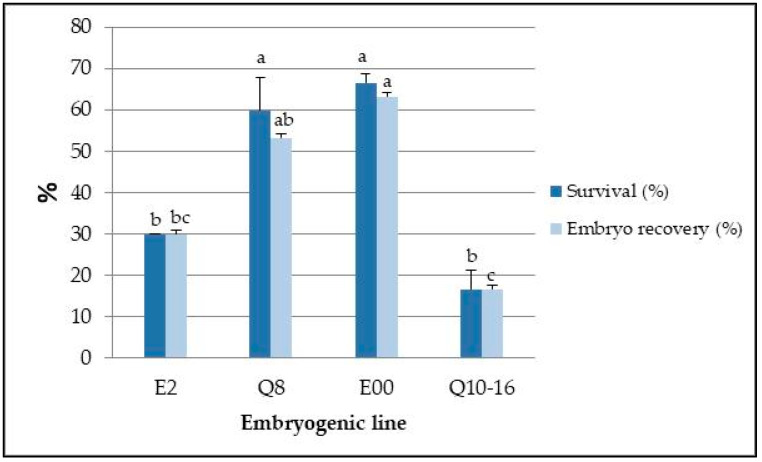
Holm oak populations are severely affected by oak decline syndrome, and reliable methods of conserving the plant material are required. A vitrification-based cryopreservation method was used for the first time for the long-term conservation of holm oak embryogenic cultures. Successful cryopreservation was achieved after determining the best developmental stage of the somatic embryos used and the optimal incubation period in plant vitrification solution 2 (PVS2). Embryos were recovered from individual nodular embryogenic structures (NES) derived from four embryogenic lines after preculture on a medium containing 0.3 M sucrose, incubation in PVS2 vitrification solution for 15 min at 25 °C and direct immersion in liquid nitrogen (LN). Embryo recovery rates of 16.7-63.3% were obtained after cryostorage for four years in LN. In addition to the embryo developmental stage and the PVS2 treatment time, the genotype can also significantly affect embryo recovery after LN storage. There were no significant differences in plant regeneration or polyploid stability between somatic embryos and plants derived from control embryos (not cryopreserved) and cryopreserved embryos. The findings indicate that embryo proliferation, plant conversion and polyploid stability are maintained in material recovered from the vitrification solution and subsequently cryopreserved.
圣栎种群受到栎树衰退综合征的严重影响,因此需要可靠的植物材料保存方法。一种基于玻璃化的冷冻保存方法首次用于圣栎胚性培养物的长期保存。在确定所用体细胞胚的最佳发育阶段和在植物玻璃化溶液2(PVS2)中的最佳孵育期后,成功实现了冷冻保存。胚是从四个胚性系的单个结节状胚性结构(NES)中获得的,这些胚性系在含有0.3M蔗糖的培养基上预培养后,于25℃在PVS2玻璃化溶液中孵育15分钟,然后直接浸入液氮(LN)中。在液氮中冷冻保存四年后,胚的回收率为16.7-63.3%。除了胚发育阶段和PVS2处理时间外,基因型也会显著影响液氮保存后胚的回收率。来自对照胚(未冷冻保存)和冷冻保存胚的体细胞胚与植株在植株再生或多倍体稳定性方面没有显著差异。研究结果表明,从玻璃化溶液中回收并随后冷冻保存的材料中,胚增殖、植株转化和多倍体稳定性得以维持。