Department of Pediatrics, United Arab Emirates University College of Medicine and Health Sciences, Al Ain, UAE.
Renal Section, Texas Children's Hospital, Houston, Texas, USA.
Lupus Sci Med. 2022 May;9(1). doi: 10.1136/lupus-2021-000631.
The renal activity index for lupus (RAIL) measures lupus nephritis (LN) activity considering urine levels of 6 biomarkers (neutrophil gelatinase-associated lipocalin, monocyte chemoattractant protein-1, kidney injury molecule-1, adiponectin, haemopexin, ceruloplasmin). We aimed to compare the accuracy of the RAIL and the renal domain-score of the SLE disease activity index (rSLEDAI) in detecting LN activity.
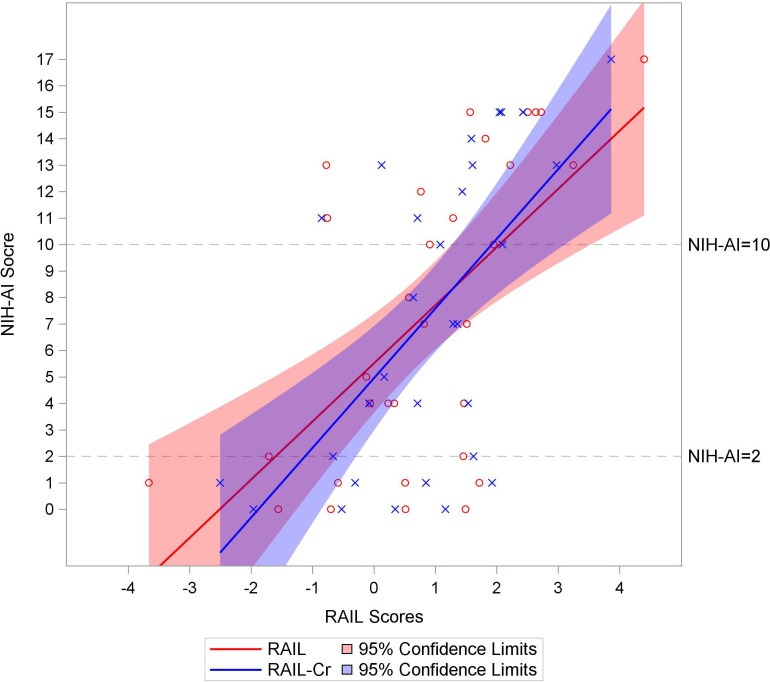
Random urine samples of patients with childhood-onset SLE with and without LN were assayed and scores of the RAIL, and RAIL standardised for urine creatinine (RAIL-Cr) were calculated. Clinical LN activity was measured by the rSLEDAI, and histological activity of LN was categorised as inactive/low-moderate/high for National Institute of Health-activity index scores of <2/2-10/>10, respectively.
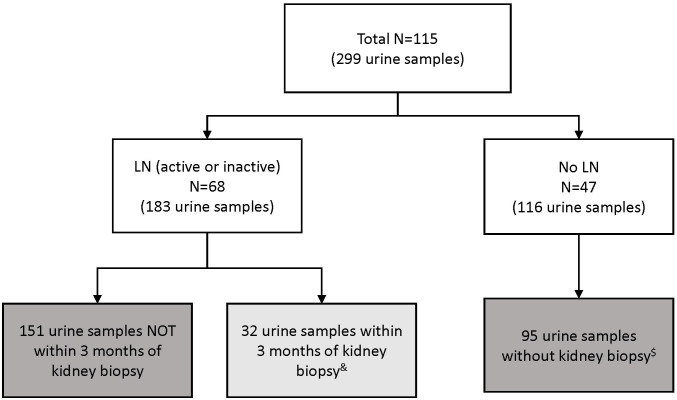
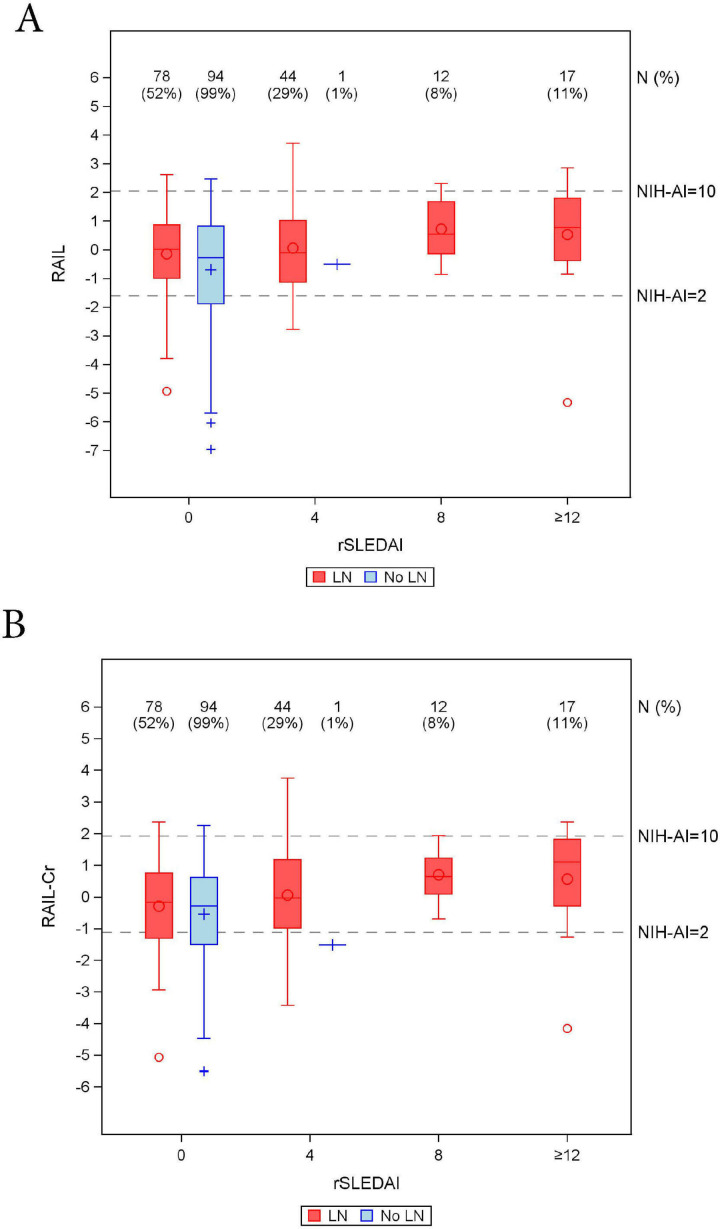
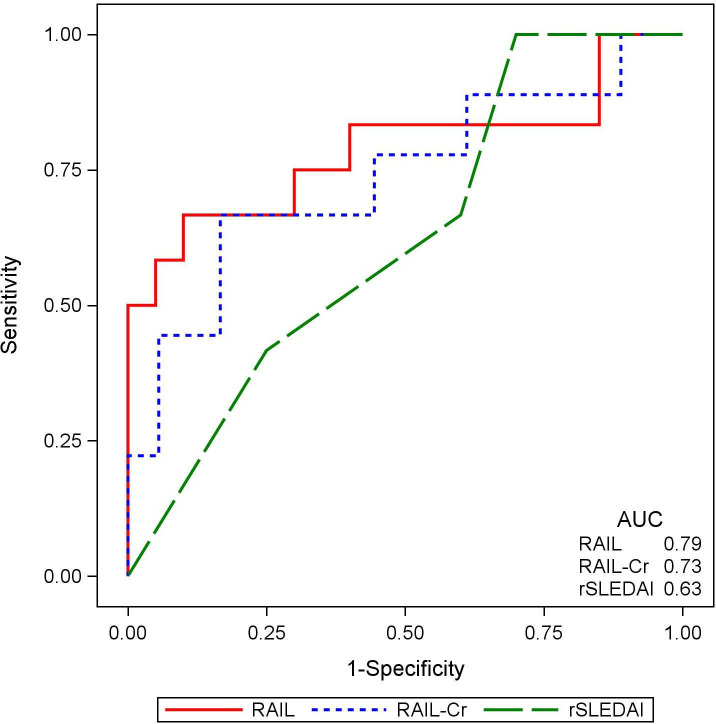
115 patients were included in the analysis (47 patients without and 68 with LN). RAIL, RAIL-Cr and rSLEDAI scores at the time (±3 months) of kidney biopsy were available for 32 patients. Median rSLEDAI, RAIL and RAIL-Cr values were 4, -0.04, 0.02 for inactive LN, 12, 0.7 and 0.9 for low-moderate LN activity and 12, 2 and 1.8 for high LN activity, respectively. The area under the receiver operating characteristic curve (AUC) to capture high LN activity was the lowest for the rSLEDAI (AUC=0.62), followed by the RAIL-Cr (AUC=0.73) and RAIL (AUC=0.79). Notably, when testing urine samples collected during routine clinic visits remote (>3 months) from a kidney biopsy, 50% patients with rSLEDAI scores of 0 had RAIL scores reflecting low-moderate LN activity.
Monitoring of renal inflammation in children and adolescents with SLE can be improved by the measurement of urine biomarkers. The RAIL may constitute important auxiliary tool for the surveillance of LN in a clinical setting and assist with the decision to obtain a kidney biopsy.
狼疮肾活动指数(RAIL)通过检测 6 种生物标志物(中性粒细胞明胶酶相关脂质运载蛋白、单核细胞趋化蛋白-1、肾损伤分子-1、脂联素、血红素结合蛋白、铜蓝蛋白)的尿液水平来衡量狼疮肾炎(LN)的活动程度。我们旨在比较 RAIL 和系统性红斑狼疮疾病活动指数(rSLEDAI)的肾域评分在检测 LN 活动中的准确性。
对伴有或不伴有 LN 的儿童起病性系统性红斑狼疮患者的随机尿样进行检测,并计算 RAIL 评分和标准化尿液肌酐的 RAIL(RAIL-Cr)评分。临床 LN 活动通过 rSLEDAI 进行评估,根据 NIH 活动指数评分将 LN 的组织学活动分为无/低中度/高度,分别为<2/2-10/>10。
共纳入 115 例患者进行分析(47 例无 LN,68 例有 LN)。32 例患者的肾活检时(±3 个月)可获得 rSLEDAI、RAIL 和 RAIL-Cr 评分。无 LN 患者的中位 rSLEDAI、RAIL 和 RAIL-Cr 值分别为 4、-0.04、0.02,低中度 LN 活动患者分别为 12、0.7、0.9,高度 LN 活动患者分别为 12、2、1.8。高 LN 活动的受试者工作特征曲线(ROC)下面积(AUC)最低的是 rSLEDAI(AUC=0.62),其次是 RAIL-Cr(AUC=0.73)和 RAIL(AUC=0.79)。值得注意的是,当检测来自肾活检的时间(>3 个月)较远的常规临床就诊时收集的尿液样本时,50%rSLEDAI 评分为 0 的患者的 RAIL 评分反映了低中度 LN 活动。
通过测量尿液生物标志物,可以改善儿童和青少年系统性红斑狼疮患者的肾脏炎症监测。RAIL 可能是临床监测 LN 的重要辅助工具,并有助于决定是否进行肾活检。