Department of Obstetrics and Gynecology, Shanghai General Hospital, Shanghai Jiao Tong University School of Medicine, Shanghai, China.
Department of General Surgery, Shanghai General Hospital, Shanghai Jiao Tong University School of Medicine, Shanghai, China.
Front Public Health. 2022 Apr 28;10:870301. doi: 10.3389/fpubh.2022.870301. eCollection 2022.
We aim to build a students' own engagement in original microbiological course-based undergraduate research experience (CUREs) model served two research and teaching scientific purposes including students' scientific literacy skills and instructors' role, which could further be applied as contribution to broader scientific knowledge and conduct novel research in their future research experience and careers.
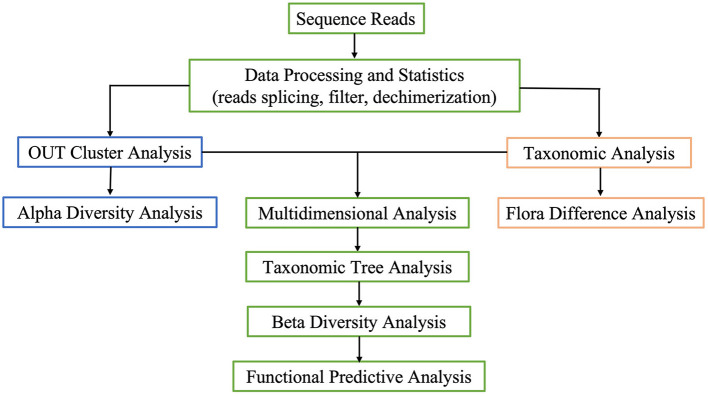
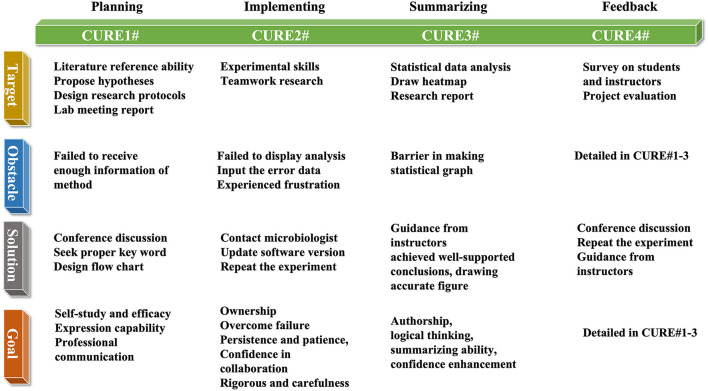
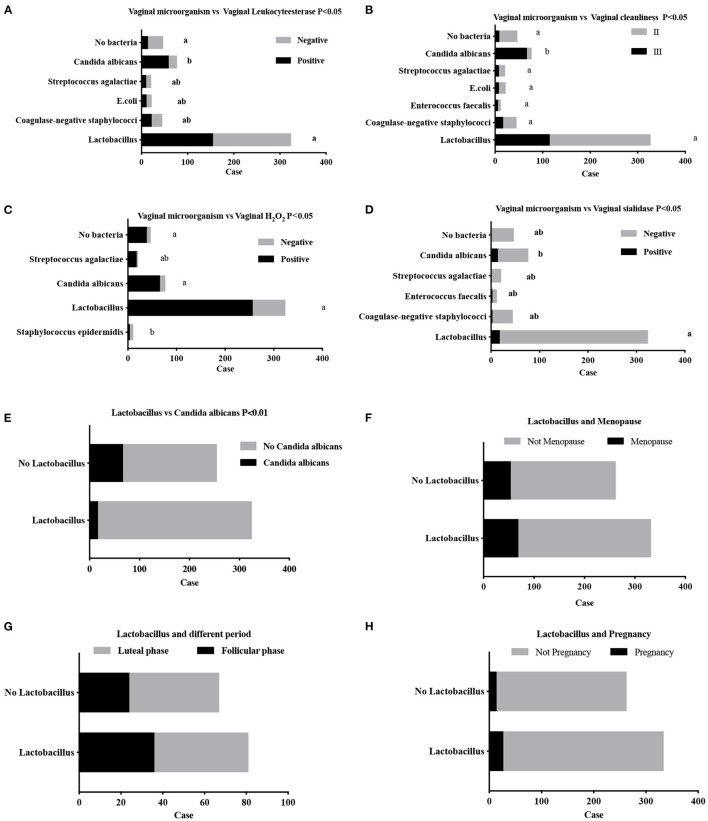
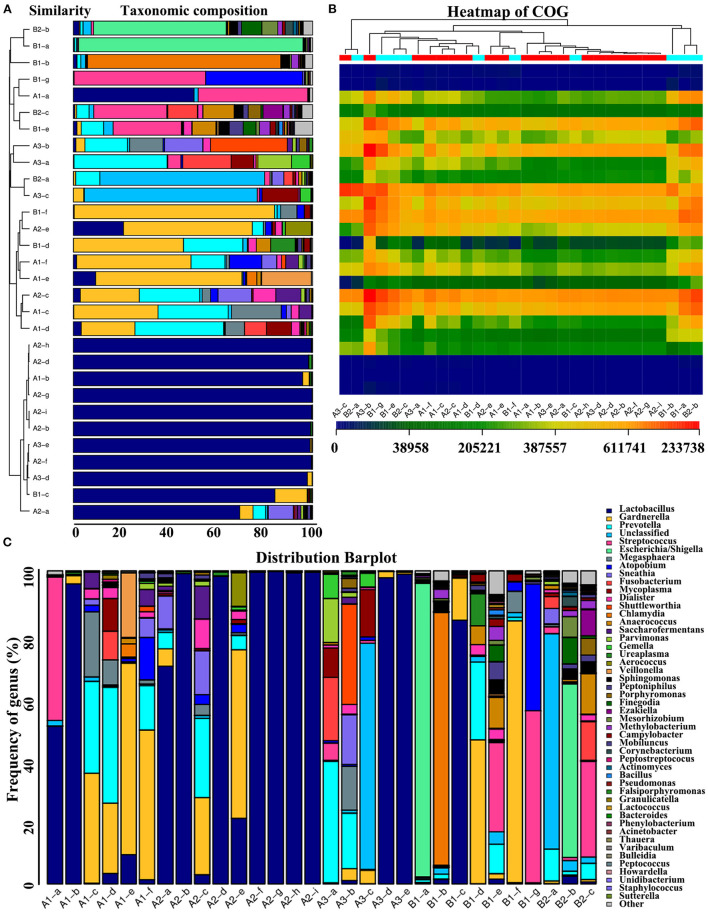
We describe a student-driven CUREs model on the microorganism species in female vaginal using general bacterial culture techniques and high-throughput 16S rRNA gene amplicon sequencing to enable students to center experimental research method under the direction of instructors. A total of 8 undergraduate students and 5 instructors from Shanghai Jiao Tong University School of Medicine participated in the project. The CUREs were divided in four operating scopes: project planning, implementation, summarizing and feedback phases. Instructors help students to develop learning research goals.
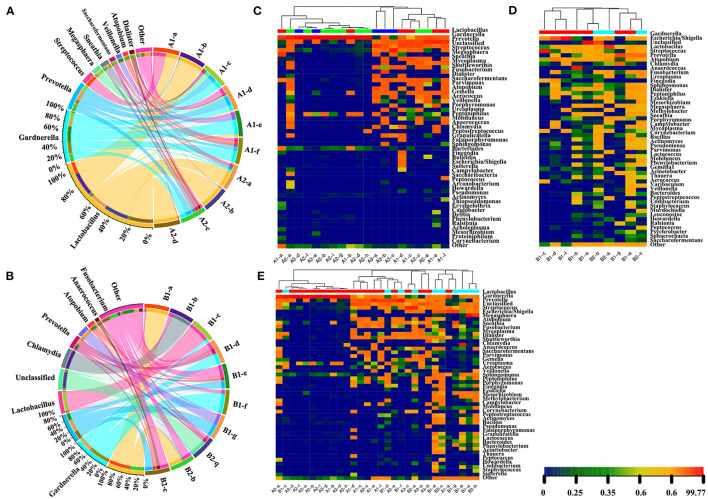
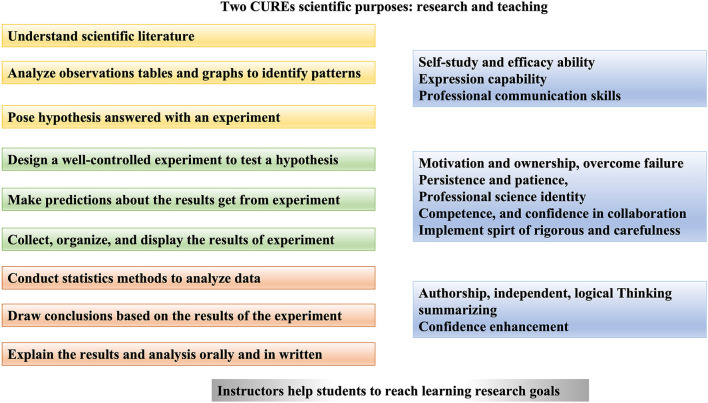
This project helped students to gain "hard skills" experiences in scientific theoretical research process and technical practices. Students reached the conclusion that species dominated the primary vaginal microbiota in reproductive-age women, 16S rRNA sequencing is a method widely applied for microbiology detection. CUREs also increased students' engagement in scientific experiments and promote 3 learning goals in "soft skills": (1) Develop students' self-study and efficacy ability, expression capability and professional research communication skills; (2) Strengthen students' motivation and ownership in science research, overcoming failure, benefitting persistence and patience, building professional science identity, competence, and confidence in collaboration, implement spirit of rigorous and carefulness; (3) Obtain authorship, independent and logical thinking capability, summarizing ability and confidence enhancement. Instructors proposed guiding research question for the students and determine evidence in achieving pedagogical goals in CUREs.
Our microbiological CUREs project served two scientific purposes: research and teaching, which increase students' engagement in promoting learning gains in scientific research skills, ownership, identity development, and spirit of motivation, self-efficacy, persistence, collaboration, communication, as well as opportunities to make relevant scientific discoveries. These abilities equipped them with essential foundation for the subsequent collaborative experiments and future scientific study.
我们旨在建立一个学生自主参与原始微生物课程基础本科研究体验(CUREs)的模型,该模型有两个研究和教学的科学目的,包括学生的科学素养技能和教师的角色,这可以进一步应用于更广泛的科学知识,并在他们未来的研究经验和职业生涯中进行新的研究。
我们描述了一个基于学生驱动的 CUREs 模型,该模型基于一般细菌培养技术和高通量 16S rRNA 基因扩增子测序,使学生能够在教师的指导下将实验研究方法置于中心位置。上海交通大学医学院共有 8 名本科生和 5 名教师参与了该项目。CUREs 分为四个操作范围:项目规划、实施、总结和反馈阶段。教师帮助学生制定学习研究目标。
该项目帮助学生获得了科学理论研究过程和技术实践的“硬技能”经验。学生得出结论,在育龄妇女的主要阴道微生物群中,主导物种是 16S rRNA 测序是一种广泛应用于微生物检测的方法。CUREs 还增加了学生对科学实验的参与度,并促进了“软技能”中的 3 个学习目标:(1)培养学生的自学能力和自我效能感,表达能力和专业研究沟通技巧;(2)加强学生对科学研究的动机和所有权,克服失败,有利于坚持和耐心,建立专业的科学身份、能力和合作信心,实施严谨和细心的精神;(3)获得著作权、独立和逻辑思维能力、总结能力和信心增强。教师为学生提出了指导研究问题,并确定了在 CUREs 中实现教学目标的证据。
我们的微生物 CUREs 项目有两个科学目的:研究和教学,这增加了学生在促进科学研究技能、所有权、身份发展和动机、自我效能、坚持、合作、沟通以及进行相关科学发现的机会方面的参与度。这些能力为他们后续的合作实验和未来的科学研究奠定了必要的基础。