Kohlmeyer Jordan L, Kaemmer Courtney A, Lingo Joshua J, Voigt Ellen, Leidinger Mariah R, McGivney Gavin R, Scherer Amanda, Koppenhafer Stacia L, Gordon David J, Breheny Patrick, Meyerholz David K, Tanas Munir R, Dodd Rebecca D, Quelle Dawn E
Molecular Medicine Graduate Program, The University of Iowa, Iowa City, Iowa, USA.
The Department of Neuroscience and Pharmacology, The University of Iowa, Iowa City, Iowa, USA.
Neurooncol Adv. 2022 Apr 9;4(1):vdac047. doi: 10.1093/noajnl/vdac047. eCollection 2022 Jan-Dec.
Malignant peripheral nerve sheath tumors (MPNSTs) are aggressive sarcomas with complex molecular and genetic alterations. Powerful tumor suppressors and are commonly disrupted along with , a gene that encodes a negative regulator of Ras. Many additional factors have been implicated in MPNST pathogenesis. A greater understanding of critical drivers of MPNSTs is needed to guide more informed targeted therapies for patients. RABL6A is a newly identified driver of MPNST cell survival and proliferation whose role in the disease is unknown.
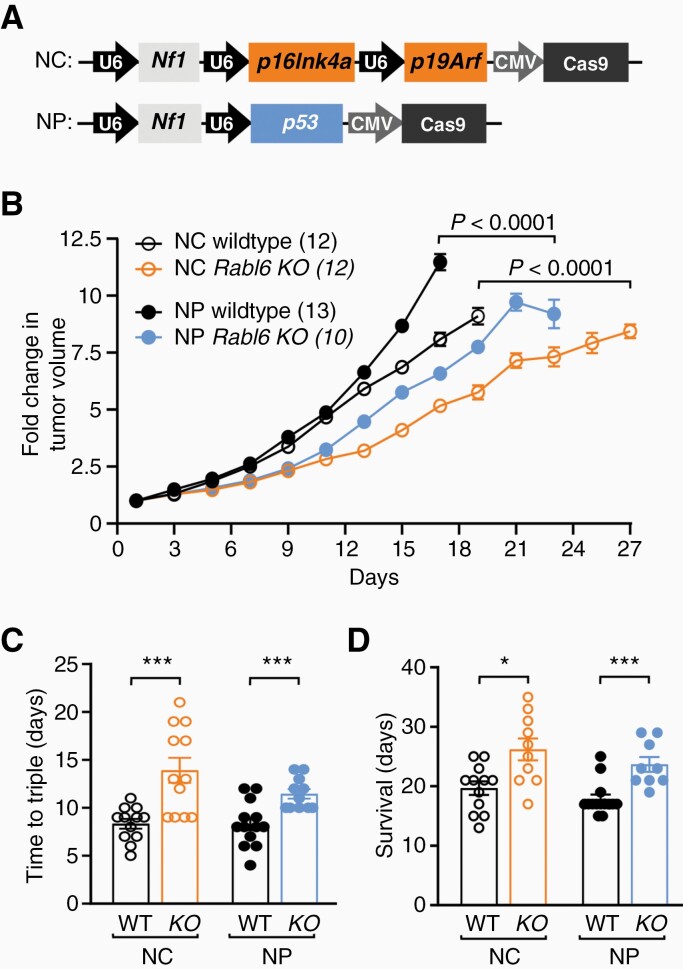
Using CRISPR-Cas9 targeting of or in the mouse sciatic nerve to form MPNSTs, we investigated the biological significance of RABL6A in MPNST development. Terminal tumors were evaluated by western blot, qRT-PCR, and immunohistochemistry.
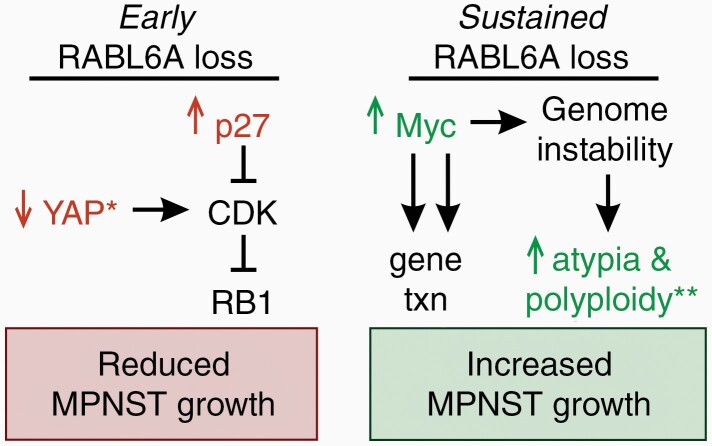
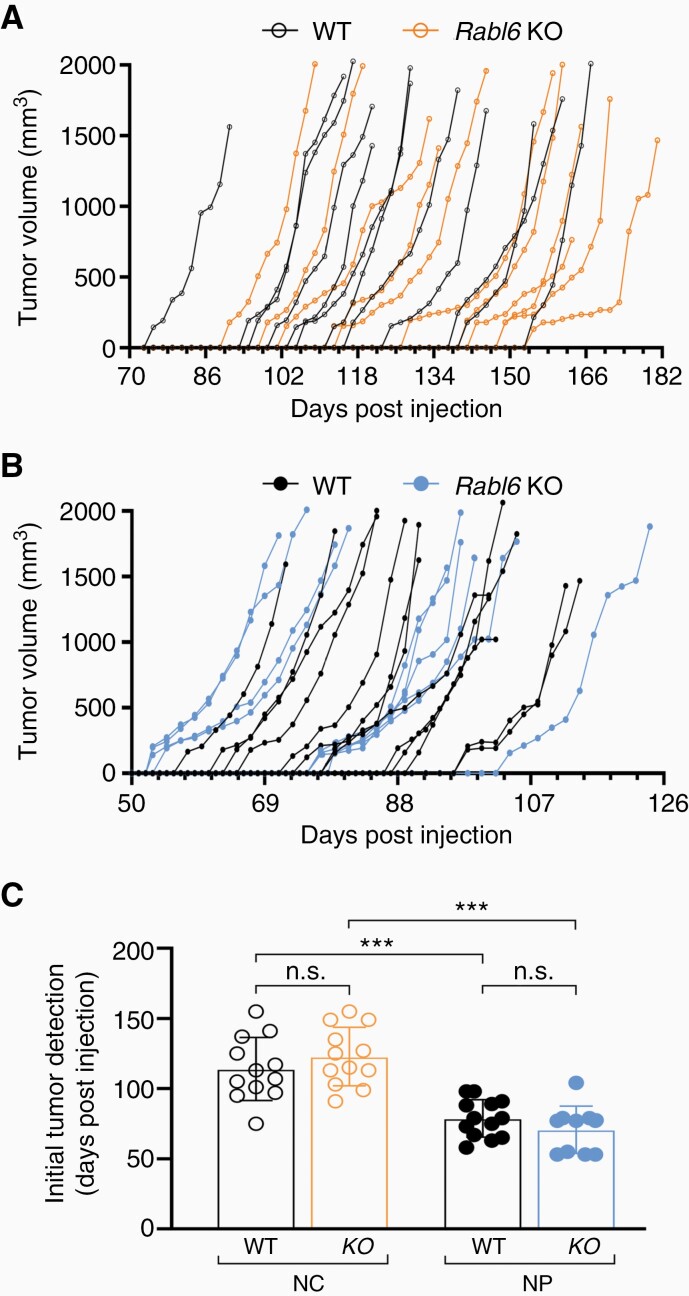
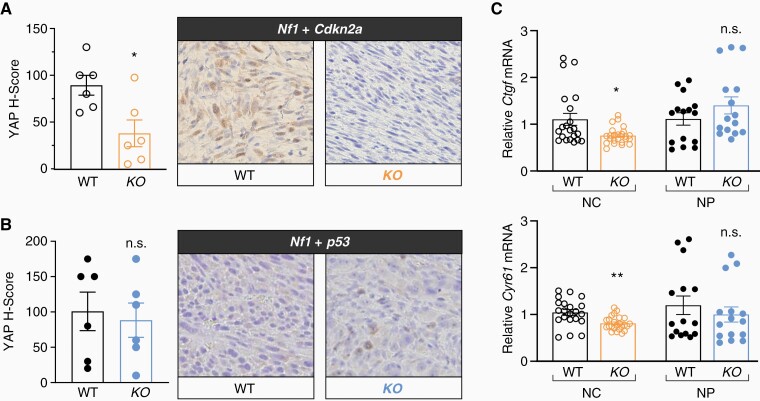
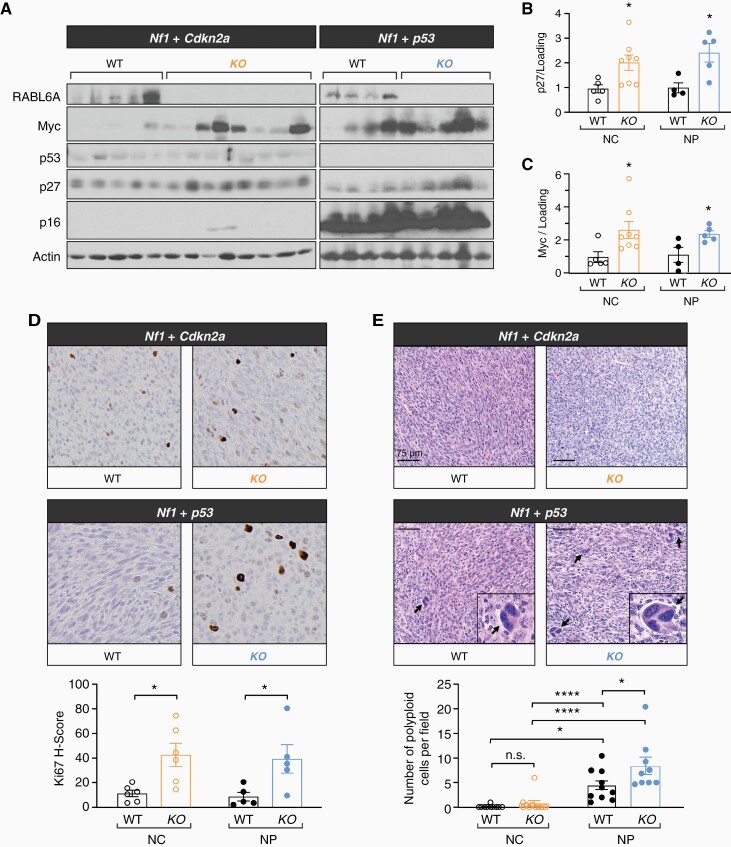
Mice lacking displayed slower tumor progression and extended survival relative to wildtype animals in both genetic contexts. YAP oncogenic activity was selectively downregulated in -null, lesions whereas loss of RABL6A caused upregulation of the CDK inhibitor, p27, in all tumors. Paradoxically, both models displayed elevated Myc protein and Ki67 staining in terminal tumors lacking RABL6A. In tumors, cellular atypia and polyploidy were evident and increased by RABL6A loss.
These findings demonstrate that RABL6A is required for optimal progression of NF1 mutant MPNSTs in both and inactivated settings. However, sustained RABL6A loss may provide selective pressure for unwanted alterations, including increased Myc, cellular atypia, and polyploidy, that ultimately promote a hyper-proliferative tumor phenotype akin to drug-resistant lesions.
恶性外周神经鞘瘤(MPNSTs)是具有复杂分子和基因改变的侵袭性肉瘤。强大的肿瘤抑制因子通常与NF1一起被破坏,NF1是一种编码Ras负调节因子的基因。许多其他因素也与MPNST的发病机制有关。需要更深入了解MPNST的关键驱动因素,以指导为患者制定更明智的靶向治疗方案。RABL6A是新发现的MPNST细胞存活和增殖的驱动因子,其在该疾病中的作用尚不清楚。
利用CRISPR-Cas9靶向小鼠坐骨神经中的Nf1或Trp53以形成MPNST,我们研究了RABL6A在MPNST发生发展中的生物学意义。通过蛋白质免疫印迹、qRT-PCR和免疫组织化学对终末肿瘤进行评估。
在两种基因背景下,与野生型动物相比,缺乏Nf1的小鼠肿瘤进展较慢,生存期延长。在Nf1缺失、Trp53完整的病变中,YAP致癌活性选择性下调,而RABL6A缺失导致所有肿瘤中细胞周期蛋白依赖性激酶抑制剂p27上调。矛盾的是,在缺乏RABL6A的终末肿瘤中,两种模型均显示Myc蛋白和Ki67染色升高。在Trp53肿瘤中,细胞异型性和多倍体明显,且因RABL6A缺失而增加。
这些发现表明,在Nf1和Trp53失活的情况下,RABL6A是NF1突变型MPNST最佳进展所必需的。然而,持续的RABL6A缺失可能为不良改变提供选择性压力,包括Myc增加、细胞异型性和多倍体,最终促进类似于耐药性病变的高增殖肿瘤表型。