Ramos Rodrigo Nalio, Tosch Caroline, Kotsias Fiorella, Claudepierre Marie-Christine, Schmitt Doris, Remy-Ziller Christelle, Hoffmann Chantal, Ricordel Marine, Nourtier Virginie, Farine Isabelle, Laruelle Laurence, Hortelano Julie, Spring-Giusti Clementine, Sedlik Christine, Le Tourneau Christophe, Hoffmann Caroline, Silvestre Nathalie, Erbs Philippe, Bendjama Kaidre, Thioudellet Christine, Quemeneur Eric, Piaggio Eliane, Rittner Karola
Institut Curie INSERM U932, and Centre d'Investigation Clinique Biotherapie CICBT 1428 PSL Research University Paris France.
Present address: Laboratório de Investigação Médica em Patogênese e Terapia dirigida em Onco-Imuno-Hematologia Hospital das Clínicas Faculdade de Medicina da Universidade de São Paulo (HCFMUSP) São Paulo Brazil.
Clin Transl Immunology. 2022 May 8;11(5):e1392. doi: 10.1002/cti2.1392. eCollection 2022.
Antitumor viral vaccines, and more particularly poxviral vaccines, represent an active field for clinical development and translational research. To improve the efficacy and treatment outcome, new viral vectors are sought, with emphasis on their abilities to stimulate innate immunity, to display tumor antigens and to induce a specific T-cell response.
We screened for a new poxviral backbone with improved innate and adaptive immune stimulation using IFN-α secretion levels in infected PBMC cultures as selection criteria. Assessment of virus effectiveness was made and .
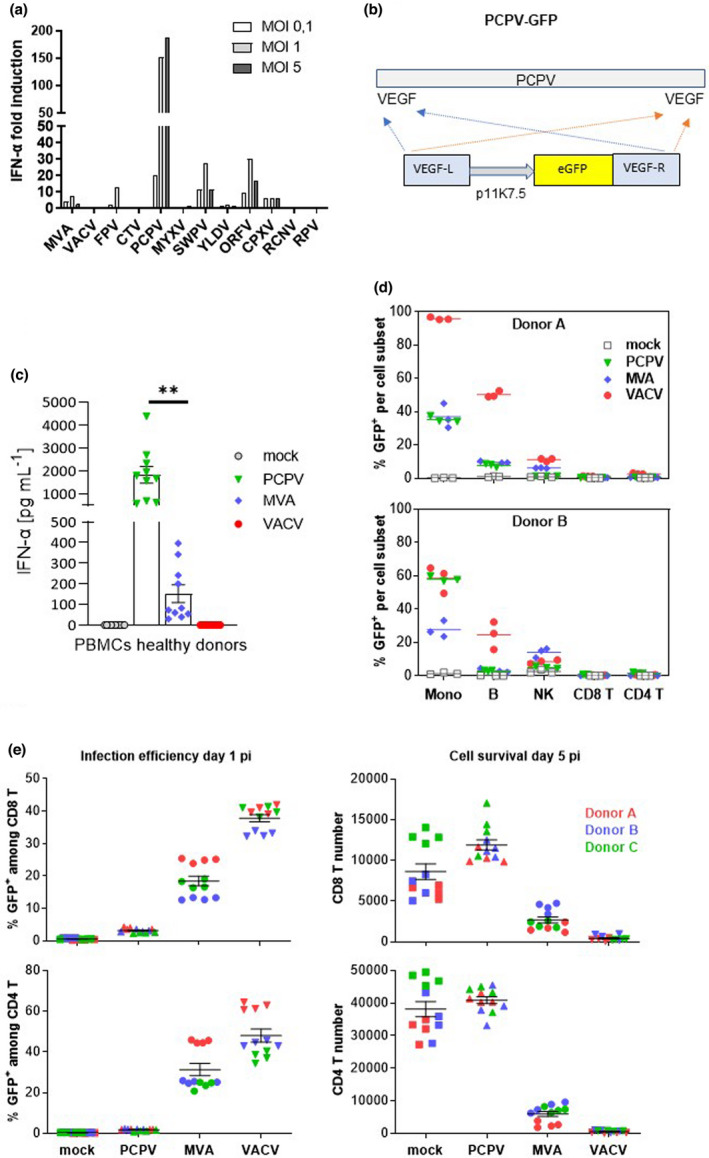
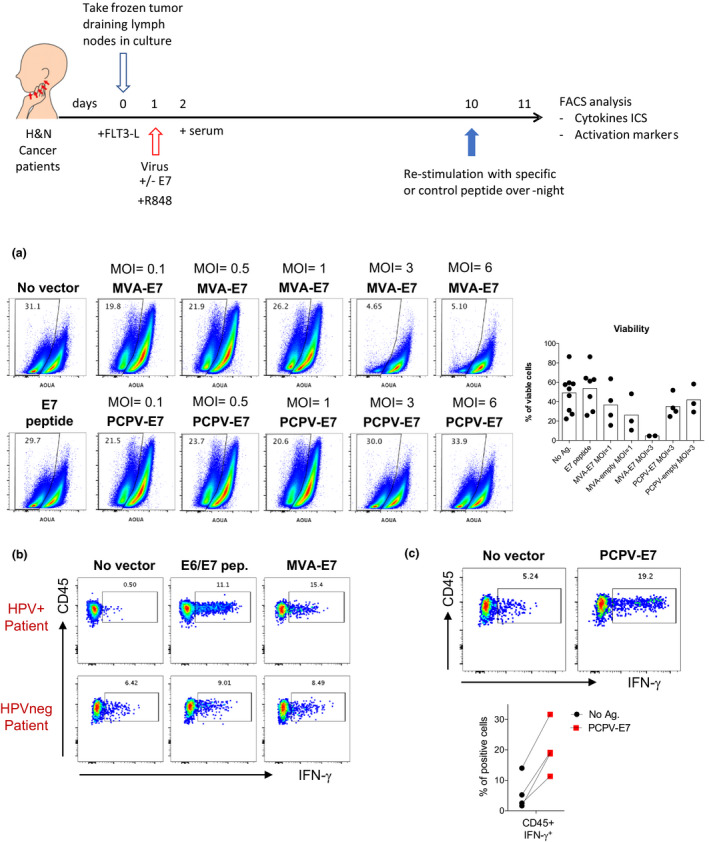
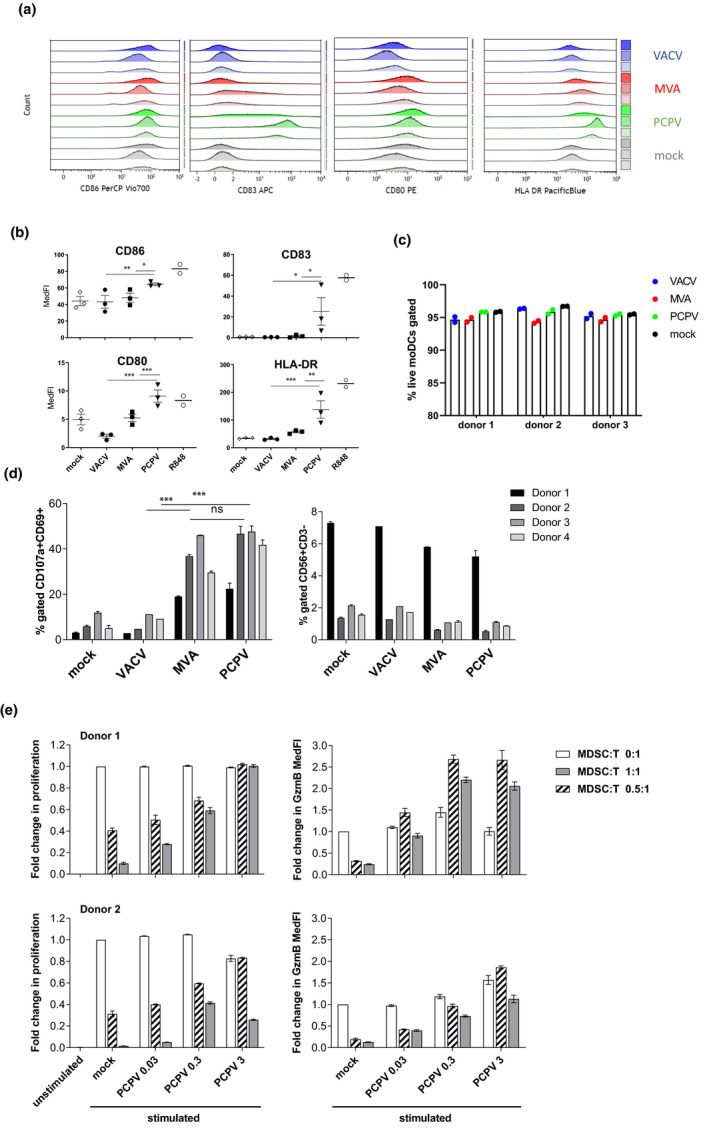
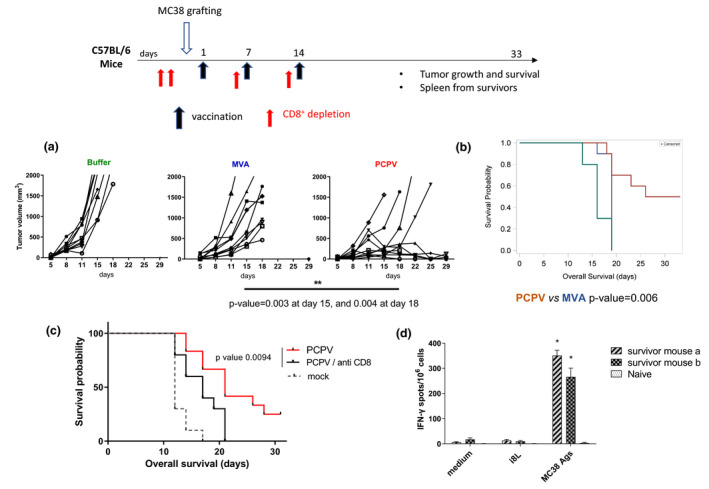
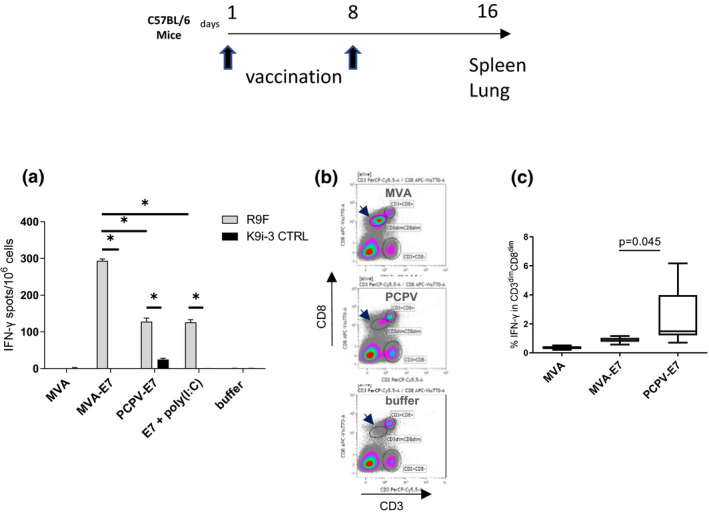
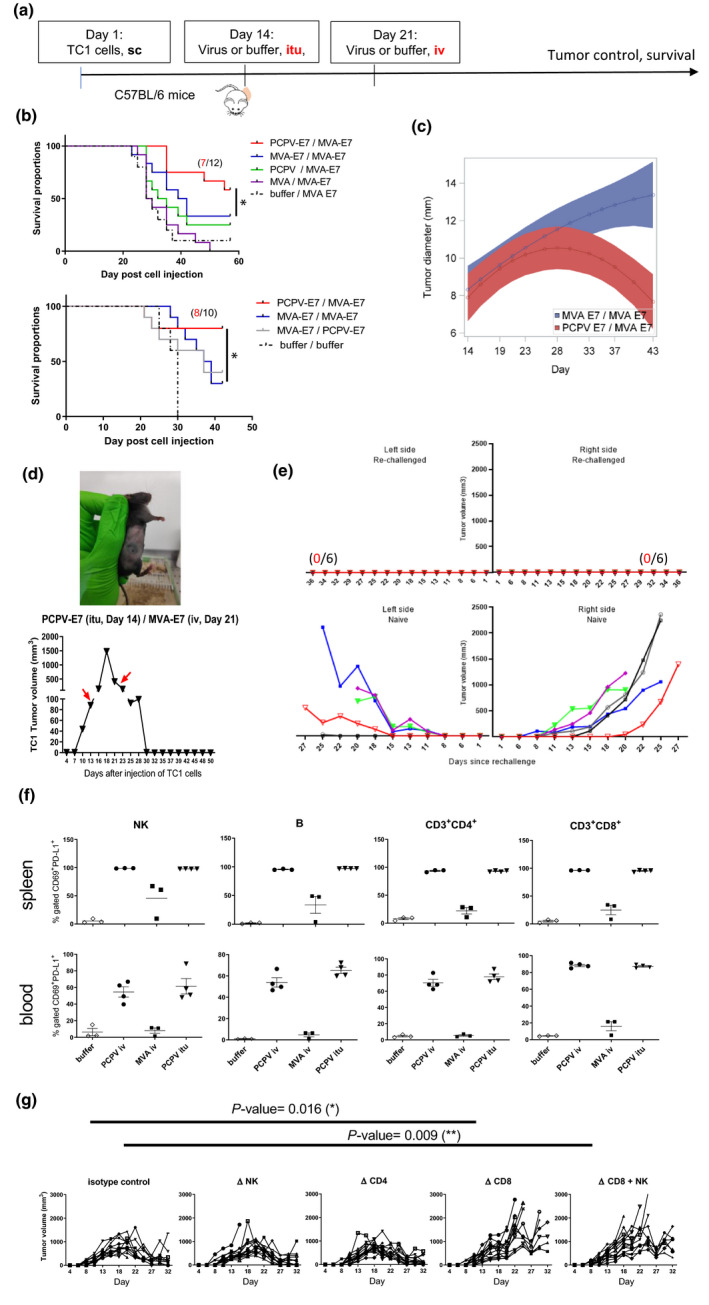
The bovine pseudocowpox virus (PCPV) stood out among several poxviruses for its ability to induce significant secretion of IFN-α. PCPV produced efficient activation of human monocytes and dendritic cells, degranulation of NK cells and reversed MDSC-induced T-cell suppression, without being offensive to activated T cells. A PCPV-based vaccine, encoding the HPV16 E7 protein (PCPV-E7), stimulated strong antigen-specific T-cell responses in TC1 tumor-bearing mice. Complete regression of tumors was obtained in a CD8 T-cell-dependent manner after intratumoral injection of PCPV-E7, followed by intravenous injection of the cancer vaccine MVA-E7. PCPV also proved active when injected repeatedly intratumorally in MC38 tumor-bearing mice, generating tumor-specific T-cell responses without encoding a specific MC38 antigen. From a translational perspective, we demonstrated that PCPV-E7 effectively stimulated IFN-γ production by T cells from tumor-draining lymph nodes of HPV-infected cancer patients.
We propose PCPV as a viral vector suitable for vaccination in the field of personalised cancer vaccines, in particular for heterologous prime-boost regimens.
抗肿瘤病毒疫苗,尤其是痘病毒疫苗,是临床开发和转化研究的一个活跃领域。为了提高疗效和治疗效果,人们正在寻找新的病毒载体,重点关注其刺激先天免疫、展示肿瘤抗原和诱导特异性T细胞反应的能力。
我们以感染的外周血单核细胞(PBMC)培养物中干扰素-α(IFN-α)分泌水平为选择标准,筛选具有改善的先天和适应性免疫刺激作用的新型痘病毒骨架。对病毒有效性进行了评估。
牛假性牛痘病毒(PCPV)在几种痘病毒中脱颖而出,因其能够诱导显著的IFN-α分泌。PCPV能有效激活人单核细胞和树突状细胞,使自然杀伤细胞(NK细胞)脱颗粒,并逆转髓系来源的抑制性细胞(MDSC)诱导的T细胞抑制,而对活化的T细胞无攻击性。一种基于PCPV的疫苗,编码人乳头瘤病毒16型(HPV16)E7蛋白(PCPV-E7),在携带TC1肿瘤的小鼠中刺激了强烈的抗原特异性T细胞反应。在瘤内注射PCPV-E7,随后静脉注射癌症疫苗MVA-E7后,以CD8 T细胞依赖的方式实现了肿瘤的完全消退。当在携带MC38肿瘤的小鼠中瘤内反复注射时,PCPV也被证明具有活性,在不编码特定MC38抗原的情况下产生肿瘤特异性T细胞反应。从转化的角度来看,我们证明了PCPV-E7能有效刺激HPV感染的癌症患者肿瘤引流淋巴结中的T细胞产生IFN-γ。
我们提出PCPV作为一种病毒载体,适用于个性化癌症疫苗领域的疫苗接种,特别是用于异源初免-加强方案。