Zhang Guojin, Deng Liangna, Zhang Jing, Cao Yuntai, Li Shenglin, Ren Jialiang, Qian Rong, Peng Shengkun, Zhang Xiaodi, Zhou Junlin, Zhang Zhuoli, Kong Weifang, Pu Hong
Department of Radiology, Sichuan Provincial People's Hospital, University of Electronic Science and Technology of China, Chengdu, China.
Department of Radiology, Chinese Academy of Sciences Sichuan Translational Medicine Research Hospital, Chengdu, China.
Front Oncol. 2022 Apr 29;12:889293. doi: 10.3389/fonc.2022.889293. eCollection 2022.
This study aimed to noninvasively predict the mutation status of epidermal growth factor receptor (EGFR) molecular subtype in lung adenocarcinoma based on CT radiomics features.
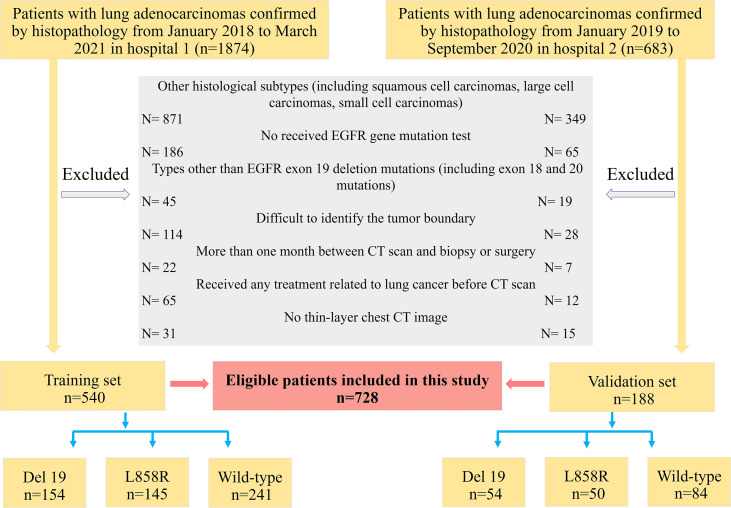
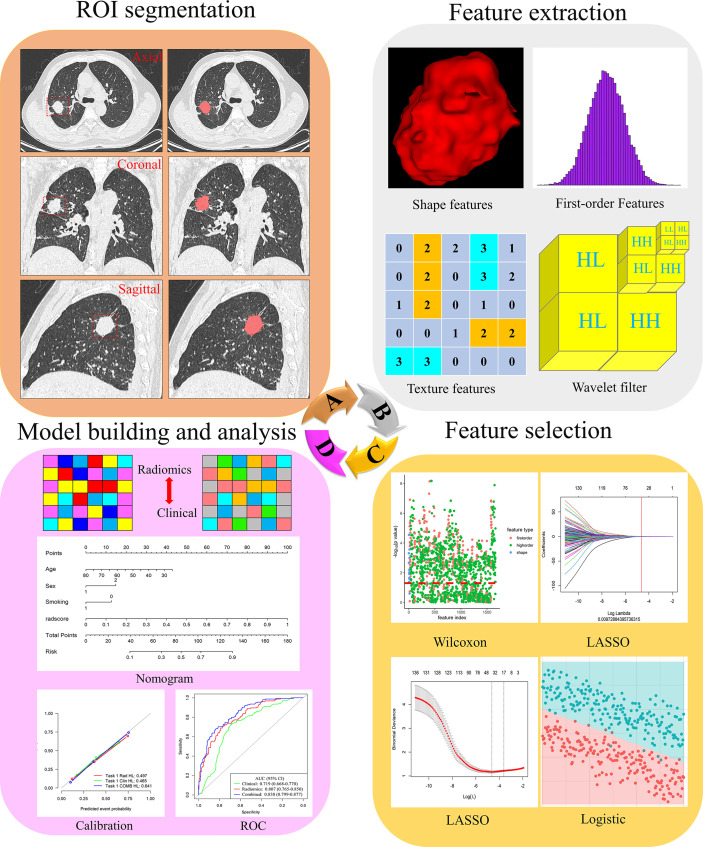
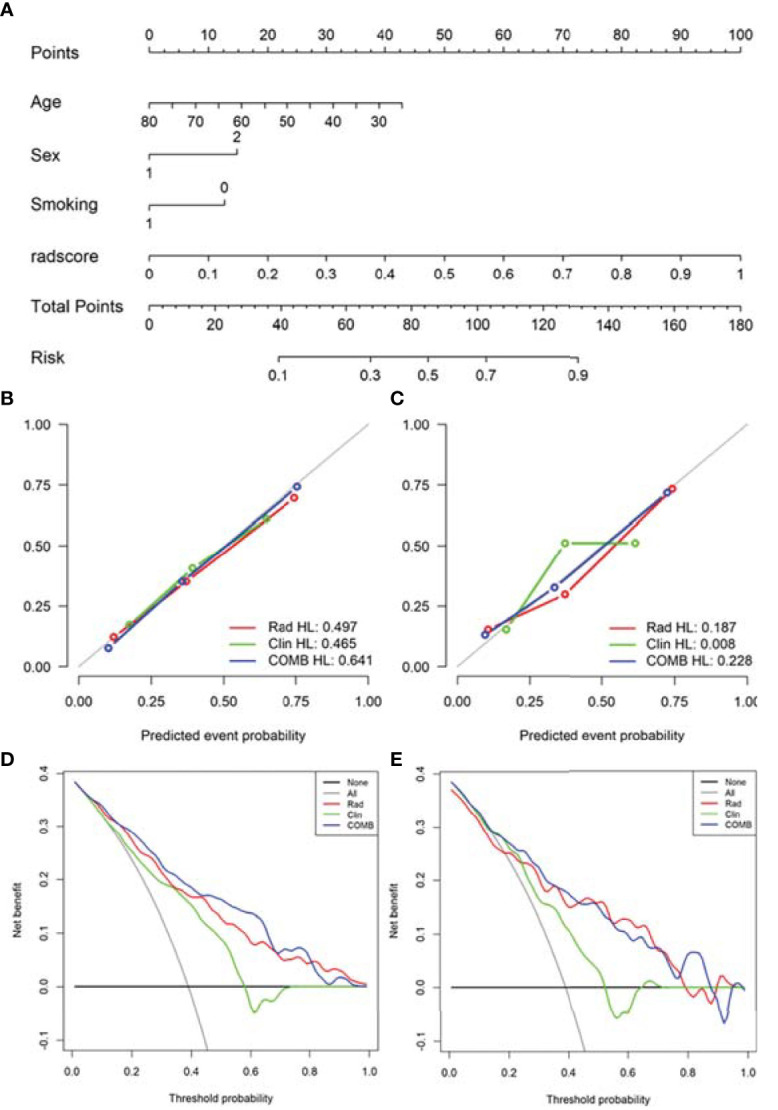
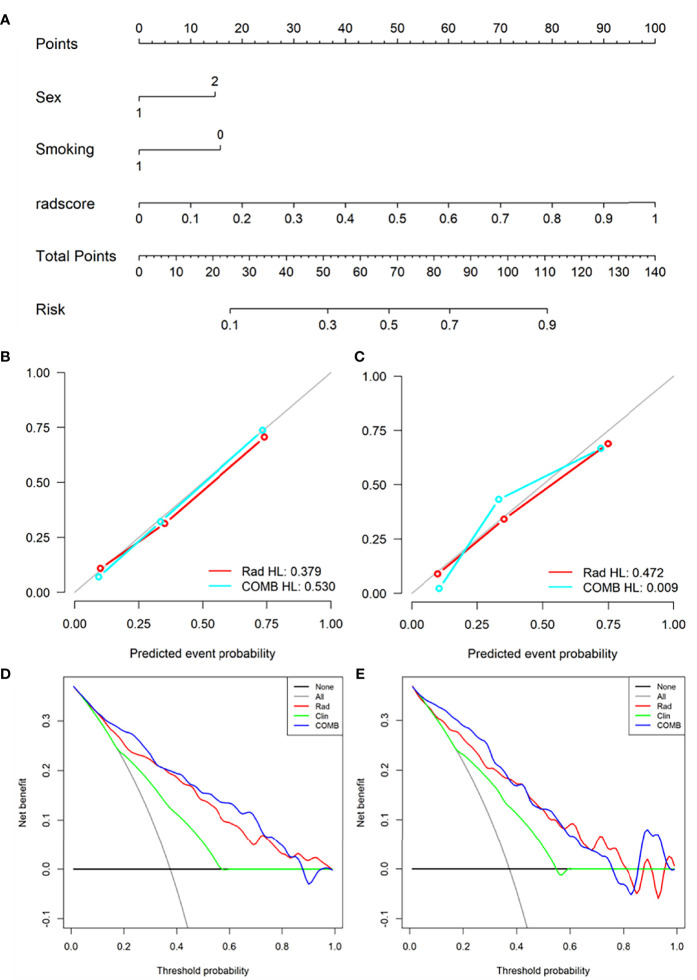
In total, 728 patients with lung adenocarcinoma were included, and divided into three groups according to EGFR mutation subtypes. 1727 radiomics features were extracted from the three-dimensional images of each patient. Wilcoxon test, least absolute shrinkage and selection operator regression, and multiple logistic regression were used for feature selection. ROC curve was used to evaluate the predictive performance of the model. Nomogram was constructed by combining radiomics features and clinical risk factors. Calibration curve was used to evaluate the goodness of fit of the model. Decision curve analysis was used to evaluate the clinical applicability of the model.
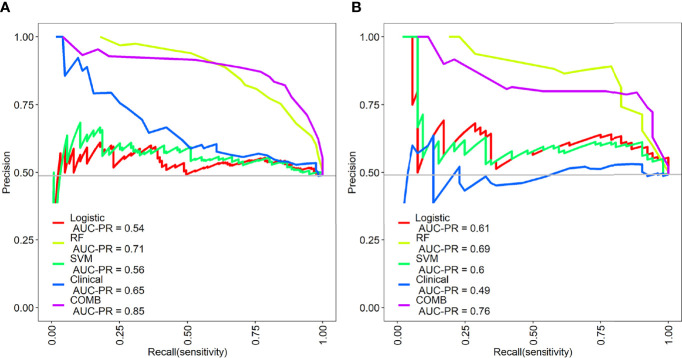
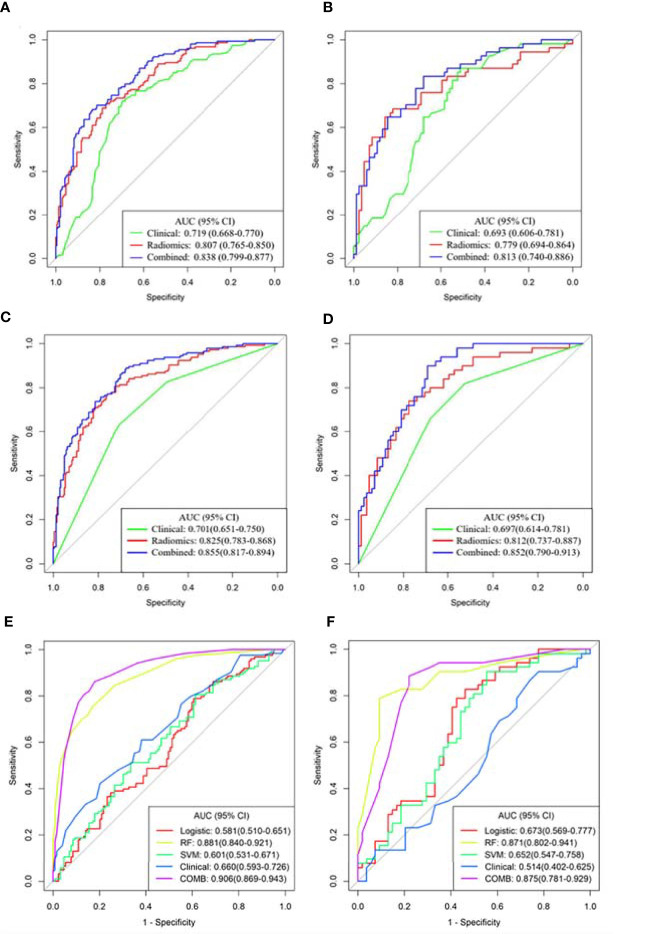
There were three, two, and one clinical factor and fourteen, thirteen, and four radiomics features, respectively, which were significantly related to each EGFR molecular subtype. Compared with the clinical and radiomics models, the combined model had the highest predictive performance in predicting EGFR molecular subtypes [Del-19 mutation wild-type, AUC=0.838 (95% CI, 0.799-0.877); L858R mutation wild-type, AUC=0.855 (95% CI, 0.817-0.894); and Del-19 mutation L858R mutation, AUC=0.906 (95% CI, 0.869-0.943), respectively], and it has a stable performance in the validation set [AUC was 0.813 (95% CI, 0.740-0.886), 0.852 (95% CI, 0.790-0.913), and 0.875 (95% CI, 0.781-0.929), respectively].
Our combined model showed good performance in predicting EGFR molecular subtypes in patients with lung adenocarcinoma. This model can be applied to patients with lung adenocarcinoma.
本研究旨在基于CT影像组学特征对肺腺癌中表皮生长因子受体(EGFR)分子亚型的突变状态进行无创预测。
共纳入728例肺腺癌患者,根据EGFR突变亚型分为三组。从每位患者的三维图像中提取1727个影像组学特征。采用Wilcoxon检验、最小绝对收缩和选择算子回归以及多元逻辑回归进行特征选择。采用ROC曲线评估模型的预测性能。通过结合影像组学特征和临床危险因素构建列线图。采用校准曲线评估模型的拟合优度。采用决策曲线分析评估模型的临床适用性。
分别有3个、2个和1个临床因素以及14个、13个和4个影像组学特征与各EGFR分子亚型显著相关。与临床模型和影像组学模型相比,联合模型在预测EGFR分子亚型方面具有最高的预测性能[Del-19突变 vs 野生型,AUC=0.838(95%CI,0.799-0.877);L858R突变 vs 野生型,AUC=0.855(95%CI,0.817-0.894);Del-19突变 vs L858R突变,AUC=0.906(95%CI,0.869-0.943)],且在验证集中具有稳定的性能[AUC分别为0.813(95%CI,0.740-0.886)、0.852(95%CI,0.790-0.913)和0.875(95%CI,0.781-0.929)]。
我们的联合模型在预测肺腺癌患者的EGFR分子亚型方面表现良好。该模型可应用于肺腺癌患者。