Department of Medical and Surgical Sciences (DIMEC), University of Bologna, 40138, Bologna, Italy.
Center for Applied Biomedical Research, University of Bologna, 40138, Bologna, Italy.
Sci Rep. 2022 May 16;12(1):8020. doi: 10.1038/s41598-022-11620-y.
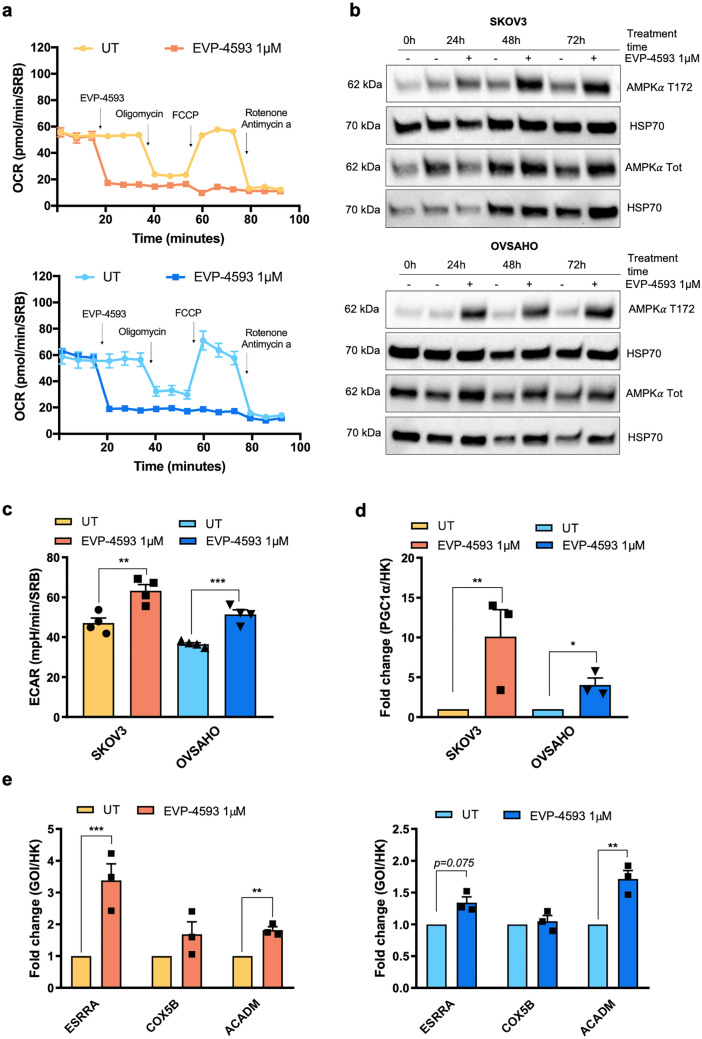
Anticancer strategies aimed at inhibiting Complex I of the mitochondrial respiratory chain are increasingly being attempted in solid tumors, as functional oxidative phosphorylation is vital for cancer cells. Using ovarian cancer as a model, we show that a compensatory response to an energy crisis induced by Complex I genetic ablation or pharmacological inhibition is an increase in the mitochondrial biogenesis master regulator PGC1α, a pleiotropic coactivator of transcription regulating diverse biological processes within the cell. We associate this compensatory response to the increase in PGC1α target gene expression, setting the basis for the comprehension of the molecular pathways triggered by Complex I inhibition that may need attention as drawbacks before these approaches are implemented in ovarian cancer care.
针对抑制线粒体呼吸链复合物 I 的抗癌策略越来越多地应用于实体肿瘤,因为功能氧化磷酸化对于癌细胞至关重要。我们以卵巢癌为模型,表明由复合物 I 遗传缺失或药理学抑制引起的能量危机的代偿反应是线粒体生物发生主调控因子 PGC1α 的增加,PGC1α 是转录的多效共激活因子,调节细胞内的多种生物学过程。我们将这种代偿反应与 PGC1α 靶基因表达的增加联系起来,为理解复合物 I 抑制引发的分子途径奠定了基础,这些分子途径可能需要在这些方法应用于卵巢癌治疗之前引起关注。