Department of experimental Psychology, Instituto de Psicologia, Universidade de São Paulo, São Paulo, Brazil.
Natura Cosméticos S.A., São Paulo, Brazil.
PLoS One. 2022 May 17;17(5):e0264261. doi: 10.1371/journal.pone.0264261. eCollection 2022.
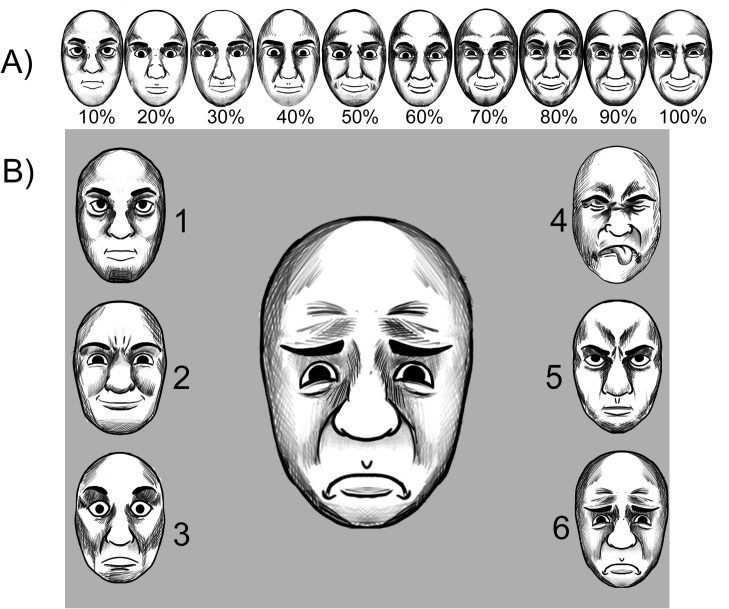
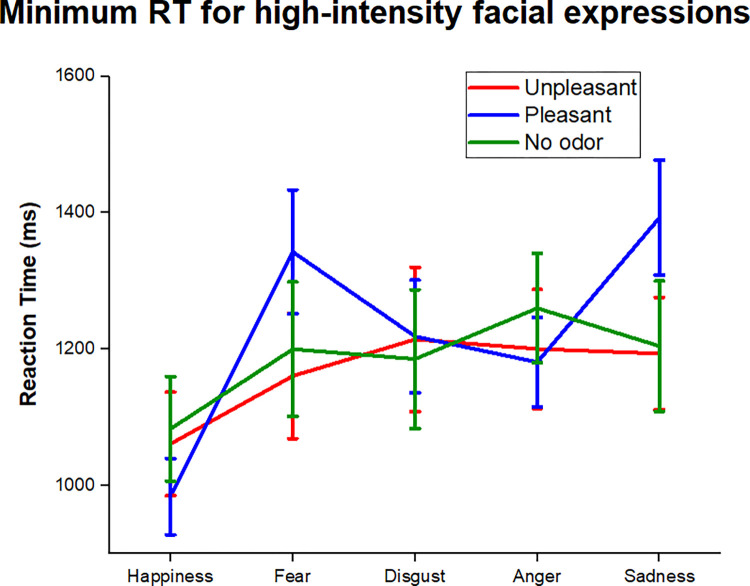
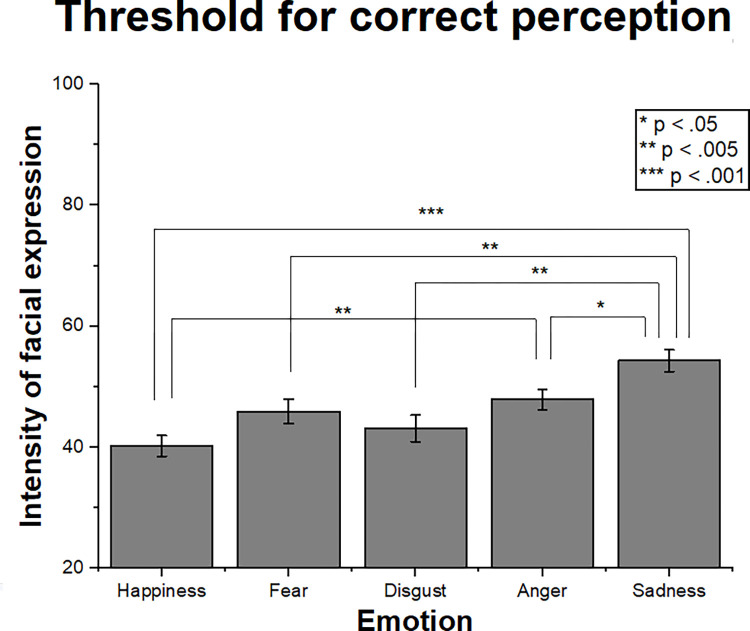
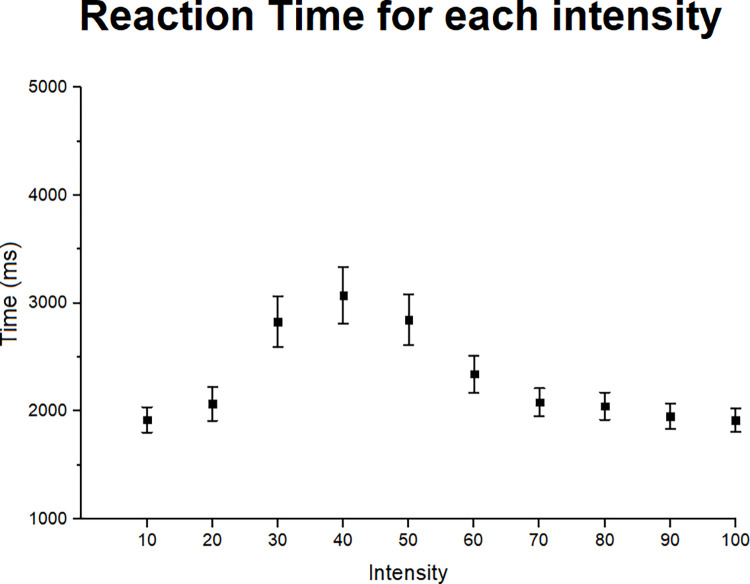
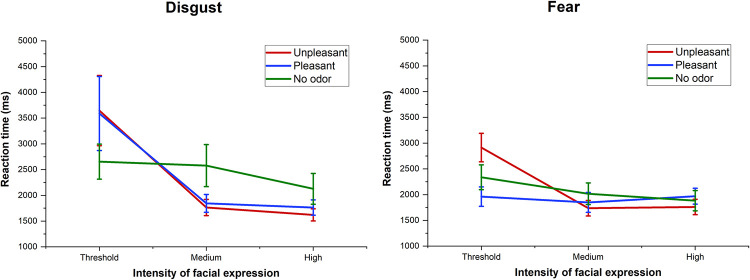
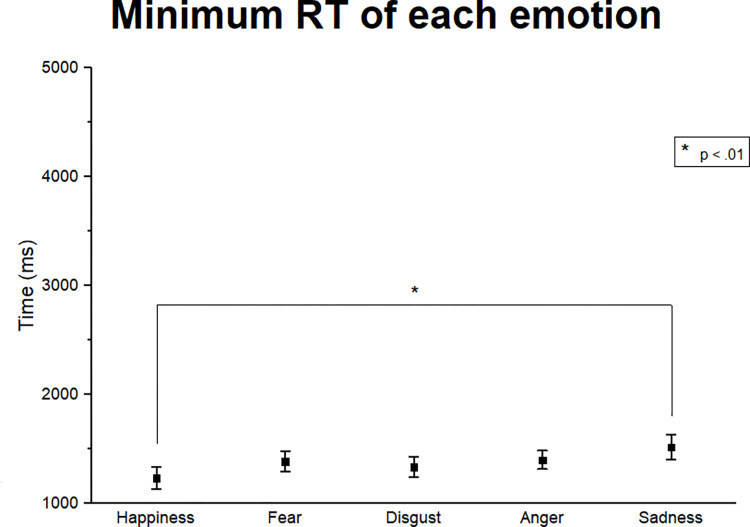
Research on olfactory stimulation indicates that it can influence human cognition and behavior, as in the perception of facial expressions. Odors can facilitate or impair the identification of facial expressions, and apparently its hedonic valence plays an important role. However, it was also demonstrated that the presentation of happiness and disgust faces can influence the emotional appraisal of odorants, indicating a bilateral influence in this phenomenon. Hence, it's possible that odor influences on emotional categorization vary depending on the intensity of expressions. To investigate this hypothesis, we performed an emotion recognition task using facial expressions of five emotional categories (happiness, fear, disgust, anger and sadness) with ten different intensities. Thirty-five participants completed four blocks of the task, each with a different olfactory condition, and we found that odorants' effects varied according to the facial expressions intensity. Odorants enhanced the Reaction Time (RT) differences between threshold and high-intensity expressions for disgust and fear faces. Also, analysis of the RT means for high-intensity facial expressions revealed that the well-known advantage in recognition of happiness facial expressions, compared to other emotions, was enhanced in the positive olfactory stimulation and decreased in the negative condition. We conclude that olfactory influences on emotional processing of facial expressions vary along intensities of the latter, and the discrepancies of past research in this field may be a result of a bilateral effect in which the odorants influence the identification of emotional faces just as the facial expressions influence the emotional reaction to the odor.
嗅觉刺激的研究表明,它可以影响人类的认知和行为,例如对面部表情的感知。气味可以促进或阻碍面部表情的识别,显然其愉悦度起着重要作用。然而,也有研究表明,快乐和厌恶面孔的呈现可以影响对气味的情绪评估,表明在这种现象中存在双向影响。因此,气味对情绪分类的影响可能取决于表情的强度。为了验证这一假设,我们使用五个情绪类别(快乐、恐惧、厌恶、愤怒和悲伤)的十种不同强度的面部表情进行了情绪识别任务。 35 名参与者完成了四个任务块,每个块都有不同的嗅觉条件,我们发现气味的效果根据面部表情的强度而变化。气味增强了厌恶和恐惧面孔的阈值和高强度表情之间的反应时(RT)差异。此外,对高强度面部表情的 RT 平均值的分析表明,与其他情绪相比,识别快乐面部表情的明显优势在正嗅觉刺激下增强,而在负嗅觉刺激下减弱。我们得出结论,嗅觉对面部表情情绪处理的影响随后者的强度而变化,而该领域过去研究中的差异可能是由于气味影响情绪面孔识别的双向影响,就像面部表情影响对气味的情绪反应一样。