Di Pietro Caterina, Öz Hasan H, Zhang Ping-Xia, Cheng Ee-Chun, Martis Valentino, Bonfield Tracey L, Kelley Thomas J, Jubin Ronald, Abuchowski Abraham, Krause Diane S, Egan Marie E, Murray Thomas S, Bruscia Emanuela M
Departments of Pediatrics, Yale University School of Medicine, New Haven, CT, USA.
Laboratory Medicine and the Yale Stem Cell Center, Yale University School of Medicine, New Haven, CT, USA.
Exp Mol Med. 2022 May;54(5):639-652. doi: 10.1038/s12276-022-00770-8. Epub 2022 May 17.
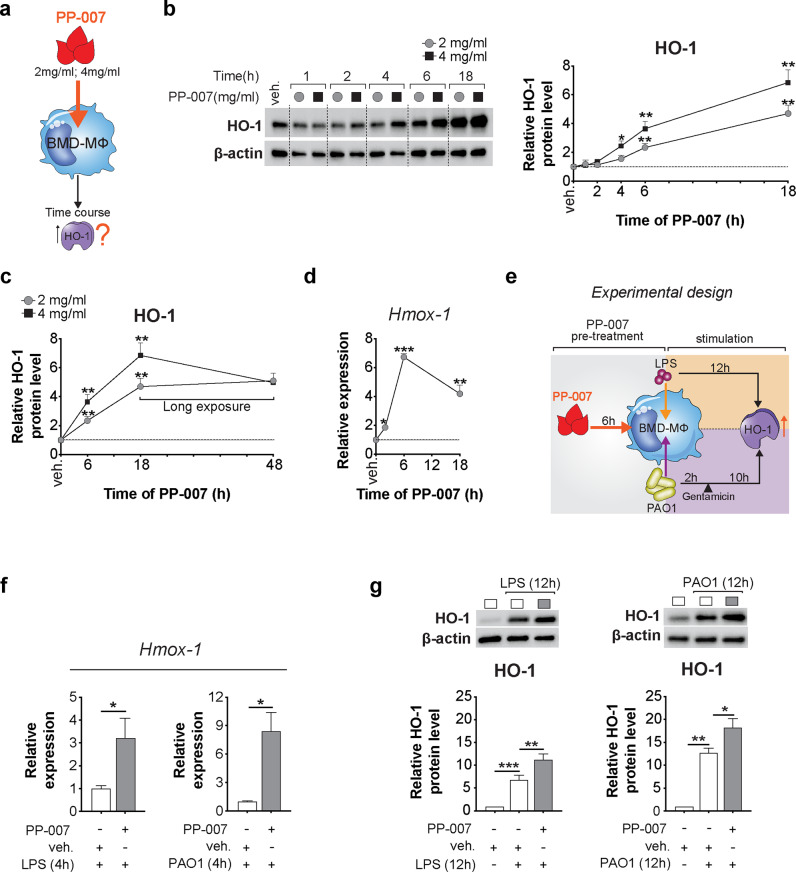
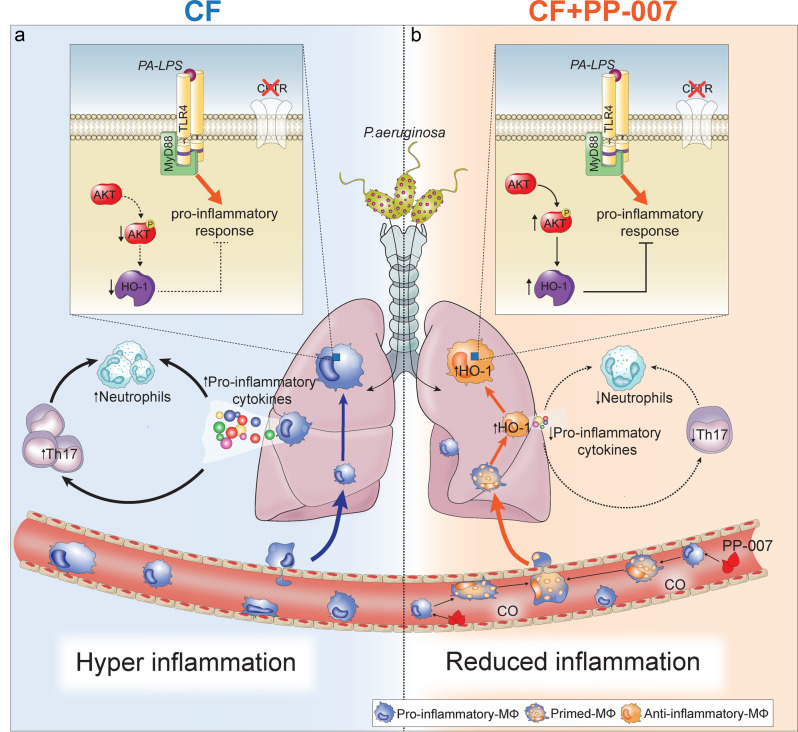
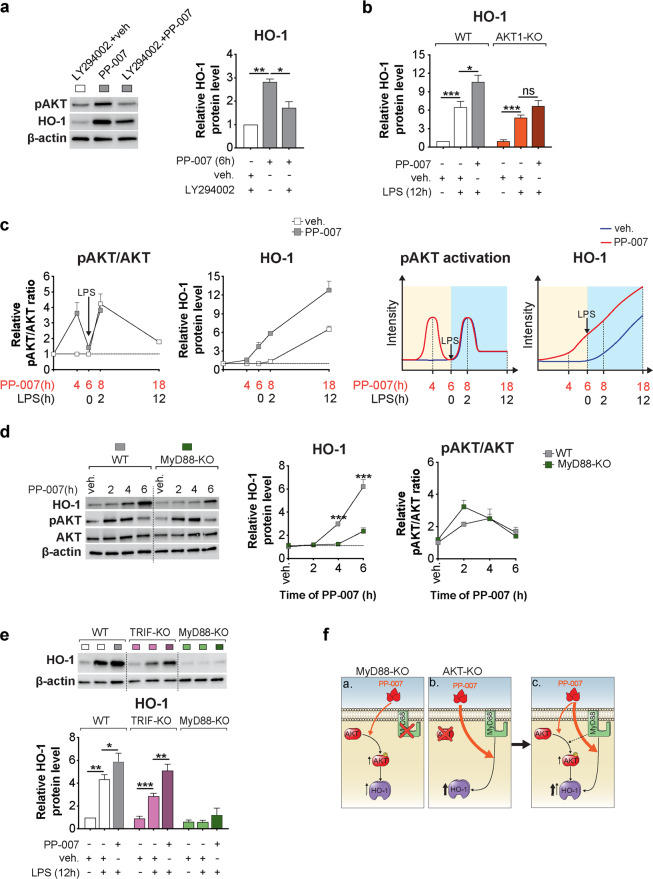
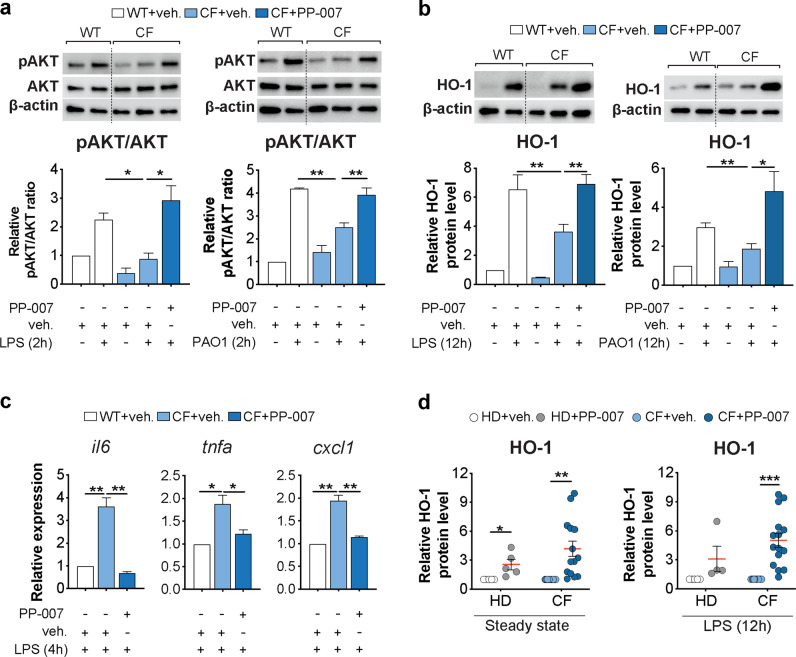
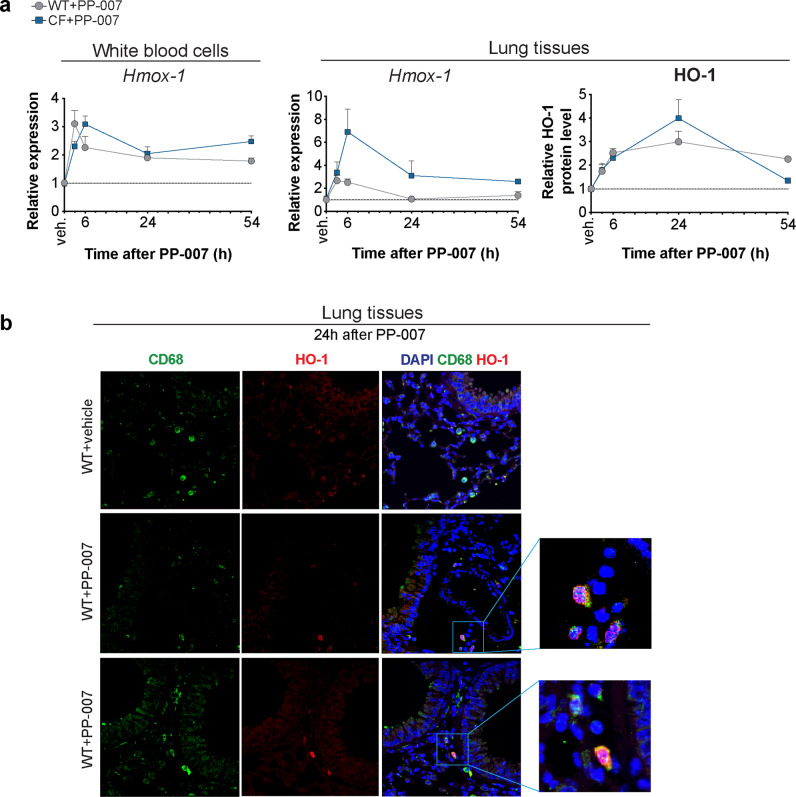
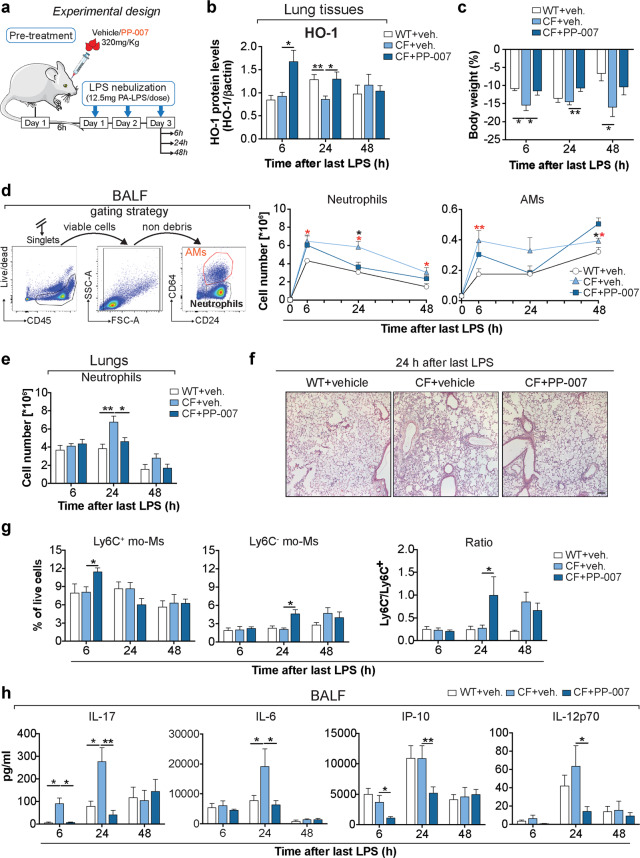
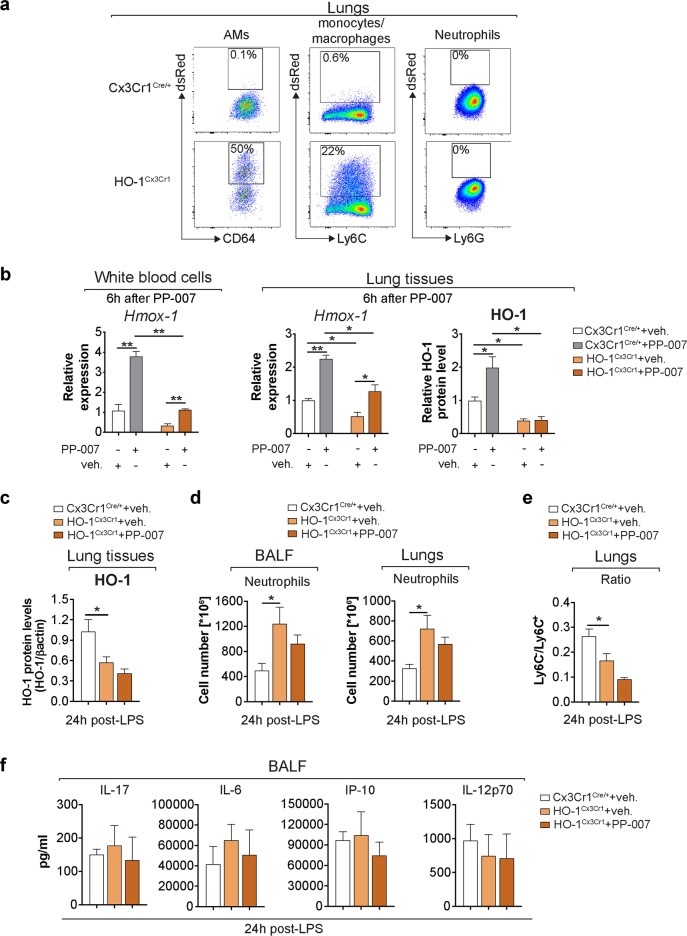
Overwhelming neutrophilic inflammation is a leading cause of lung damage in many pulmonary diseases, including cystic fibrosis (CF). The heme oxygenase-1 (HO-1)/carbon monoxide (CO) pathway mediates the resolution of inflammation and is defective in CF-affected macrophages (MΦs). Here, we provide evidence that systemic administration of PP-007, a CO releasing/O transfer agent, induces the expression of HO-1 in a myeloid differentiation factor 88 (MyD88) and phosphatidylinositol 3-kinase (PI3K)/protein kinase B (AKT)-dependent manner. It also rescues the reduced HO-1 levels in CF-affected cells induced in response to lipopolysaccharides (LPS) or Pseudomonas aeruginosa (PA). Treatment of CF and muco-obstructive lung disease mouse models with a single clinically relevant dose of PP-007 leads to effective resolution of lung neutrophilia and to decreased levels of proinflammatory cytokines in response to LPS. Using HO-1 conditional knockout mice, we show that the beneficial effect of PP-007 is due to the priming of circulating monocytes trafficking to the lungs in response to infection to express high levels of HO-1. Finally, we show that PP-007 does not compromise the clearance of PA in the setting of chronic airway infection. Overall, we reveal the mechanism of action of PP-007 responsible for the immunomodulatory function observed in clinical trials for a wide range of diseases and demonstrate the potential use of PP-007 in controlling neutrophilic pulmonary inflammation by promoting the expression of HO-1 in monocytes/macrophages.
压倒性的嗜中性粒细胞炎症是包括囊性纤维化(CF)在内的许多肺部疾病中肺损伤的主要原因。血红素加氧酶-1(HO-1)/一氧化碳(CO)途径介导炎症的消退,并且在受CF影响的巨噬细胞(MΦs)中存在缺陷。在这里,我们提供证据表明,全身性给予PP-007(一种CO释放/O转移剂)以髓样分化因子88(MyD88)和磷脂酰肌醇3激酶(PI3K)/蛋白激酶B(AKT)依赖性方式诱导HO-1的表达。它还挽救了因脂多糖(LPS)或铜绿假单胞菌(PA)诱导的受CF影响细胞中降低的HO-1水平。用单一临床相关剂量的PP-007治疗CF和黏液阻塞性肺病小鼠模型可有效缓解肺部嗜中性粒细胞增多,并降低对LPS反应的促炎细胞因子水平。使用HO-1条件性敲除小鼠,我们表明PP-007的有益作用是由于循环单核细胞在感染后转运至肺部并表达高水平HO-1的启动作用。最后,我们表明在慢性气道感染的情况下,PP-007不会损害PA的清除。总体而言,我们揭示了PP-007在广泛疾病的临床试验中观察到的免疫调节功能的作用机制,并证明了PP-007通过促进单核细胞/巨噬细胞中HO-1的表达来控制嗜中性粒细胞性肺部炎症的潜在用途。