Bessone Federica, Dianzani Chiara, Argenziano Monica, Cangemi Luigi, Spagnolo Rita, Maione Federica, Giraudo Enrico, Cavalli Roberta
Department of Drug Science and Technology, University of Turin, Turin 10125, Italy.
Laboratory of Tumor microenvironment, Candiolo Cancer Institute - FPO, IRCCS, Candiolo 10060, Italy.
Cancer Drug Resist. 2021 Mar 19;4(1):192-207. doi: 10.20517/cdr.2020.65. eCollection 2021.
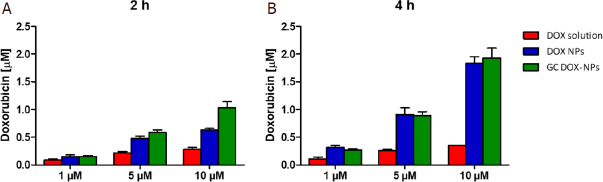
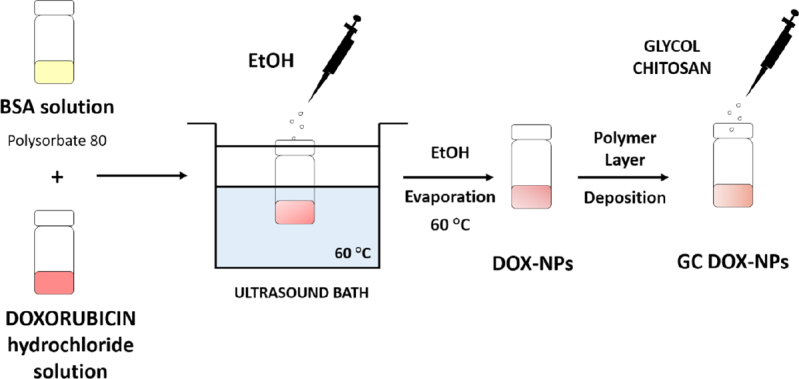
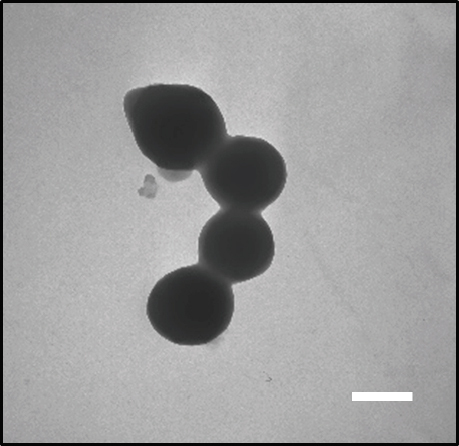
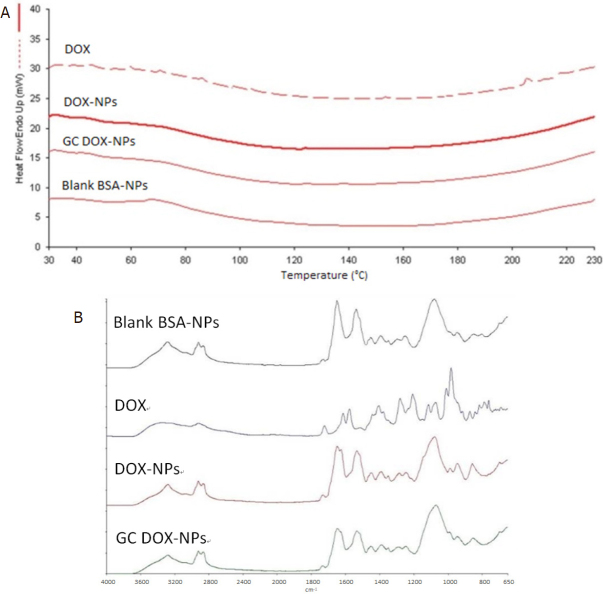
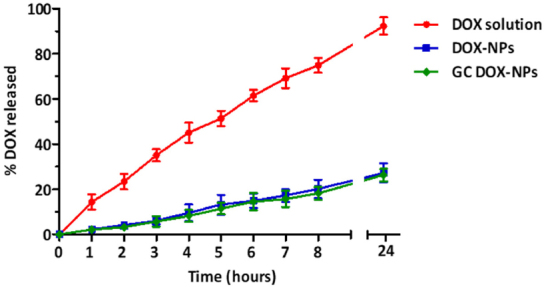
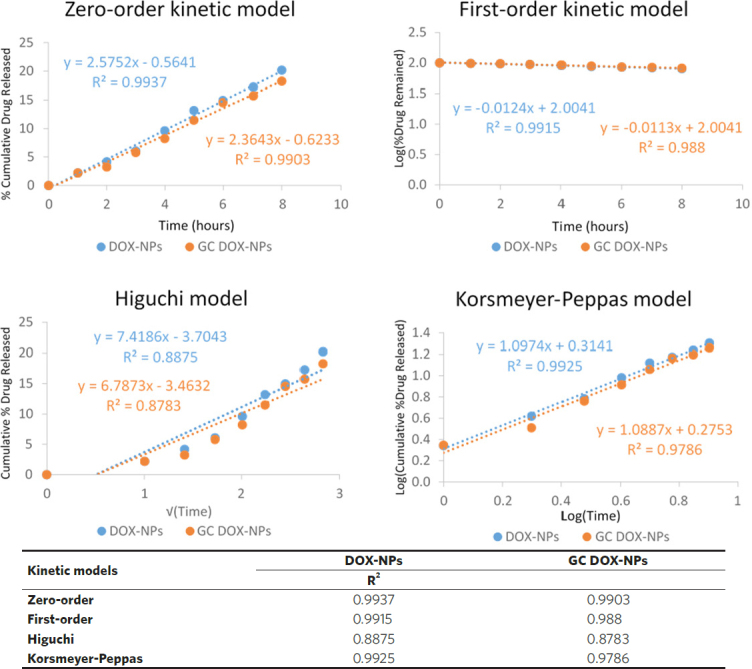
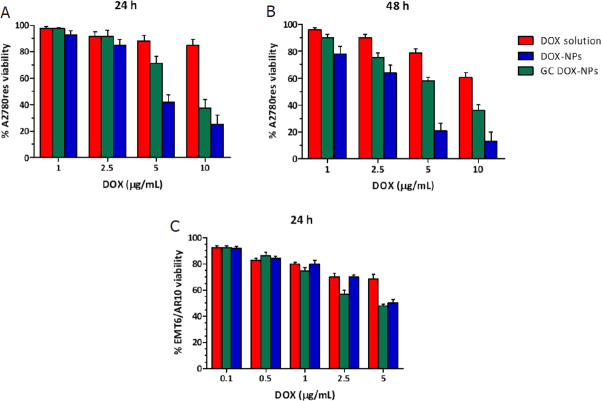
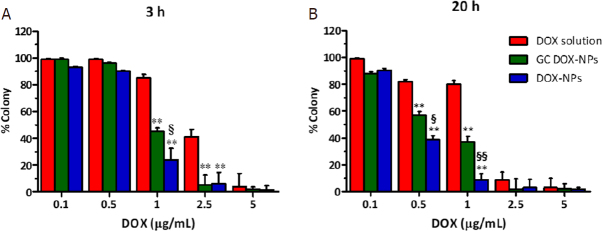
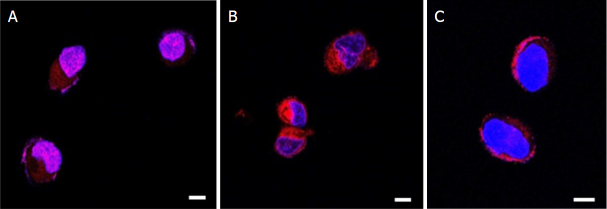
Resistance to chemotherapy is a major limiting factor that hamper the effectiveness of anticancer therapies. Doxorubicin is an antineoplastic agent used in the treatment of a wide range of cancers. However, it presents several limitations such as dose-dependent cardiotoxicity, lack of selectivity for tumor cells, and induced cell resistance. Nanotechnology represents a promising strategy to avoid these drawbacks. In this work, new albumin-based nanoparticles were formulated for the intracellular delivery of doxorubicin with the aim to overcome cancer drug resistance. Glycol chitosan-coated and uncoated albumin nanoparticles were prepared with a tuned coacervation method. The nanoformulations were characterized evaluating the physicochemical parameters, morphology, and release kinetics. Biological assays were performed on A2780res and EMT6 cells from human ovarian carcinoma and mouse mammary cell lines resistant for doxorubicin, respectively. Cell viability assays showed that nanoparticles have higher cytotoxicity than the free drug. Moreover, at low concentrations, both doxorubicin-loaded nanoparticles inhibited the cell colony formation in a greater extent than drug solution. In addition, the cell uptake of the different formulations was investigated by confocal microscopy and by the HPLC determination of doxorubicin intracellular accumulation. The nanoparticles were rapidly internalized in greater extent compared to the free drug. Based on these results, doxorubicin-loaded albumin nanoparticles might represent a novel platform to overcome the mechanism of drug resistance in cancer cell lines and improve the drug efficacy.
化疗耐药是阻碍抗癌治疗效果的一个主要限制因素。阿霉素是一种用于治疗多种癌症的抗肿瘤药物。然而,它存在一些局限性,如剂量依赖性心脏毒性、对肿瘤细胞缺乏选择性以及诱导细胞耐药。纳米技术是一种有望避免这些缺点的策略。在这项工作中,制备了新型的基于白蛋白的纳米颗粒用于阿霉素的细胞内递送,旨在克服癌症耐药性。采用调控制备凝聚法制备了乙二醇壳聚糖包被和未包被的白蛋白纳米颗粒。通过评估物理化学参数、形态和释放动力学对纳米制剂进行了表征。分别对来自人卵巢癌的A2780res细胞和对阿霉素耐药的小鼠乳腺细胞系EMT6细胞进行了生物学测定。细胞活力测定表明,纳米颗粒比游离药物具有更高的细胞毒性。此外,在低浓度下,两种载阿霉素纳米颗粒比药物溶液更能抑制细胞集落形成。此外,通过共聚焦显微镜和通过高效液相色谱法测定阿霉素细胞内积累来研究不同制剂的细胞摄取情况。与游离药物相比,纳米颗粒能更快且更大量地被细胞内化。基于这些结果,载阿霉素白蛋白纳米颗粒可能代表一种克服癌细胞系耐药机制并提高药物疗效的新型平台。