Towner Rheal A, Zalles Michelle, Saunders Debra, Smith Nataliya
Advanced Magnetic Resonance Center, Oklahoma Medical Research Foundation, Oklahoma City, OK 73104, USA.
Oklahoma Center for Neuroscience, University of Oklahoma Health Sciences Center, Oklahoma City, OK 73104, USA.
Cancer Drug Resist. 2020 Aug 21;3(4):686-698. doi: 10.20517/cdr.2020.38. eCollection 2020.
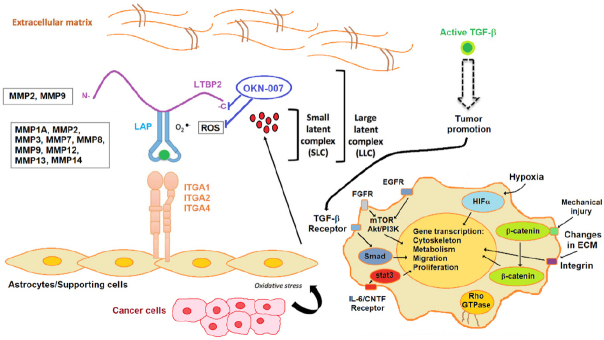
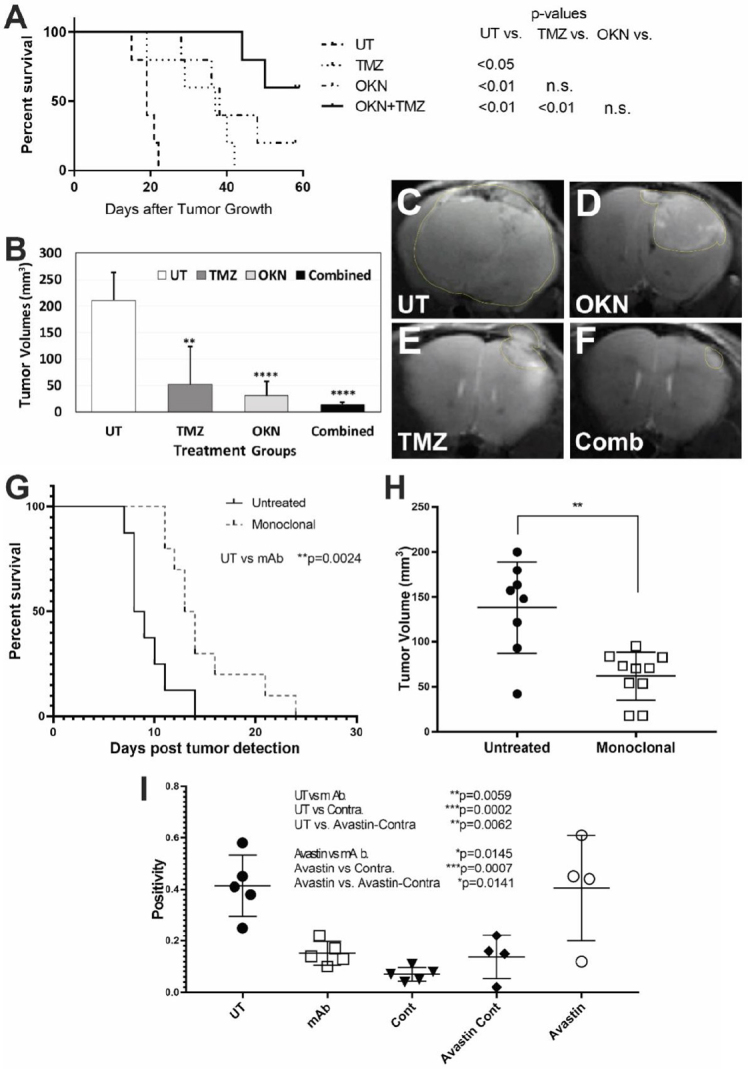
The poor prognosis of glioblastoma multiforme (GBM) patients is in part due to resistance to current standard-of-care treatments including chemotherapy [predominantly temozolomide (TMZ; Temodar)], radiation therapy and an anti-angiogenic therapy [an antibody against the vascular endothelial growth factor (bevacizumab; Avastin)], resulting in recurrent tumors. Several recurrent GBM tumors are commonly resistant to either TMZ, radiation or bevacizumab, which contributes to the low survival rate for GBM patients. This review will focus on novel targets and therapeutic approaches that are currently being considered to combat GBM chemoresistance. One of these therapeutic options is a small molecule called OKlahoma Nitrone 007 (OKN-007), which was discovered to inhibit the transforming growth factor β1 pathway, reduce TMZ-resistance and enhance TMZ-sensitivity. OKN-007 is currently an investigational new drug in clinical trials for both newly-diagnosed and recurrent GBM patients. Another novel target is ELTD1 (epidermal growth factor, latrophilin and seven transmembrane domain-containing protein 1; alternatively known as ADGRL4, Adhesion G protein-coupled receptor L4), which we used a monoclonal antibody against, where a therapy against it was found to inhibit Notch 1 in a pre-clinical GBM xenograft model. Notch 1 is known to be associated with chemoresistance in GBM. Other potential therapeutic targets to combat GBM chemoresistance include the phosphoinositide 3-kinase pathway, nuclear factor-κB, the hepatocyte/scatter factor (c-MET), the epidermal growth factor receptor, and the tumor microenvironment.
多形性胶质母细胞瘤(GBM)患者预后较差,部分原因是对包括化疗[主要是替莫唑胺(TMZ;泰道)]、放射治疗和抗血管生成治疗[抗血管内皮生长因子抗体(贝伐单抗;阿瓦斯汀)]在内的当前标准治疗产生耐药性,从而导致肿瘤复发。几种复发性GBM肿瘤通常对TMZ、放射治疗或贝伐单抗耐药,这导致GBM患者生存率较低。本综述将聚焦于目前正在考虑用于对抗GBM化疗耐药性的新靶点和治疗方法。其中一种治疗选择是一种名为俄克拉荷马硝酮007(OKN-007)的小分子,它被发现可抑制转化生长因子β1通路,降低TMZ耐药性并增强TMZ敏感性。OKN-007目前是一种用于新诊断和复发性GBM患者临床试验的研究性新药。另一个新靶点是ELTD1(表皮生长因子、亲嗜素和含七个跨膜结构域蛋白1;也称为ADGRL4,粘附G蛋白偶联受体L4),我们使用了一种针对它的单克隆抗体,在临床前GBM异种移植模型中发现针对它的治疗可抑制Notch 1。已知Notch 1与GBM中的化疗耐药性有关。对抗GBM化疗耐药性的其他潜在治疗靶点包括磷酸肌醇3激酶通路、核因子κB、肝细胞/散射因子(c-MET)、表皮生长因子受体和肿瘤微环境。