Department of Medicine, Keck School of Medicine, University of Southern Californiagrid.42505.36 (USC), Los Angeles, California, USA.
Department of Molecular Microbiology and Immunology, Keck School of Medicine, University of Southern Californiagrid.42505.36 (USC), Los Angeles, California, USA.
mSphere. 2022 Jun 29;7(3):e0007122. doi: 10.1128/msphere.00071-22. Epub 2022 May 18.
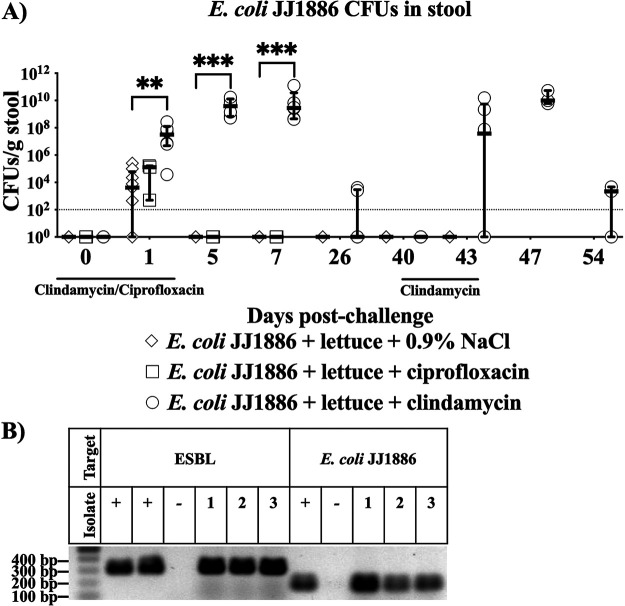
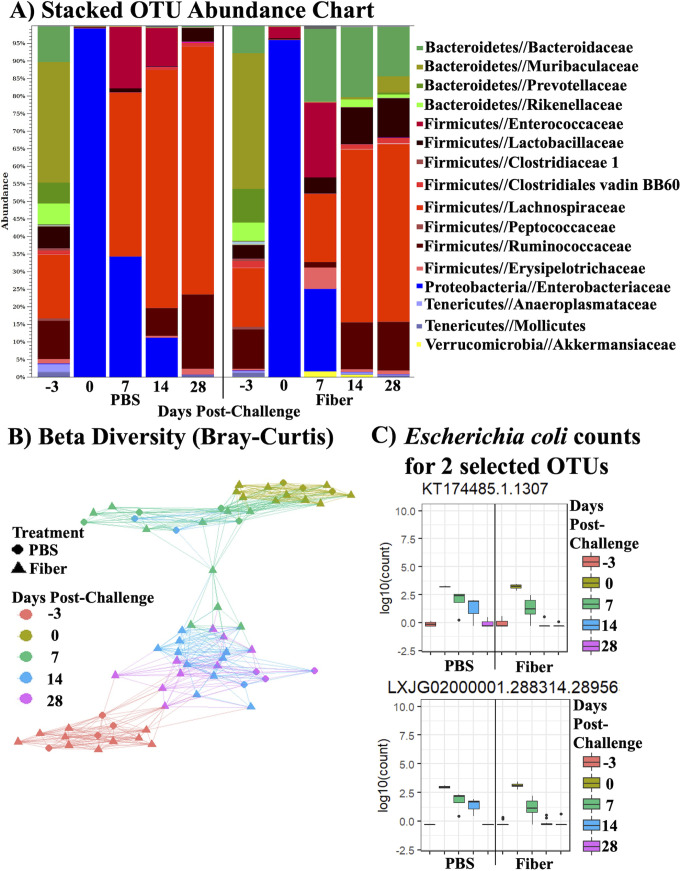
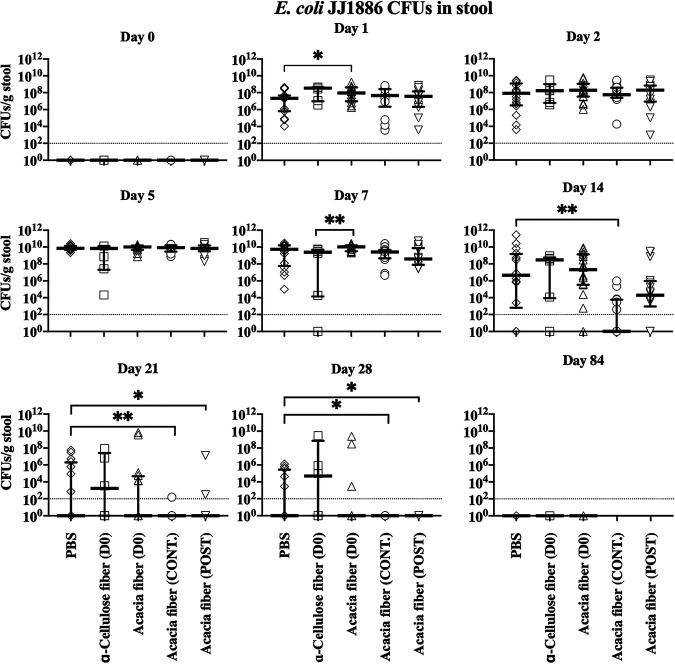
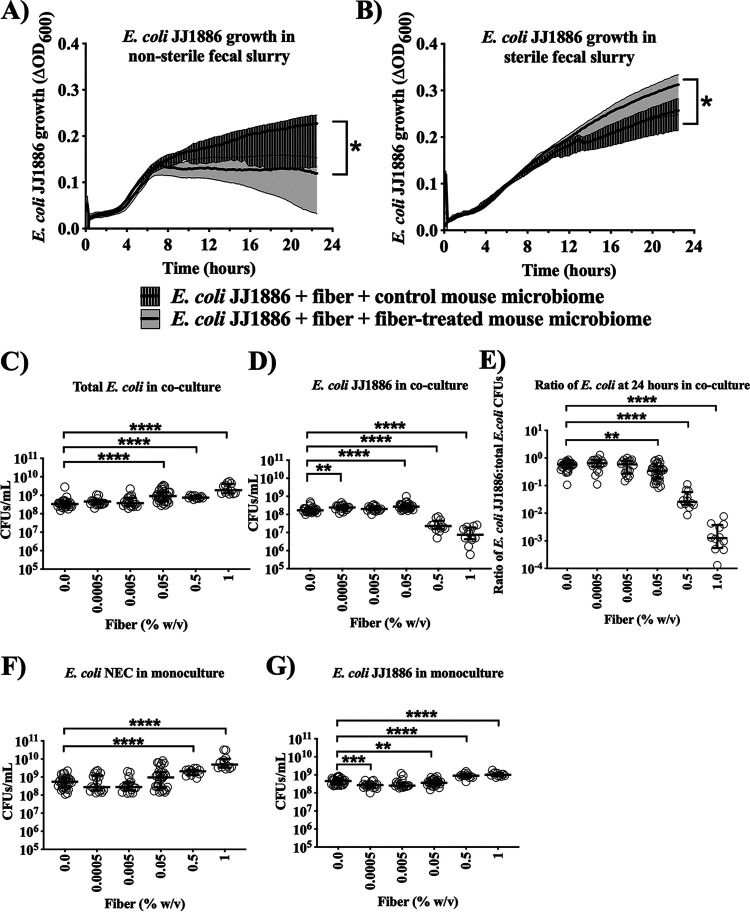
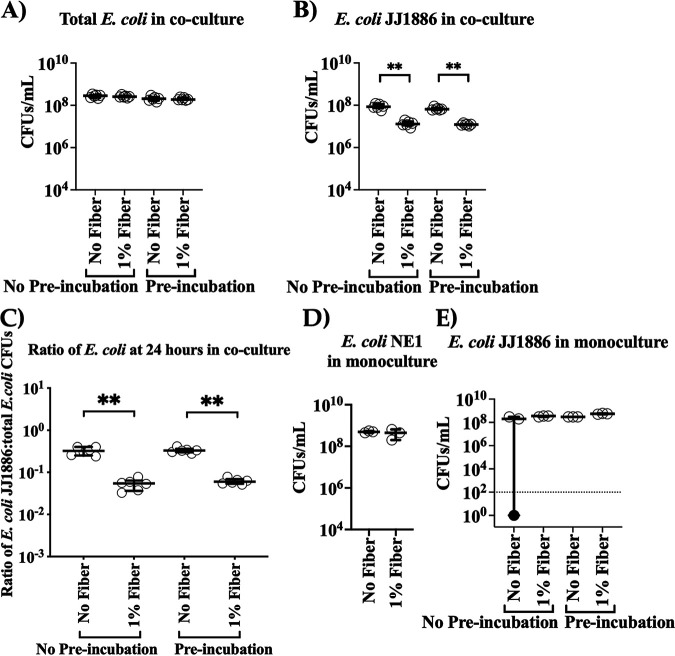
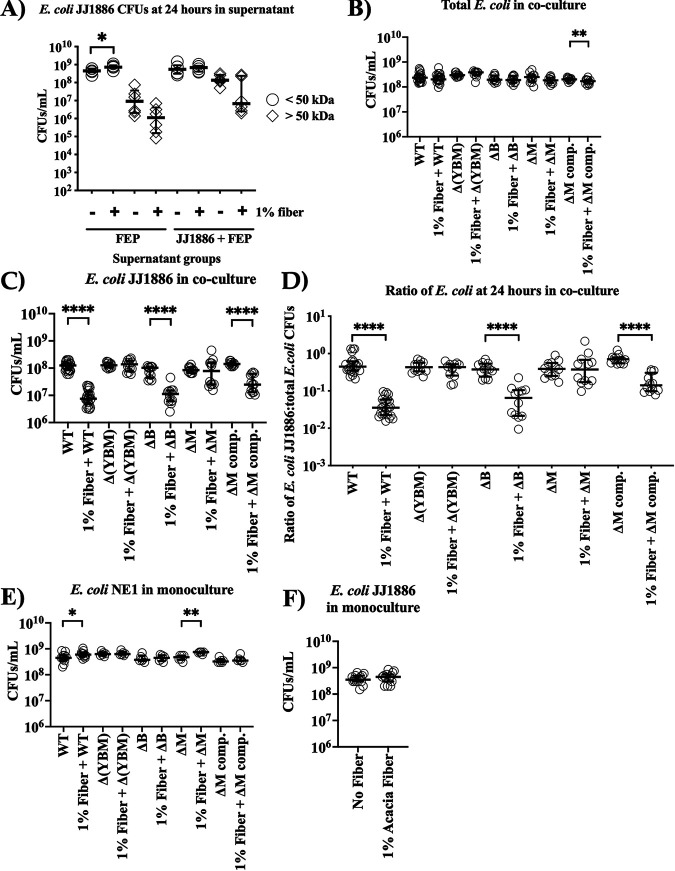
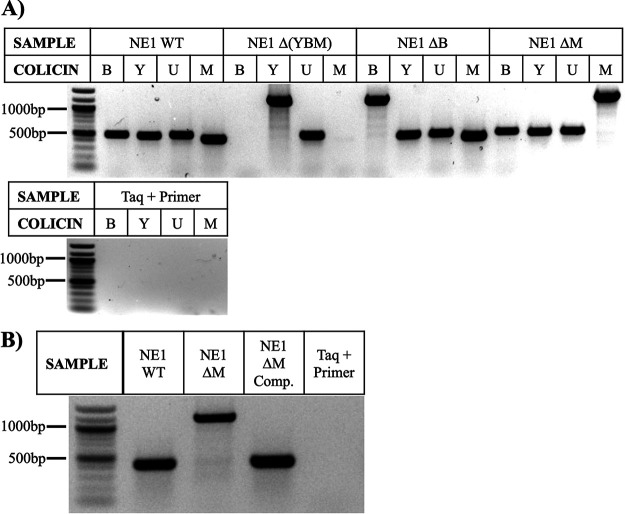
Novel approaches to combating antibiotic resistance are needed given the ever-continuing rise of antibiotic resistance and the scarce discovery of new antibiotics. Little is known about the colonization dynamics and the role of intrinsic plant-food characteristics in this process. We sought to determine whether plant fiber could alter colonization dynamics by antibiotic-resistant bacteria in the gut. We determined that ingestion of antibiotics in mice markedly enhanced gut colonization by a pathogenic extended-spectrum beta-lactamase-producing Escherichia coli strain of human origin, E. coli JJ1886 (ST131-30Rx). Furthermore, ingestion of soluble acacia fiber before and after antibiotic exposure significantly reduced pathogenic E. coli colonization. 16S rRNA analysis and cocultures demonstrated that fiber protected the microbiome by serving as a prebiotic, which induced native gut E. coli to inhibit pathogenic E. coli via colicin M. Fiber may be a useful prebiotic with which to administer antibiotics to protect human and livestock gut microbiomes against colonization from antibiotic-resistant, pathogenic bacteria. A One Health-based strategy-the concept that human health and animal health are interconnected with the environment-is necessary to determine the drivers of antibiotic resistance from food to the clinic. Moreover, humans can ingest antibiotic-resistant bacteria on food and asymptomatically, or "silently," carry such bacteria in the gut long before they develop an opportunistic extraintestinal infection. Here, we determined that fiber-rich foods, in particular acacia fiber, may be a new, promising, and inexpensive prebiotic to administer with antibiotics to protect the mammalian (i.e., human and livestock) gut against such colonization by antibiotic-resistant, pathogenic bacteria.
鉴于抗生素耐药性的持续不断上升和新抗生素的稀缺发现,需要寻找新的方法来对抗抗生素耐药性。人们对定植动力学以及内在植物食物特征在这一过程中的作用知之甚少。我们试图确定植物纤维是否可以改变肠道中抗生素耐药菌的定植动力学。我们发现,给小鼠服用抗生素会显著增强一种具有人类来源的、产生扩展谱β-内酰胺酶的致病性大肠杆菌 JJ1886(ST131-30Rx)菌株在肠道中的定植。此外,在服用抗生素前后摄入可溶性金合欢纤维可显著减少致病性大肠杆菌的定植。16S rRNA 分析和共培养实验表明,纤维通过充当益生元来保护微生物组,通过诱导肠道内的天然大肠杆菌产生 colicin M 来抑制致病性大肠杆菌。纤维可能是一种有用的益生元,与抗生素联合使用可以保护人类和家畜的肠道微生物组免受抗生素耐药性、致病性细菌的定植。基于一种健康理念——即人类健康、动物健康与环境相互关联——的策略,有必要确定从食物到临床的抗生素耐药性的驱动因素。此外,人类可以在食物中摄入抗生素耐药菌而无症状,或者在肠道中“无声无息”地携带这些细菌,然后才会发展为机会性的肠道外感染。在这里,我们确定富含纤维的食物,特别是金合欢纤维,可能是一种新的、有希望的、廉价的益生元,可以与抗生素联合使用,以保护哺乳动物(即人类和家畜)肠道免受抗生素耐药性、致病性细菌的定植。