School of Biological Science, Seoul National University, Gwanak-gu, Seoul, 08826, Korea.
Departments of Discovery Oncology, Genentech, Inc., South San Francisco, CA, 94080, USA.
Cell Death Dis. 2022 May 18;13(5):469. doi: 10.1038/s41419-022-04921-7.
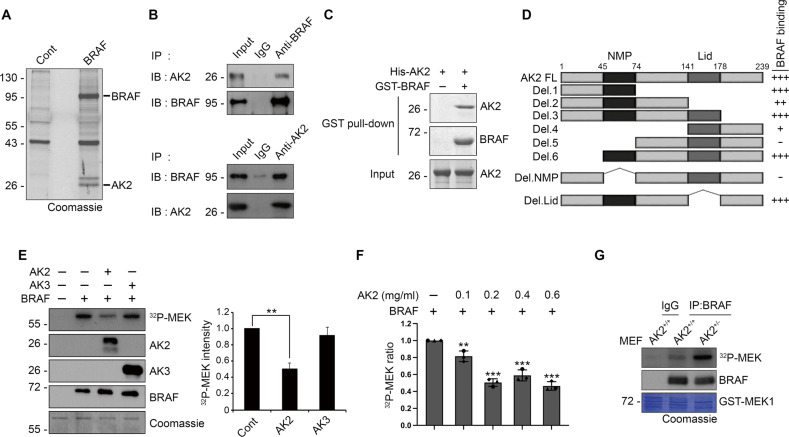
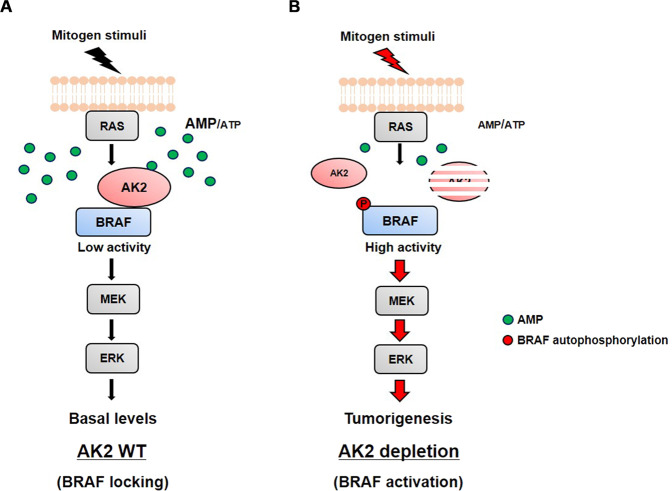
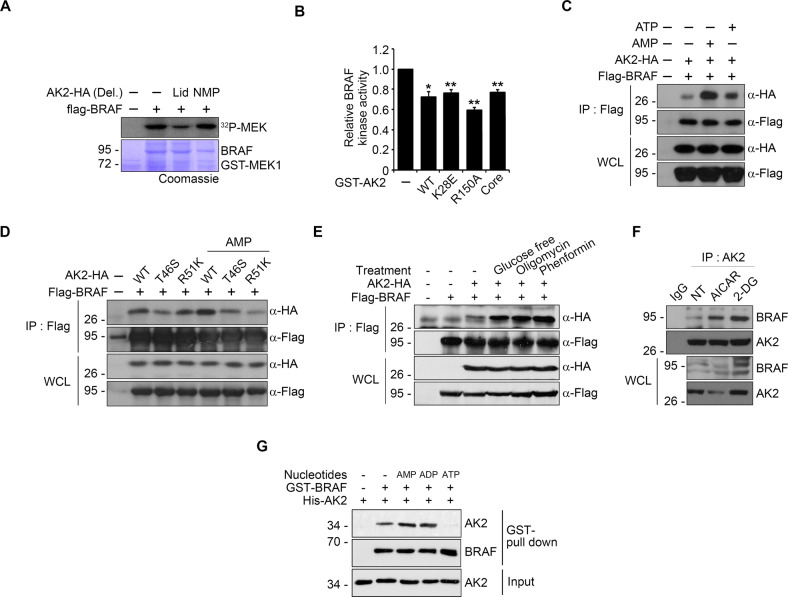
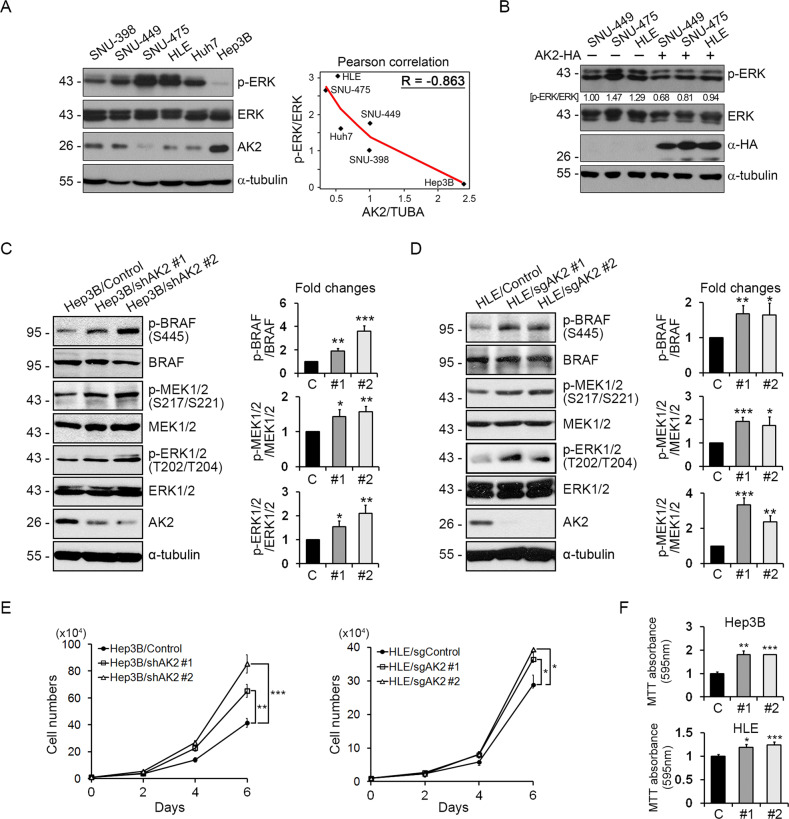
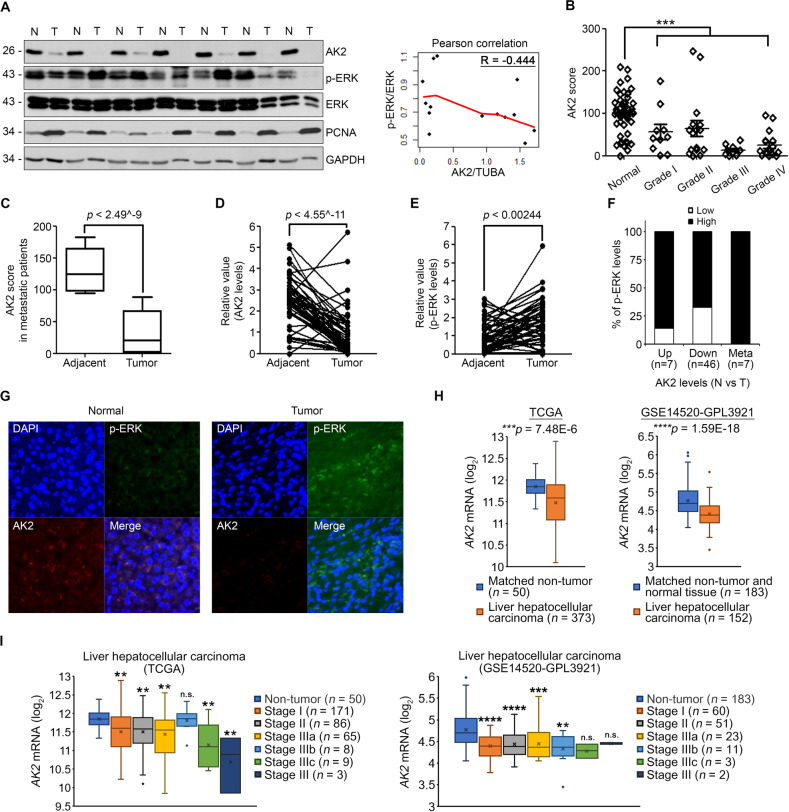
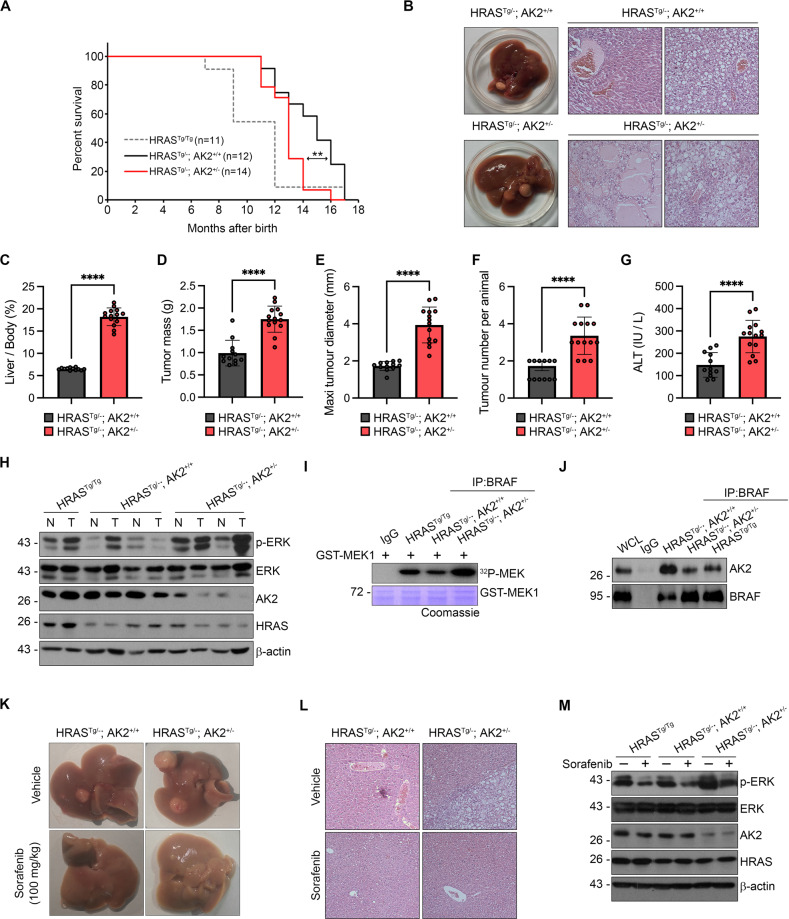
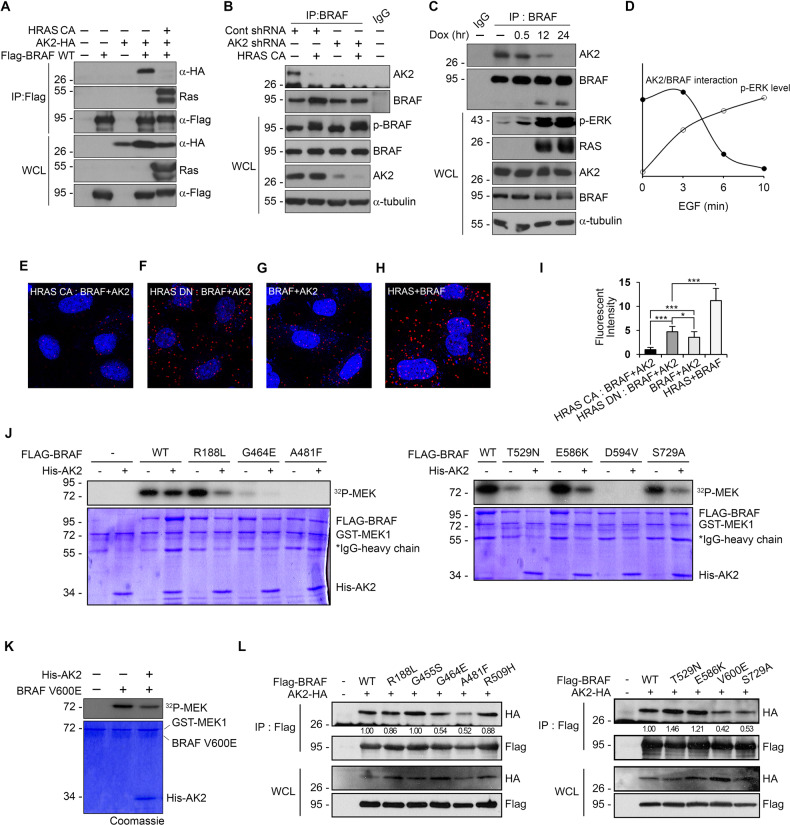
The RAS-BRAF signaling is a major pathway of cell proliferation and their mutations are frequently found in human cancers. Adenylate kinase 2 (AK2), which modulates balance of adenine nucleotide pool, has been implicated in cell death and cell proliferation independently of its enzyme activity. Recently, the role of AK2 in tumorigenesis was in part elucidated in some cancer types including lung adenocarcinoma and breast cancer, but the underlying mechanism is not clear. Here, we show that AK2 is a BRAF-suppressor. In in vitro assays and cell model, AK2 interacted with BRAF and inhibited BRAF activity and downstream ERK phosphorylation. Energy-deprived conditions in cell model and the addition of AMP to cell lysates strengthened the AK2-BRAF interaction, suggesting that AK2 is involved in the regulation of BRAF activity in response to cell metabolic state. AMP facilitated the AK2-BRAF complex formation through binding to AK2. In a panel of HCC cell lines, AK2 expression was inversely correlated with ERK/MAPK activation, and AK2-knockdown or -knockout increased BRAF activity and promoted cell proliferation. Tumors from HCC patients showed low-AK2 protein expression and increased ERK activation compared to non-tumor tissues and the downregulation of AK2 was also verified by two microarray datasets (TCGA-LIHC and GSE14520). Moreover, AK2/BRAF interaction was abrogated by RAS activation in in vitro assay and cell model and in a mouse model of HRAS-driven HCC, and AK2 ablation promoted tumor growth and BRAF activity. AK2 also bound to BRAF inhibitor-insensitive BRAF mutants and attenuated their activities. These findings indicate that AK2 monitoring cellular AMP levels is indeed a negative regulator of BRAF, linking the metabolic status to tumor growth.
RAS-BRAF 信号通路是细胞增殖的主要途径,其突变经常在人类癌症中发现。腺嘌呤激酶 2(AK2)调节腺嘌呤核苷酸池的平衡,已被证明独立于其酶活性在细胞死亡和细胞增殖中发挥作用。最近,AK2 在一些癌症类型中的肿瘤发生作用部分得到了解释,包括肺腺癌和乳腺癌,但潜在机制尚不清楚。在这里,我们表明 AK2 是 BRAF 的抑制剂。在体外测定和细胞模型中,AK2 与 BRAF 相互作用,抑制 BRAF 活性和下游 ERK 磷酸化。细胞模型中的能量剥夺条件和 AMP 向细胞裂解物中的添加增强了 AK2-BRAF 相互作用,表明 AK2 参与调节 BRAF 活性以响应细胞代谢状态。AMP 通过与 AK2 结合促进 AK2-BRAF 复合物的形成。在一组 HCC 细胞系中,AK2 表达与 ERK/MAPK 激活呈负相关,AK2 敲低或敲除增加 BRAF 活性并促进细胞增殖。与非肿瘤组织相比,HCC 患者的肿瘤显示出低 AK2 蛋白表达和增加的 ERK 激活,并且通过两个微阵列数据集(TCGA-LIHC 和 GSE14520)也验证了 AK2 的下调。此外,在体外测定和细胞模型以及 HRAS 驱动的 HCC 小鼠模型中,RAS 激活破坏了 AK2/BRAF 相互作用,AK2 缺失促进了肿瘤生长和 BRAF 活性。AK2 还与 BRAF 抑制剂不敏感的 BRAF 突变体结合并减弱其活性。这些发现表明,AK2 监测细胞 AMP 水平确实是 BRAF 的负调节剂,将代谢状态与肿瘤生长联系起来。