Division of Cardiology, Department of Medicine, Keio University School of Medicine, 35 Shinanomachi Shinjuku-ku, Tokyo, 160-8582, Japan.
Department of Cardiovascular Medicine, Kyorin University Faculty of Medicine, Tokyo, Japan.
Sci Rep. 2022 May 18;12(1):8318. doi: 10.1038/s41598-022-12357-4.
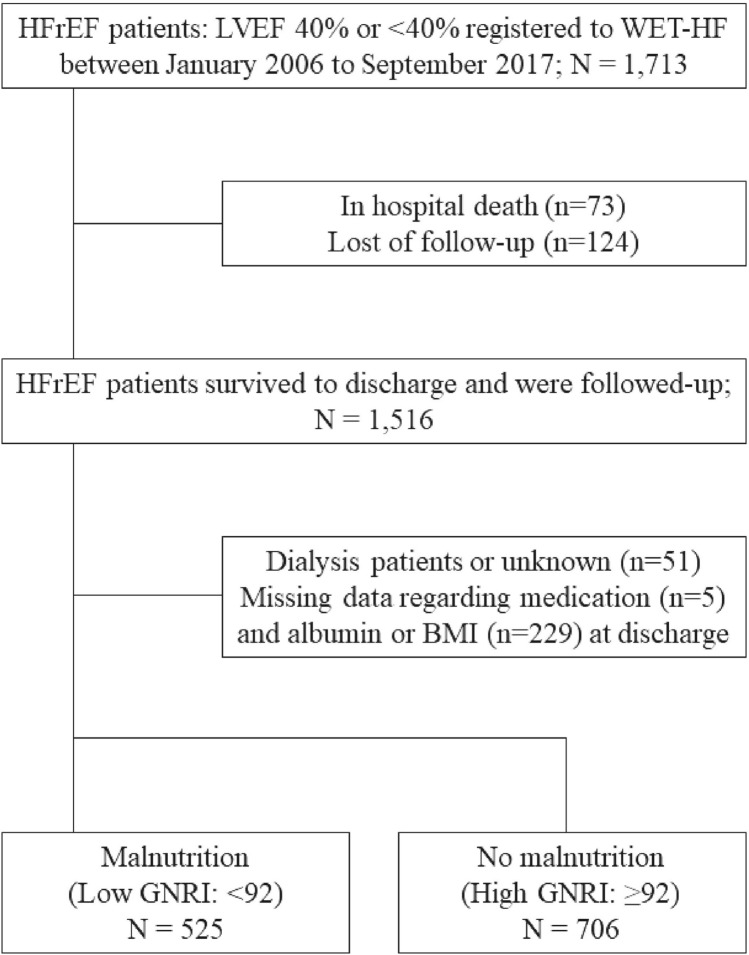
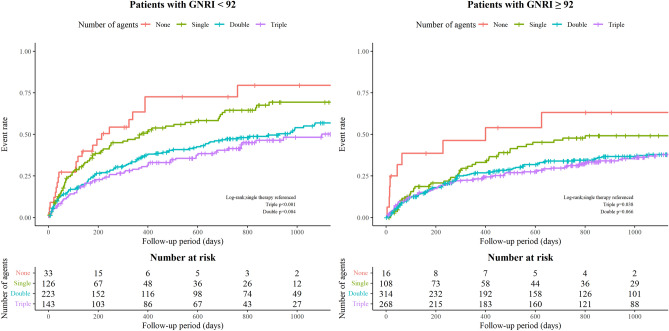
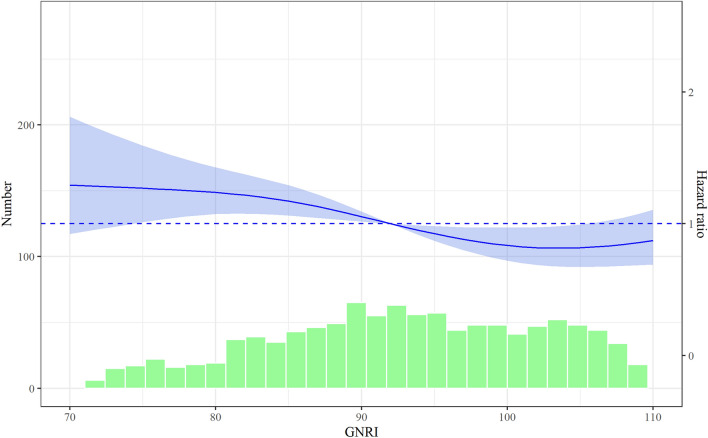
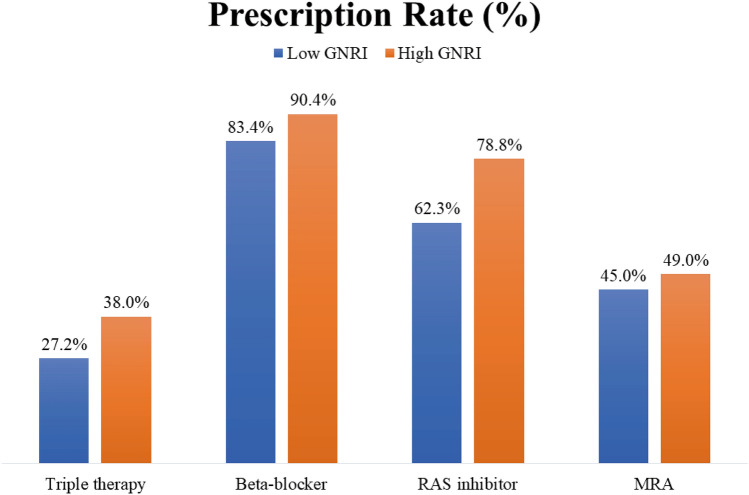
Malnutrition is common in patients with heart failure with reduced ejection fraction (HFrEF) and may influence the long-term prognosis and allocation of combination medical therapy. We reviewed 1231 consecutive patient-level records from a multicenter Japanese registry of hospitalized HFrEF patients. Nutritional status was assessed using geriatric nutritional risk index (GNRI). Combination medical therapy were categorized based on the use of beta-blockers, renin-angiotensin system inhibitors, and mineralocorticoid receptor antagonists. The composite outcome of all-cause death and HF rehospitalization was assessed. The mean age was 72.0 ± 14.2 years and 42.6% patients were malnourished (GNRI < 92). At discharge, 43.6% and 33.4% of patients were receiving two and three agents, respectively. Malnourished patients had lower rates of combination medical therapy use. The standardized GNRI score was independently associated with the occurrence of adverse events (hazard ratio [HR]: 0.88, 95% confidence interval [CI] 0.79-0.98). Regardless of the GNRI score, referenced to patients receiving single agent, risk of adverse events were lower with those receiving three (HR: 0.70, 95% CI 0.55-0.91) or two agents (HR: 0.70, 95% CI 0.56-0.89). Malnutrition assessed by GNRI score predicts long-term adverse outcomes among hospitalized HFrEF patients. However, its prognosis may be modified with combination medical therapy.
营养不良在射血分数降低的心力衰竭(HFrEF)患者中很常见,可能会影响长期预后和联合药物治疗的分配。我们回顾了来自日本多中心住院 HFrEF 患者登记处的 1231 例连续患者水平记录。使用老年营养风险指数(GNRI)评估营养状况。根据β受体阻滞剂、肾素-血管紧张素系统抑制剂和盐皮质激素受体拮抗剂的使用情况对联合药物治疗进行分类。评估全因死亡和 HF 再入院的复合结局。患者的平均年龄为 72.0±14.2 岁,42.6%的患者存在营养不良(GNRI<92)。出院时,分别有 43.6%和 33.4%的患者接受了两种和三种药物治疗。营养不良患者联合药物治疗使用率较低。标准化 GNRI 评分与不良事件的发生独立相关(危险比 [HR]:0.88,95%置信区间 [CI] 0.79-0.98)。无论 GNRI 评分如何,与接受单一药物治疗的患者相比,接受三种(HR:0.70,95%CI 0.55-0.91)或两种药物(HR:0.70,95%CI 0.56-0.89)治疗的患者发生不良事件的风险较低。GNRI 评分评估的营养不良预测住院 HFrEF 患者的长期不良结局。然而,其预后可能通过联合药物治疗来改善。