Banerjee Saswati, Xu Wei, Chowdhury Indrajit, Driss Adel, Ali Mohamed, Yang Qiwei, Al-Hendy Ayman, Thompson Winston E
Department of Physiology, Morehouse School of Medicine, 720 Westview Drive Southwest, Atlanta, GA, 30310, USA.
Department of Obstetrics and Gynecology, Morehouse School of Medicine, Atlanta, GA, USA.
Reprod Sci. 2022 Sep;29(9):2607-2619. doi: 10.1007/s43032-022-00960-9. Epub 2022 May 18.
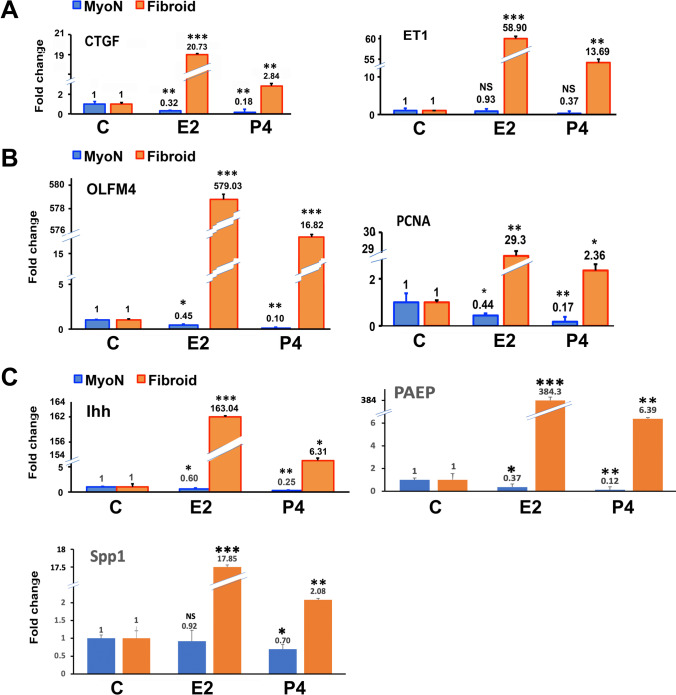
Uterine fibroids (UFs) (leiomyomas or myomas) are the most common clonal neoplasms of the uterus in women of reproductive age worldwide. UFs originate from myometrium consist of smooth muscle and fibroblast components, in addition to a substantial amount of fibrous extracellular matrix which all contribute to the pathogenetic process. Current treatments are primarily limited to surgical and interventional. Here, we have established a novel and promising organoid model from both normal and patient myometrial stem cells (MMSCs). MMSCs embedded in Matrigel in stem cell media swiftly formed organoids which successfully proliferate and self-organized into complex structures developing a sustainable organoid culture that maintain their capacity to differentiate into the different cell types recapitulating their tissue of origin and shows responsiveness to the reproductive hormones (estrogen and progesterone). Gene expression analysis and structural features indicated the early onset of uterine fibrosis led to the accumulation of extracellular matrix suggesting the potential use of this model in better understanding of the pathophysiology associated with UFs and inventing novel therapeutics for the treatment of UFs.
子宫肌瘤(UFs)(平滑肌瘤或肌瘤)是全球育龄女性中最常见的子宫克隆性肿瘤。UFs起源于子宫肌层,由平滑肌和成纤维细胞成分组成,此外还有大量纤维细胞外基质,所有这些都参与了发病过程。目前的治疗主要限于手术和介入治疗。在此,我们从正常和患者子宫肌层干细胞(MMSCs)建立了一种新型且有前景的类器官模型。嵌入基质胶并置于干细胞培养基中的MMSCs迅速形成类器官,这些类器官成功增殖并自组织成复杂结构,形成可持续的类器官培养物,保持其分化为不同细胞类型的能力,重现其起源组织,并对生殖激素(雌激素和孕激素)产生反应。基因表达分析和结构特征表明子宫纤维化的早期发生导致细胞外基质积累,这表明该模型有可能用于更好地理解与UFs相关的病理生理学,并发明治疗UFs的新疗法。