Qu Fang, Bu Hongxia, Yang Liu, Liu Hui, Xie Chaoying
Minimally Invasive Surgery Center of the First Hospital of Changsha, Changsha, China.
Outpatient Office, The First Hospital of Changsha, Changsha, China.
Front Surg. 2022 May 2;9:897616. doi: 10.3389/fsurg.2022.897616. eCollection 2022.
To investigate and analyze the effect of fast track surgery (FTS) based on nutritional support on the improvement of rehabilitation efficacy and nutritional status of patients after radical lumpectomy for thyroid cancer.
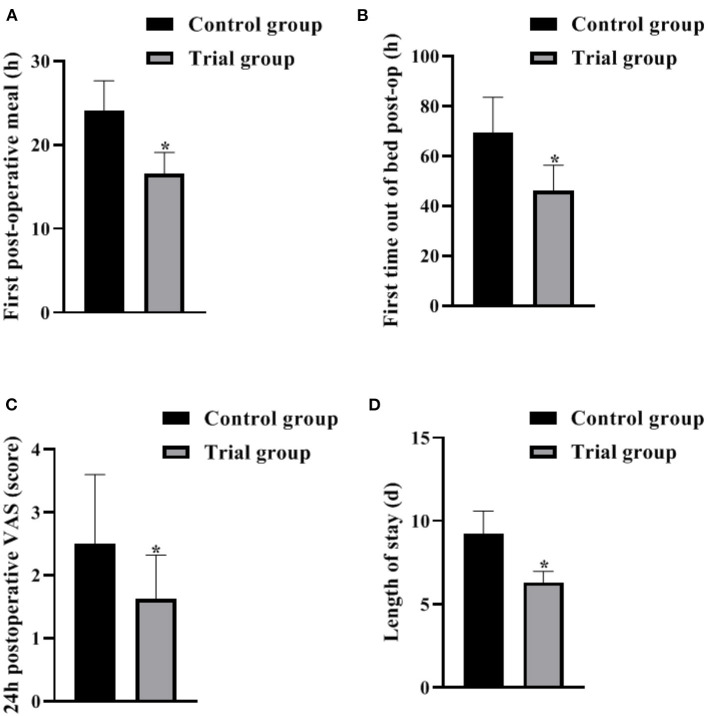
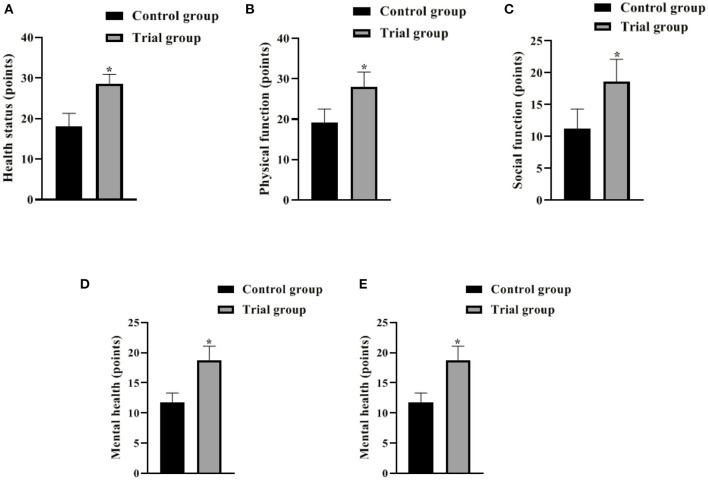
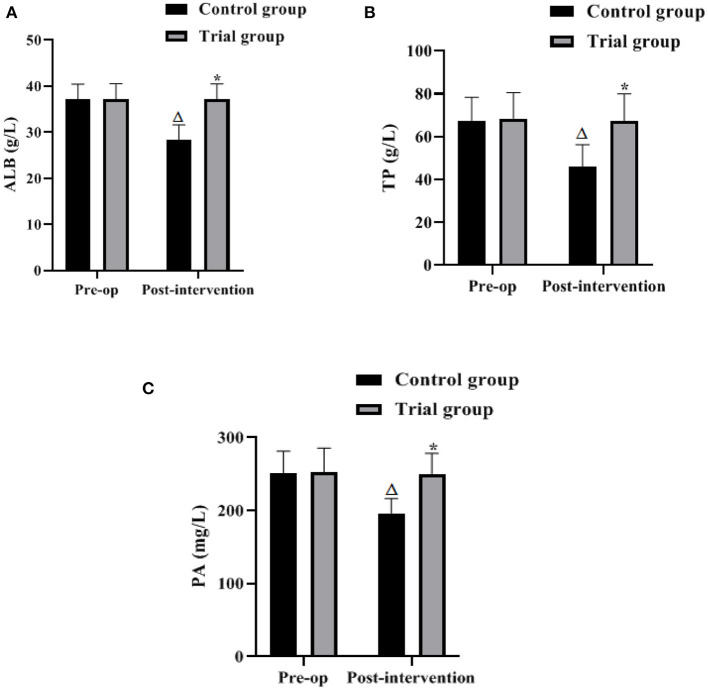
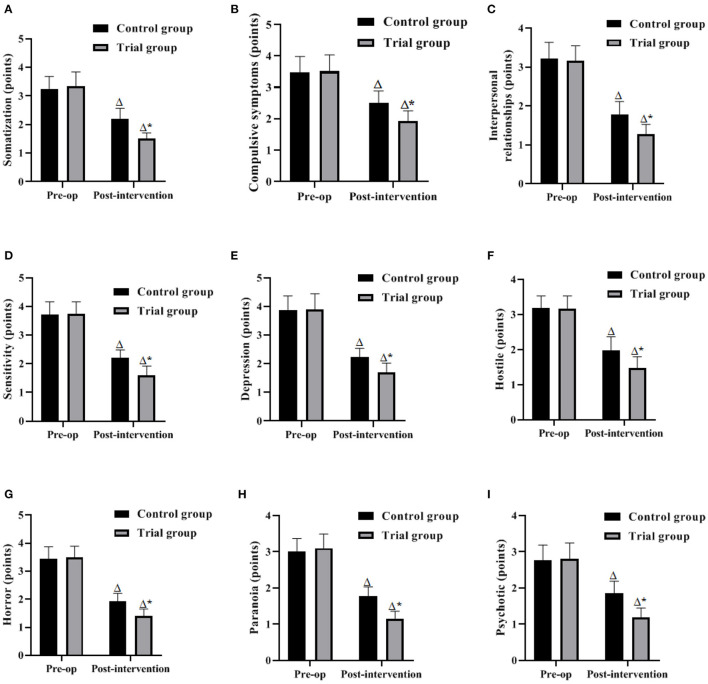
Eighty-six patients admitted to our hospital for radical lumpectomy for thyroid cancer between April 2018 and April 2021 were selected, of which 40 patients admitted between April 2018 and April 2019 were included in the control group with conventional perioperative care. Forty-six patients admitted between May 2019 and April 2021 were included in the trial group with FTS care based on nutritional support. The two groups of patients were compared in terms of postoperative feeding time, length of stay, time out of bed, VAS scores, albumin (ALB), total protein (TP) and prealbumin (PA) levels, negative emotions [Mental Health Test Questionnaire (DCL-90)], quality of life [General Quality of Life Inventory (GQOLI-74)] and complication rates.
The patients in the trial group had shorter feeding time, hospitalization time and time out of bed than the control group ( < 0.05). After the intervention, ALB, TP and PA levels were higher in the trial group than in the control group vs. preoperatively ( < 0.05); VAS scores in the trial group were lower than VAS scores in the control group during the same period ( < 0.05). The postoperative DCL-90 scores of the trial group were lower than those of the control group ( < 0.05); the GQOLI-74 scores and total scores of the trial group were higher than those of the control group at the 3-month postoperative follow-up ( < 0.05). The overall incidence of complications such as hoarseness, choking on water, hand and foot numbness, wound infection, and hypocalemia was lower in the trial group than in the control group ( < 0.05).
The implementation of FTS care based on nutritional support for patients after endoscopic radical thyroidectomyr can effectively improve the postoperative recovery and reduce their pain level, as well as help improve their nutritional status, negative emotions and improve their quality of life, which is worth promoting.
探讨并分析基于营养支持的快速康复外科(FTS)对甲状腺癌根治性肿块切除术后患者康复疗效及营养状况改善的影响。
选取2018年4月至2021年4月在我院行甲状腺癌根治性肿块切除术的86例患者,其中2018年4月至2019年4月收治的40例患者纳入对照组,给予常规围手术期护理。2019年5月至2021年4月收治的46例患者纳入试验组,给予基于营养支持的FTS护理。比较两组患者术后进食时间、住院时间、下床时间、视觉模拟评分法(VAS)评分、白蛋白(ALB)、总蛋白(TP)和前白蛋白(PA)水平、负性情绪[精神卫生评定量表(DCL-90)]、生活质量[生活质量综合评定问卷(GQOLI-74)]及并发症发生率。
试验组患者的进食时间、住院时间和下床时间均短于对照组(P<0.05)。干预后,试验组的ALB、TP和PA水平高于对照组且高于术前(P<0.05);同期试验组的VAS评分低于对照组(P<0.05)。试验组术后DCL-90评分低于对照组(P<0.05);术后3个月随访时,试验组的GQOLI-74评分及总分高于对照组(P<0.05)。试验组声音嘶哑、饮水呛咳、手足麻木、伤口感染、低钙血症等并发症的总发生率低于对照组(P<0.05)。
对甲状腺癌内镜根治术后患者实施基于营养支持的FTS护理,可有效促进术后恢复,降低疼痛程度,有助于改善营养状况、负性情绪及提高生活质量,值得推广。