• 文献检索
  • 文档翻译
  • 深度研究
  • 学术资讯
  • Suppr Zotero 插件Zotero 插件
  • 邀请有礼
  • 套餐&价格
  • 历史记录
应用&插件
Suppr Zotero 插件Zotero 插件浏览器插件Mac 客户端Windows 客户端微信小程序
定价
高级版会员购买积分包购买API积分包
服务
文献检索文档翻译深度研究API 文档MCP 服务
关于我们
关于 Suppr公司介绍联系我们用户协议隐私条款
关注我们

Suppr 超能文献

核心技术专利:CN118964589B侵权必究
粤ICP备2023148730 号-1Suppr @ 2026

文献检索

告别复杂PubMed语法,用中文像聊天一样搜索,搜遍4000万医学文献。AI智能推荐,让科研检索更轻松。

立即免费搜索

文件翻译

保留排版,准确专业,支持PDF/Word/PPT等文件格式,支持 12+语言互译。

免费翻译文档

深度研究

AI帮你快速写综述,25分钟生成高质量综述,智能提取关键信息,辅助科研写作。

立即免费体验

使用电动牙刷的刷牙模式自然主义研究。

A naturalistic study of brushing patterns using powered toothbrushes.

机构信息

Department of Electrical and Computer Engineering, University of California, Los Angeles, California, United States of America.

Department of Biostatistics, University of California, Los Angeles, California, United States of America.

出版信息

PLoS One. 2022 May 19;17(5):e0263638. doi: 10.1371/journal.pone.0263638. eCollection 2022.

DOI:10.1371/journal.pone.0263638
PMID:35587489
原文链接:https://pmc.ncbi.nlm.nih.gov/articles/PMC9119504/
Abstract

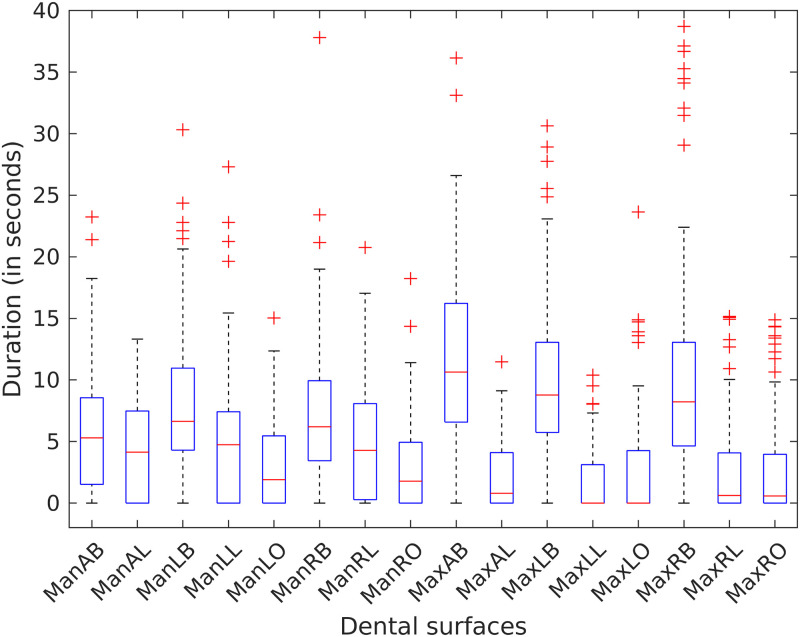
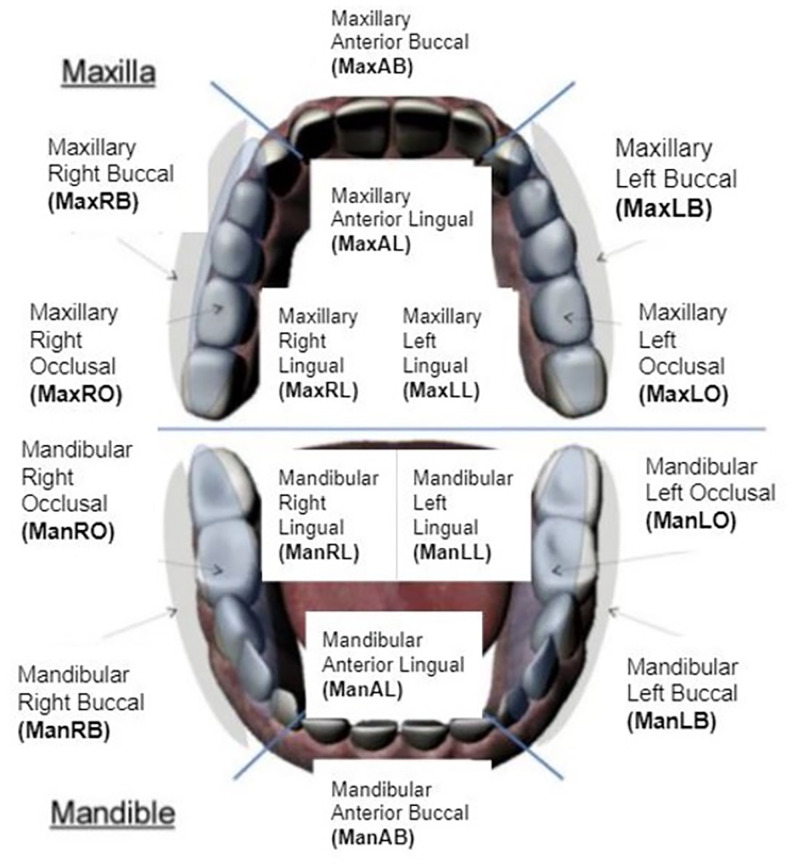
Dental caries and periodontal disease are very common chronic diseases closely linked to inadequate removal of dental plaque. Powered toothbrushes are viewed as more effective at removing plaque; however, the conflicting evidence and considerable unexplained heterogeneity in their clinical outcomes does not corroborate the relative merits of powered tooth brushing. To explain the heterogeneity of brushing patterns with powered toothbrushes, we conducted a observational study of tooth brushing practices of 12 participants in their naturalistic setting. Integrated brush sensors and a digital data collection platform allowed unobtrusive and accurate capture of habitual brushing patterns. Annotated brushing data from 10 sessions per participant was chosen for scrutiny of brushing patterns. Analysis of brushing patterns from the total 120 sessions revealed substantial between- and within-participant variability in brushing patterns and efficiency. Most participants (91.67%) brushed for less than the generally prescribed two minutes; individual participants were also inconsistent in brushing duration across sessions. The time devoted to brushing different dental regions was also quite unequal. Participants generally brushed their buccal tooth surfaces more than twice as long as the occlusal (2.18 times longer (95% CI 1.42, 3.35; p < 0.001)) and lingual surfaces (2.22 times longer (95% CI 1.62, 3.10; p < 0.001); the lingual surfaces of the maxillary molars were often neglected (p < 0.001). Participants also varied in the epochs of excessive brushing pressure and the regions to which they were applied. In general, the occlusal surfaces were more likely to be brushed with excessive pressure (95% CI 0.10, 0.98; p = 0.015). Our study reveals that users of powered toothbrushes vary substantially in their use of the toothbrushes and diverge from recommended brushing practices. The inconsistent brushing patterns, between and within individuals, can affect effective plaque removal. Our findings underscore the limited uptake of generic oral self-care recommendations and emphasize the need for personalized brushing recommendations that derive from the objective sensor data provided by powered toothbrushes.

摘要

龋齿和牙周病是非常常见的慢性疾病,与牙菌斑清除不充分密切相关。电动牙刷被认为在清除牙菌斑方面更有效;然而,其临床效果的证据相互矛盾,且存在大量无法解释的异质性,这并不支持电动刷牙相对优势的说法。为了解释使用电动牙刷时刷牙模式的异质性,我们在自然环境中对 12 名参与者的刷牙习惯进行了观察性研究。集成式牙刷传感器和数字化数据采集平台可实现对习惯性刷牙模式的非侵入式和准确捕捉。选择了每位参与者的 10 次刷牙数据进行刷牙模式的详细分析。对总共 120 次刷牙的刷牙模式分析显示,刷牙模式和效率存在很大的个体内和个体间差异。大多数参与者(91.67%)的刷牙时间少于一般规定的两分钟;个别参与者在不同的刷牙过程中也存在刷牙持续时间不一致的情况。用于清洁不同牙齿区域的时间也很不相等。参与者通常会将颊侧牙齿表面刷得比咬合面(长 2.18 倍(95%CI 1.42,3.35;p < 0.001)和舌侧表面(长 2.22 倍(95%CI 1.62,3.10;p < 0.001))长得多;上颌磨牙的舌侧表面经常被忽略(p < 0.001)。参与者在过度刷牙压力的时间段和应用区域上也存在差异。一般来说,咬合面更有可能承受过度的刷牙压力(95%CI 0.10,0.98;p = 0.015)。我们的研究表明,电动牙刷的使用者在使用牙刷方面存在很大差异,并且偏离了推荐的刷牙习惯。个体之间和个体内部不一致的刷牙模式会影响有效清除牙菌斑。我们的研究结果强调了通用口腔自我保健建议接受度有限,并强调需要根据电动牙刷提供的客观传感器数据制定个性化的刷牙建议。
https://cdn.ncbi.nlm.nih.gov/pmc/blobs/cef7/9119504/fac0e5d491bb/pone.0263638.g007.jpg
https://cdn.ncbi.nlm.nih.gov/pmc/blobs/cef7/9119504/4fa9142876fc/pone.0263638.g001.jpg
https://cdn.ncbi.nlm.nih.gov/pmc/blobs/cef7/9119504/ec86c9cfa143/pone.0263638.g002.jpg
https://cdn.ncbi.nlm.nih.gov/pmc/blobs/cef7/9119504/a4b5756fada5/pone.0263638.g003.jpg
https://cdn.ncbi.nlm.nih.gov/pmc/blobs/cef7/9119504/29a69a628a13/pone.0263638.g004.jpg
https://cdn.ncbi.nlm.nih.gov/pmc/blobs/cef7/9119504/5f22ae0e66a0/pone.0263638.g005.jpg
https://cdn.ncbi.nlm.nih.gov/pmc/blobs/cef7/9119504/ff59c65c27c9/pone.0263638.g006.jpg
https://cdn.ncbi.nlm.nih.gov/pmc/blobs/cef7/9119504/fac0e5d491bb/pone.0263638.g007.jpg
https://cdn.ncbi.nlm.nih.gov/pmc/blobs/cef7/9119504/4fa9142876fc/pone.0263638.g001.jpg
https://cdn.ncbi.nlm.nih.gov/pmc/blobs/cef7/9119504/ec86c9cfa143/pone.0263638.g002.jpg
https://cdn.ncbi.nlm.nih.gov/pmc/blobs/cef7/9119504/a4b5756fada5/pone.0263638.g003.jpg
https://cdn.ncbi.nlm.nih.gov/pmc/blobs/cef7/9119504/29a69a628a13/pone.0263638.g004.jpg
https://cdn.ncbi.nlm.nih.gov/pmc/blobs/cef7/9119504/5f22ae0e66a0/pone.0263638.g005.jpg
https://cdn.ncbi.nlm.nih.gov/pmc/blobs/cef7/9119504/ff59c65c27c9/pone.0263638.g006.jpg
https://cdn.ncbi.nlm.nih.gov/pmc/blobs/cef7/9119504/fac0e5d491bb/pone.0263638.g007.jpg

相似文献

1
A naturalistic study of brushing patterns using powered toothbrushes.使用电动牙刷的刷牙模式自然主义研究。
PLoS One. 2022 May 19;17(5):e0263638. doi: 10.1371/journal.pone.0263638. eCollection 2022.
2
What characterizes effective tooth brushing of daily users of powered versus manual toothbrushes?日常使用电动牙刷和手动牙刷的人群,其有效刷牙的特点是什么?
BMC Oral Health. 2022 Jan 16;22(1):10. doi: 10.1186/s12903-022-02045-0.
3
Comparative efficacy of a specially engineered sonic powered toothbrush with unique sensing and control technologies to two commercially available power toothbrushes on established plaque and gingivitis.一款具有独特传感和控制技术的特殊设计声波电动牙刷与两款市售电动牙刷在已形成的牙菌斑和牙龈炎方面的比较疗效。
J Clin Dent. 2012;23 Spec No A:A5-10.
4
Oral hygiene interventions for people with intellectual disabilities.针对智障人士的口腔卫生干预措施。
Cochrane Database Syst Rev. 2019 May 31;5(5):CD012628. doi: 10.1002/14651858.CD012628.pub2.
5
The relative effectiveness of six powered toothbrushes for dental plaque removal.六种电动牙刷在去除牙菌斑方面的相对有效性。
J Clin Dent. 2002;13(5):198-202.
6
Plaque removal efficacy of a new experimental battery-powered toothbrush relative to two advanced-design manual toothbrushes.一种新型实验性电池驱动牙刷相对于两种先进设计手动牙刷的牙菌斑清除效果。
J Clin Dent. 2002;13(5):191-7.
7
Randomised methodology development study to investigate plaque removal efficacy of manual toothbrushes.随机方法学发展研究,以调查手动牙刷清除牙菌斑的效果。
J Dent. 2022 Jan;116:103830. doi: 10.1016/j.jdent.2021.103830. Epub 2021 Oct 21.
8
A Thirty-Day Safety and Efficacy Evaluation of the Rowenta, Braun and Sonicare Powered Toothbrushes and a Manual Toothbrush.Rowenta、博朗和飞利浦声波震动牙刷与手动牙刷的30天安全性和有效性评估。
J Clin Dent. 1997;8(4):120-3.
9
The relative cleaning effectiveness of manual and powered toothbrushes.手动牙刷和电动牙刷的相对清洁效果。
J Clin Dent. 2002;13(5):211-4.
10
One- and 3-minute plaque removal by a battery-powered versus a manual toothbrush.电动牙刷与手动牙刷在1分钟和3分钟内清除牙菌斑的效果比较。
J Periodontol. 2004 Aug;75(8):1107-13. doi: 10.1902/jop.2004.75.8.1107.

引用本文的文献

1
Exploring brushing and questionnaire data from a feasibility randomised control trial of a school-based smart, connected toothbrushing program.探索一项基于学校的智能联网刷牙计划可行性随机对照试验中的刷牙和问卷调查数据。
BMC Oral Health. 2025 Aug 15;25(1):1330. doi: 10.1186/s12903-025-06581-3.
2
Comparative Analysis of Plaque Removal and Wear between Electric-Mechanical and Bioelectric Toothbrushes.电动机械牙刷与生物电牙刷在牙菌斑清除及磨损方面的对比分析
Bioengineering (Basel). 2024 May 9;11(5):474. doi: 10.3390/bioengineering11050474.
3
Optimizing an adaptive digital oral health intervention for promoting oral self-care behaviors: Micro-randomized trial protocol.

本文引用的文献

1
A Scalable System for Passively Monitoring Oral Health Behaviors Using Electronic Toothbrushes in the Home Setting: Development and Feasibility Study.一种在家中使用电子牙刷被动监测口腔健康行为的可扩展系统:开发和可行性研究。
JMIR Mhealth Uhealth. 2020 Jun 24;8(6):e17347. doi: 10.2196/17347.
2
How effective is a powered toothbrush as compared to a manual toothbrush? A systematic review and meta-analysis of single brushing exercises.电动牙刷相对于手动牙刷的效果如何?单次刷牙的系统评价和荟萃分析。
Int J Dent Hyg. 2020 Feb;18(1):17-26. doi: 10.1111/idh.12401. Epub 2019 Jul 23.
3
Toothbrushing: to the best of one's abilities is possibly not good enough.
优化自适应数字化口腔健康干预措施以促进口腔自我保健行为:微随机试验方案。
Contemp Clin Trials. 2024 Apr;139:107464. doi: 10.1016/j.cct.2024.107464. Epub 2024 Feb 1.
4
Results of objective brushing data recorded from a powered toothbrush used by elderly individuals with mild cognitive impairment related to values for oral health.使用电动牙刷对患有与口腔健康相关的轻度认知障碍的老年人进行客观刷牙数据记录的结果。
Clin Oral Investig. 2023 Dec 21;28(1):8. doi: 10.1007/s00784-023-05407-2.
5
A Study on the Biofilm Removal Efficacy of a Bioelectric Toothbrush.生物电牙刷去除牙菌斑效果的研究
Bioengineering (Basel). 2023 Oct 13;10(10):1184. doi: 10.3390/bioengineering10101184.
6
Delivery of biologics: Topical administration.生物制剂的传递:局部给药。
Biomaterials. 2023 Nov;302:122312. doi: 10.1016/j.biomaterials.2023.122312. Epub 2023 Sep 4.
7
"You should brush your teeth better": a randomized controlled trial comparing best-possible versus as-usual toothbrushing.“你应该更好地刷牙”:一项比较最佳可能刷牙和常规刷牙的随机对照试验。
BMC Oral Health. 2023 Jul 6;23(1):456. doi: 10.1186/s12903-023-03127-3.
8
Fewer Children in Families Associated with Lower Odds of Early Childhood Caries: A Sample from Three Countries.家庭中儿童人数较少与幼儿龋齿风险降低有关:来自三个国家的样本。
Int J Environ Res Public Health. 2023 Jan 26;20(3):2195. doi: 10.3390/ijerph20032195.
9
Preventing burnout and substance use disorder among healthcare professionals through breathing exercises, emotion identification, and writing activities.通过呼吸练习、情绪识别和写作活动预防医护人员的职业倦怠和物质使用障碍。
J Interprof Educ Pract. 2022 Dec;29:100570. doi: 10.1016/j.xjep.2022.100570. Epub 2022 Nov 4.
刷牙:尽最大努力可能还不够好。
BMC Oral Health. 2018 Oct 19;18(1):167. doi: 10.1186/s12903-018-0633-0.
4
Tooth brushing motion patterns with manual and powered toothbrushes-a randomised video observation study.手动和电动牙刷的刷牙动作模式:一项随机视频观察研究。
Clin Oral Investig. 2018 Mar;22(2):715-720. doi: 10.1007/s00784-017-2146-7. Epub 2017 Jun 16.
5
Toothbrushing and flossing behaviour in young adults--a video observation.年轻人的刷牙和使用牙线行为——一项视频观察研究
Clin Oral Investig. 2015 May;19(4):851-8. doi: 10.1007/s00784-014-1306-2. Epub 2014 Sep 4.
6
An analysis of methods of toothbrushing recommended by dental associations, toothpaste and toothbrush companies and in dental texts.对牙科协会、牙膏及牙刷公司以及牙科文献中推荐的刷牙方法的分析。
Br Dent J. 2014 Aug;217(3):E5. doi: 10.1038/sj.bdj.2014.651.
7
Powered versus manual toothbrushing for oral health.电动牙刷与手动牙刷对口腔健康的影响
Cochrane Database Syst Rev. 2014 Jun 17;2014(6):CD002281. doi: 10.1002/14651858.CD002281.pub3.
8
Dental plaque, preventive care, and tooth brushing associated with dental caries in primary teeth in schoolchildren ages 6-9 years of Leon, Nicaragua.尼加拉瓜莱昂市 6-9 岁学童乳牙龋齿与牙菌斑、预防保健和刷牙的关系。
Med Sci Monit. 2013 Nov 19;19:1019-26. doi: 10.12659/MSM.884025.
9
Toothbrushing region detection using three-axis accelerometer and magnetic sensor.利用三轴加速度计和磁力传感器进行刷牙区域检测。
IEEE Trans Biomed Eng. 2012 Mar;59(3):872-81. doi: 10.1109/TBME.2011.2181369. Epub 2011 Dec 22.
10
The effect of brushing time and dentifrice on dental plaque removal in vivo.刷牙时间和牙膏对体内牙菌斑清除的影响。
J Dent Hyg. 2009 Summer;83(3):111-6. Epub 2009 Aug 14.