Department of Oral Biology, University of Floridagrid.15276.37 College of Dentistry, Gainesville, Florida, USA.
Microbiol Spectr. 2022 Jun 29;10(3):e0052222. doi: 10.1128/spectrum.00522-22. Epub 2022 May 19.
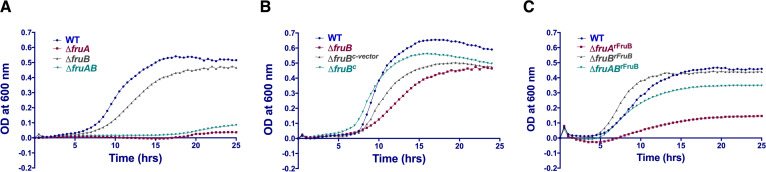
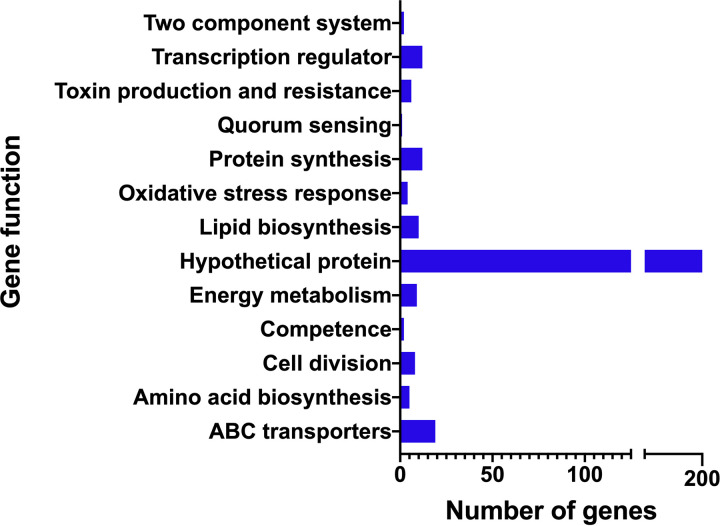
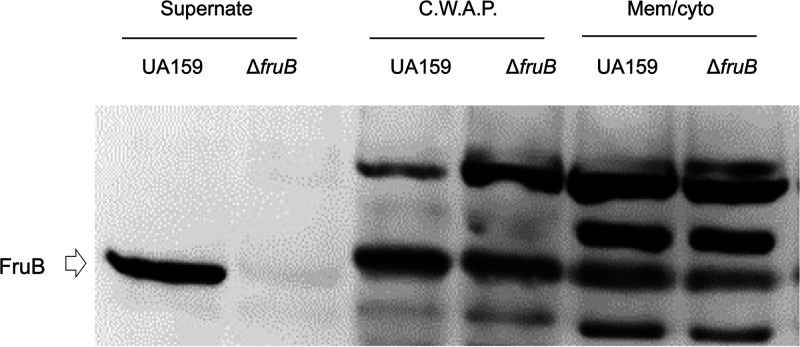
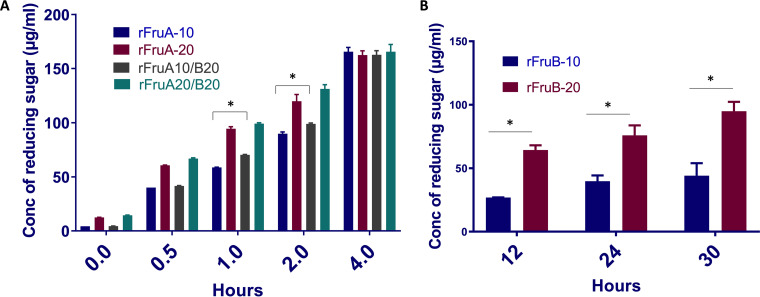
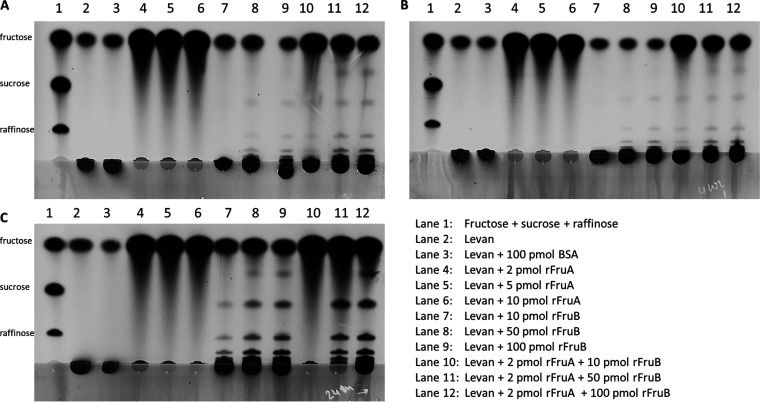
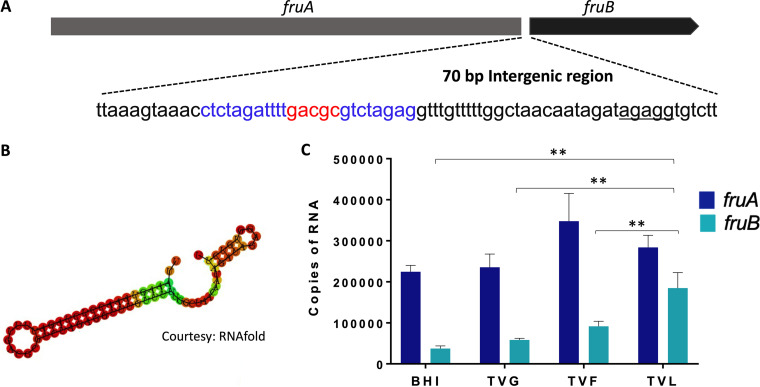
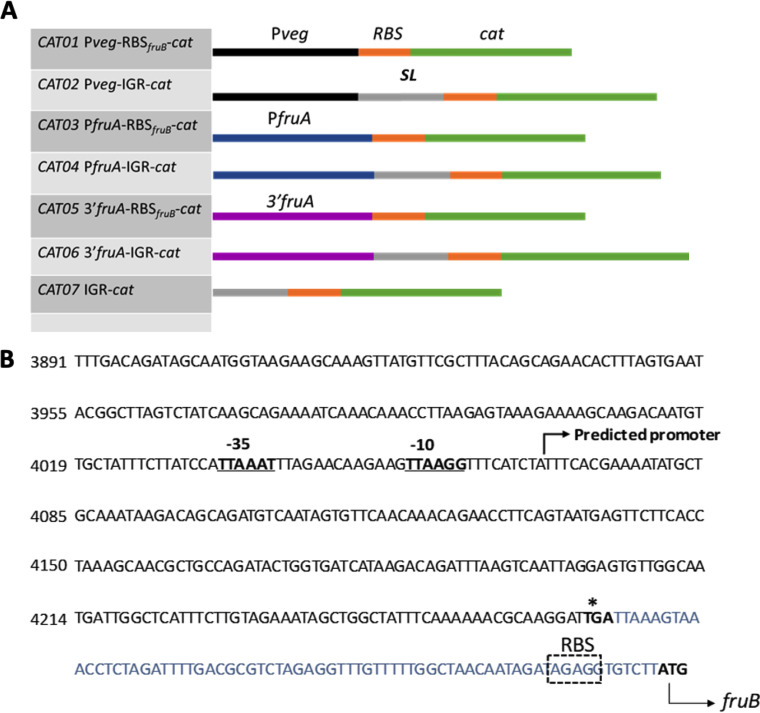
Streptococcus mutans, the primary etiologic agent of human dental caries, and a variety of oral Streptococcus and Actinomyces spp. synthesize high molecular mass homopolymers of fructose (fructans) with predominantly β2,1- (inulins) or β2,6-linkages (levans). The ability of S. mutans to degrade fructans contributes to the severity of dental caries. The extracellular product of of S. mutans is an exo- β-d-fructofuranosidase that releases fructose from levan and inulin. Located 70 bp downstream of encodes a member of the glycoside hydrolase family 32, but the function of FruB has not been established. Growth assays performed using wild-type UA159 and deficient derivatives, with fructans as the sole carbohydrate source, showed a significant reduction in the growth rate of a mutant on levan, but not on inulin. A purified, recombinant FruB protein degraded levan to release mainly fructooligosaccharides. Driven by the promoter and a secondary promoter located in the 3' region of the sequence, the gene is inducible by fructose and especially by levan, but a stable stem-loop structure in the intergenic region likely modulates transcriptional read-through from . Transcriptomic analysis of UA159 and a mutant grown on 0.2% levan revealed differential expression of genes encoding ABC transporters, transcriptional regulators and genes involved in growth and stress tolerance. The ability of FruB to enhance levan metabolism and the high degree of conservation of FruB across S. mutans isolates imply a significant contribution of FruB to the fitness and virulence of this pathogen in human dental biofilms. Carbohydrate metabolism and acid production are essential for the development of dental caries. As a by-product of sucrose metabolism, formation, and degradation of fructans enhances the severity of caries by S. mutans in animal models. This study highlights a significant breakthrough in identifying FruB in S. mutans as an endolevanase that contributes to efficient utilization of levan, a specific type of fructan produced by certain commensals but not S. mutans. Transcriptomic analysis revealed that FruB-dependent levan metabolism impacted global gene regulation, including a large number of novel genes. Considering the preference for levan by both FruA and FruB, the conservation of in S. mutans might represent a competitive advantage in access to the energy storage produced by dental microbiome. This is the first report demonstrating the presence of an endolevanase in S. mutans, therefore should be of broad interest to the fields of dental caries and complex carbohydrate metabolism.
变形链球菌是人类龋齿的主要病原体,还有多种口腔链球菌和放线菌属合成高分子质量的果糖同聚物(果聚糖),主要具有β2,1-(菊粉)或β2,6-键(莱鲍迪苷)。变形链球菌降解果聚糖的能力导致龋齿的严重程度增加。变形链球菌的细胞外产物是一种外切-β-d-呋喃果糖苷酶,可从莱鲍迪苷和菊粉中释放果糖。位于 70bp 下游的 编码糖苷水解酶家族 32 的成员,但 FruB 的功能尚未确定。使用野生型 UA159 和缺乏衍生物的生长测定,以果聚糖作为唯一的碳水化合物来源,表明 突变体在莱鲍迪苷上的生长速度显著降低,但在菊粉上则没有。纯化的重组 FruB 蛋白可降解莱鲍迪苷以释放主要的果寡糖。在 启动子和位于 序列 3'区域的辅助启动子的驱动下, 基因可被果糖诱导,特别是被莱鲍迪苷诱导,但基因间区中稳定的茎环结构可能调节从 的转录通读。对在 0.2%莱鲍迪苷上生长的 UA159 和 突变体的转录组分析显示,编码 ABC 转运蛋白、转录调节剂以及与生长和应激耐受相关的基因的表达存在差异。FruB 增强莱鲍迪苷代谢的能力以及 FruB 在不同的 S. mutans 分离株中的高度保守性表明,FruB 对该病原体在人类牙菌斑中的适应性和毒力有重要贡献。碳水化合物代谢和产酸是龋齿发展的必要条件。作为蔗糖代谢的副产物,果糖的形成和降解增强了变形链球菌在动物模型中龋齿的严重程度。本研究在鉴定 S. mutans 中的 FruB 作为内切莱鲍迪苷酶方面取得了重大突破,该酶有助于有效利用莱鲍迪苷,这是一种特定类型的果糖聚糖,由某些共生菌产生,但 S. mutans 不会产生。转录组分析显示,FruB 依赖的莱鲍迪苷代谢影响全局基因调控,包括大量新基因。考虑到 FruA 和 FruB 对莱鲍迪苷的偏好, 在 S. mutans 中的保守性可能代表了对牙微生物群产生的能量储存的竞争优势。这是首次报道在变形链球菌中存在内切莱鲍迪苷酶,因此应该引起龋齿和复杂碳水化合物代谢领域的广泛关注。