State Key Laboratory of Toxicology and Medical Countermeasures, Beijing Institute of Pharmacology and Toxicology, Beijing, China.
Sci Rep. 2022 May 19;12(1):8469. doi: 10.1038/s41598-022-12242-0.
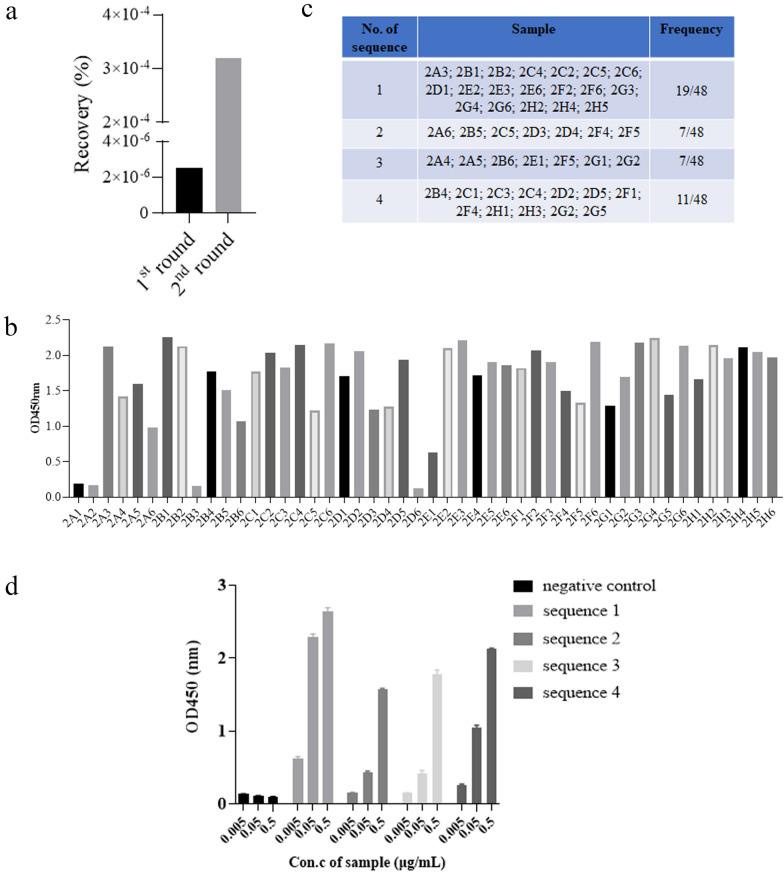
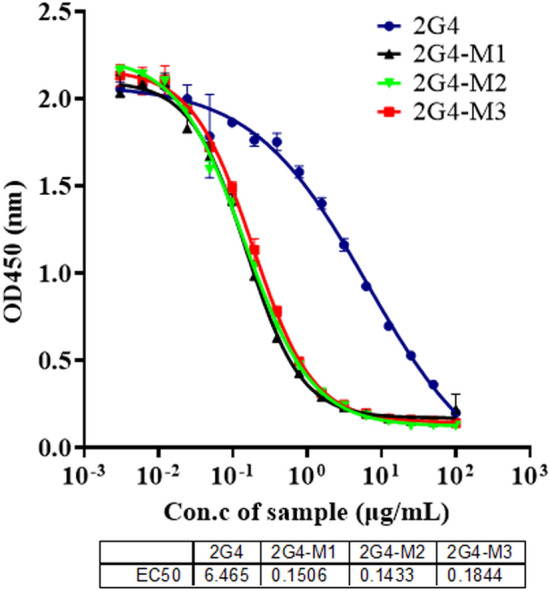
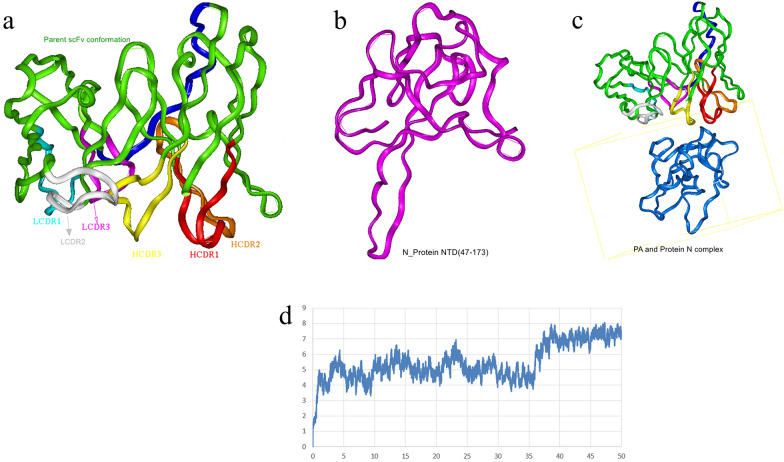
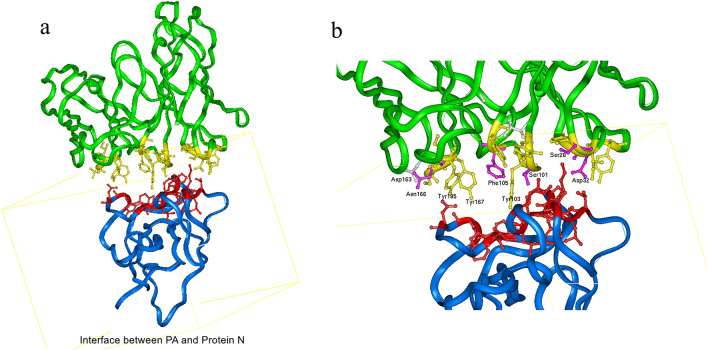
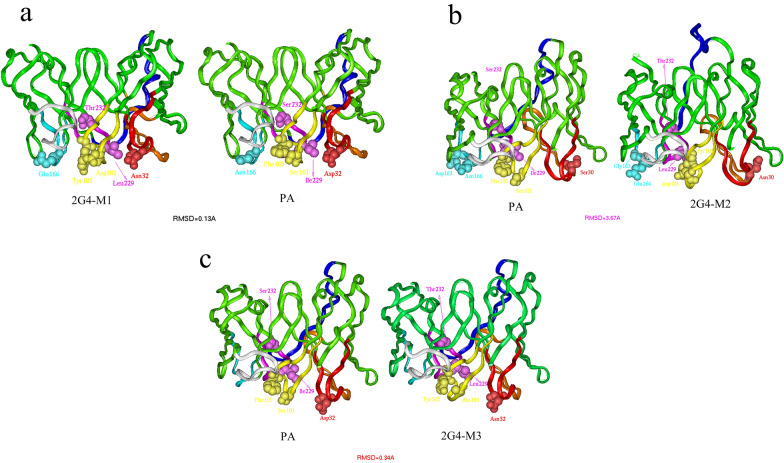
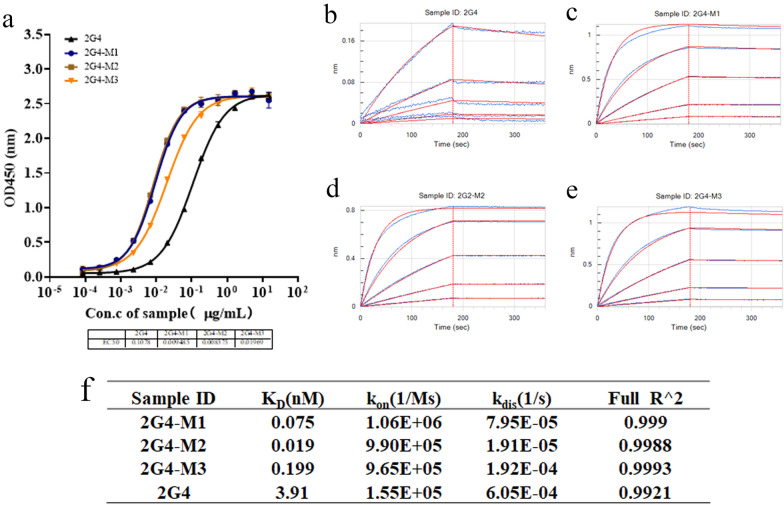
The continuous mutation of SARS-CoV-2 has presented enormous challenges to global pandemic prevention and control. Recent studies have shown evidence that the genome sequence of SARS-CoV-2 nucleocapsid proteins is relatively conserved, and their biological functions are being confirmed. There is increasing evidence that the N protein will not only provide a specific diagnostic marker but also become an effective treatment target. In this study, 2G4, which specifically recognizes the N protein, was identified by screening a human phage display library. Based on the computer-guided homology modelling and molecular docking method used, the 3-D structures for the 2G4 scFv fragment (VH-linker-VL structure, with (GS) as the linker peptide in the model), SARS-CoV-2 N protein and its complex were modelled and optimized with a suitable force field. The binding mode and key residues of the 2G4 and N protein interaction were predicted, and three mutant antibodies (named 2G4-M1, 2G4-M2 and 2G4-M3) with higher affinity were designed theoretically. Using directed point mutant technology, the three mutant antibodies were prepared, and their affinity was tested. Their affinity constants of approximately 0.19 nM (2G4-M1), 0.019 nM (2G4-M2) and 0.075 nM (2G4-M3) were at least one order of magnitude lower than that of the parent antibody (3 nM; 2G4, parent antibody), as determined using a biolayer interferometry (BLI) assay. It is expected that high-affinity candidates will be used for diagnosis and even as potential therapeutic drugs for the SARS-CoV-2 pandemic.
SARS-CoV-2 的持续突变给全球疫情防控带来了巨大挑战。最近的研究表明,SARS-CoV-2 核衣壳蛋白的基因组序列相对保守,其生物学功能正在得到证实。越来越多的证据表明,N 蛋白不仅将提供一个特定的诊断标志物,而且还将成为一个有效的治疗靶点。在这项研究中,通过筛选人噬菌体展示文库,鉴定出了特异性识别 N 蛋白的 2G4。基于计算机指导的同源建模和分子对接方法,对 2G4 scFv 片段(VH-接头-VL 结构,模型中的接头肽为 (GS))、SARS-CoV-2 N 蛋白及其复合物进行了建模和优化,使用合适的力场。预测了 2G4 与 N 蛋白相互作用的结合模式和关键残基,并从理论上设计了三个具有更高亲和力的突变抗体(分别命名为 2G4-M1、2G4-M2 和 2G4-M3)。利用定向点突变技术制备了这三种突变抗体,并测试了它们的亲和力。使用生物层干涉法(BLI)测定,它们的亲和力常数分别约为 0.19 nM(2G4-M1)、0.019 nM(2G4-M2)和 0.075 nM(2G4-M3),至少比亲本抗体(3 nM;2G4,亲本抗体)低一个数量级。预计高亲和力的候选物将用于诊断,甚至可能成为治疗 SARS-CoV-2 大流行的潜在治疗药物。