Center for Pathogen Biology and Infectious Diseases, Key Laboratory of Organ Regeneration and Transplantation of the Ministry of Education, The First Hospital of Jilin University, State Key Laboratory of Human-Animal Zoonotic infectious Diseases, Changchun, China.
College of Wildlife and Protected Area, Northeast Forestry University, Harbin, China.
Signal Transduct Target Ther. 2021 Sep 1;6(1):331. doi: 10.1038/s41392-021-00742-w.
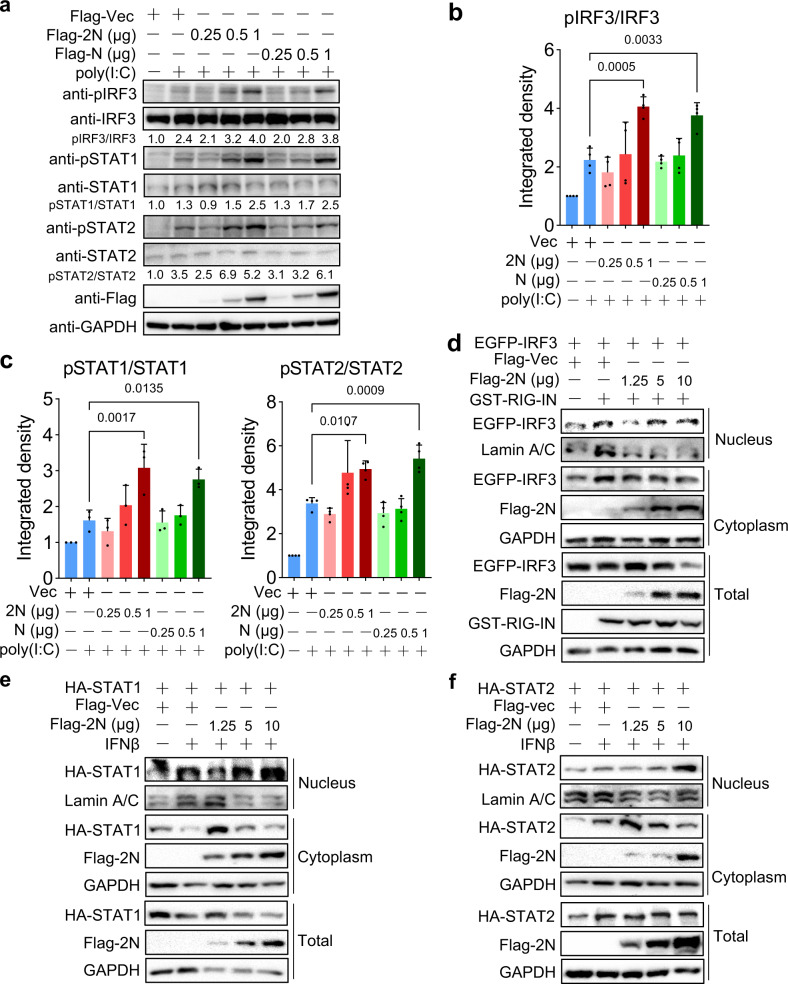
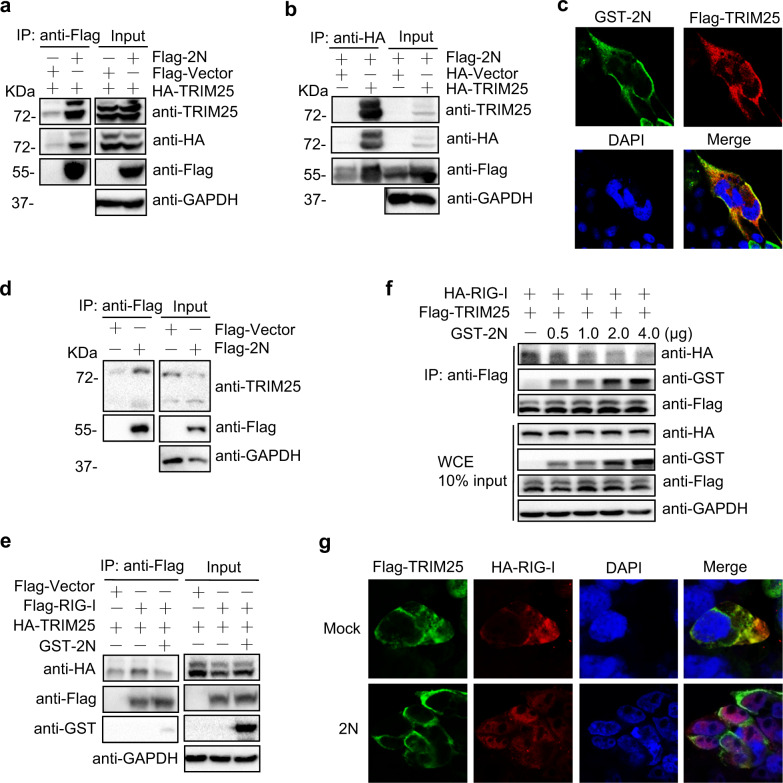
The recently emerged severe acute respiratory syndrome coronavirus 2 (SARS-CoV-2), which is the causative agent of ongoing global pandemic of COVID-19, may trigger immunosuppression in the early stage and overactive immune response in the late stage of infection; However, the underlying mechanisms are not well understood. Here we demonstrated that the SARS-CoV-2 nucleocapsid (N) protein dually regulated innate immune responses, i.e., the low-dose N protein suppressed type I interferon (IFN-I) signaling and inflammatory cytokines, whereas high-dose N protein promoted IFN-I signaling and inflammatory cytokines. Mechanistically, the SARS-CoV-2 N protein dually regulated the phosphorylation and nuclear translocation of IRF3, STAT1, and STAT2. Additionally, low-dose N protein combined with TRIM25 could suppress the ubiquitination and activation of retinoic acid-inducible gene I (RIG-I). Our findings revealed a regulatory mechanism of innate immune responses by the SARS-CoV-2 N protein, which would contribute to understanding the pathogenesis of SARS-CoV-2 and other SARS-like coronaviruses, and development of more effective strategies for controlling COVID-19.
新型严重急性呼吸综合征冠状病毒 2(SARS-CoV-2)是导致当前 COVID-19 全球大流行的病原体,它可能在感染的早期引发免疫抑制,在晚期引发过度活跃的免疫反应;然而,其潜在机制尚不清楚。在这里,我们证明了 SARS-CoV-2 核衣壳(N)蛋白双重调节先天免疫反应,即低剂量的 N 蛋白抑制 I 型干扰素(IFN-I)信号和炎症细胞因子,而高剂量的 N 蛋白促进 IFN-I 信号和炎症细胞因子。从机制上讲,SARS-CoV-2 N 蛋白双重调节 IRF3、STAT1 和 STAT2 的磷酸化和核易位。此外,低剂量的 N 蛋白与 TRIM25 结合可以抑制视黄酸诱导基因 I(RIG-I)的泛素化和激活。我们的研究结果揭示了 SARS-CoV-2 N 蛋白对先天免疫反应的调节机制,这将有助于理解 SARS-CoV-2 和其他 SARS 样冠状病毒的发病机制,并为控制 COVID-19 开发更有效的策略。