Department of Neurodegenerative Science, Van Andel Research Institute, 333 Bostwick Ave. N.E., Grand Rapids, MI, 49503-2518, USA.
Division of Psychiatry and Behavioral Medicine, Michigan State University College of Human Medicine, Grand Rapids, MI, USA.
Sci Rep. 2022 May 19;12(1):8404. doi: 10.1038/s41598-022-12391-2.
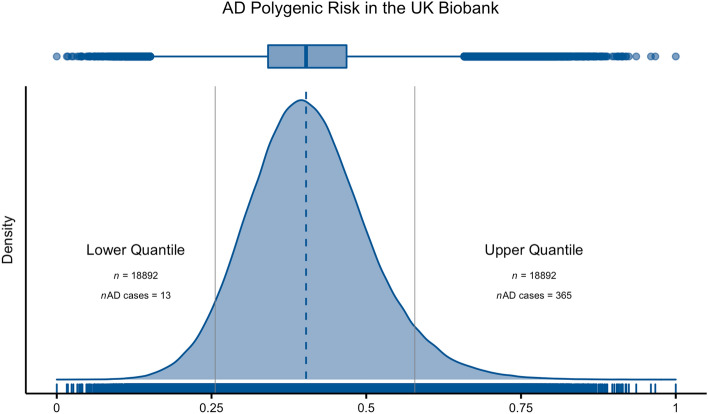
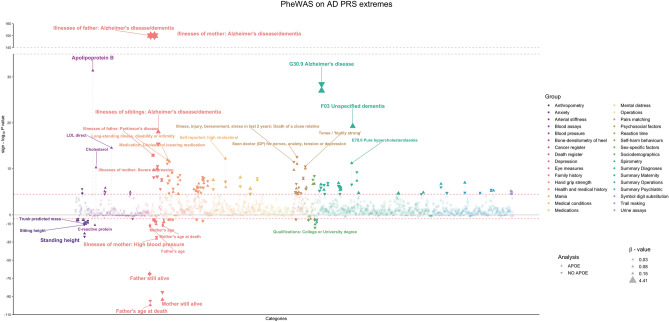
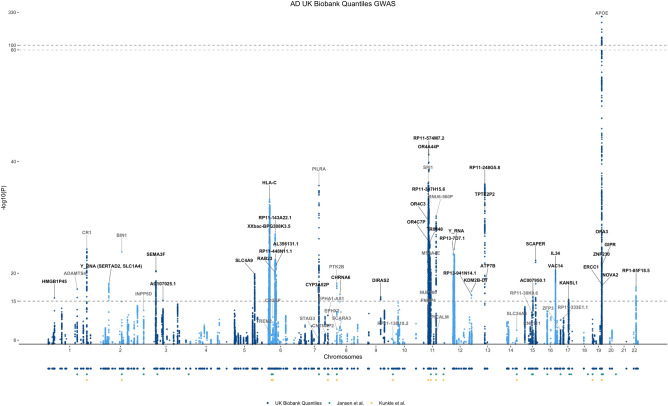
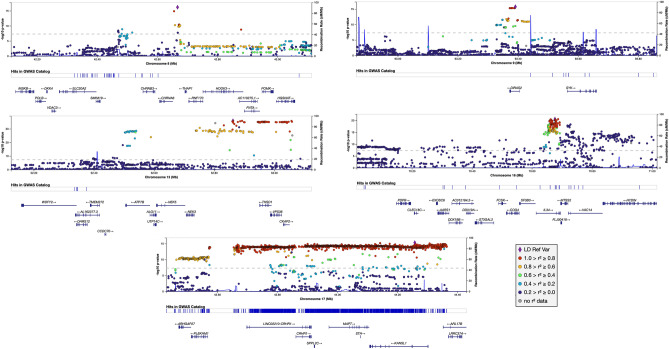
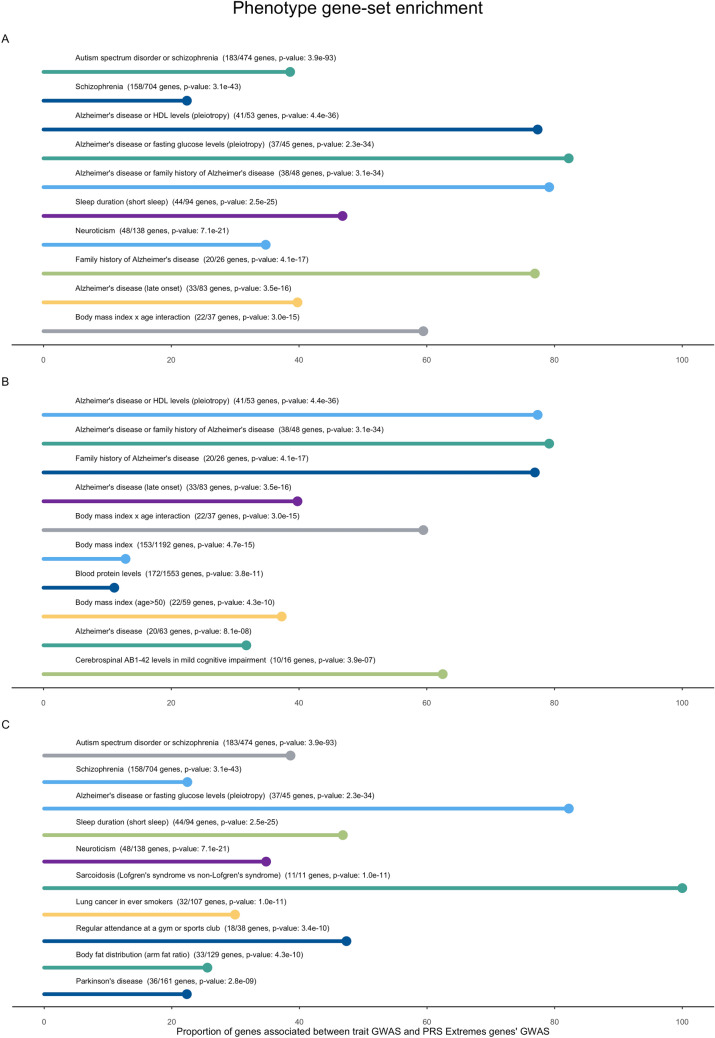
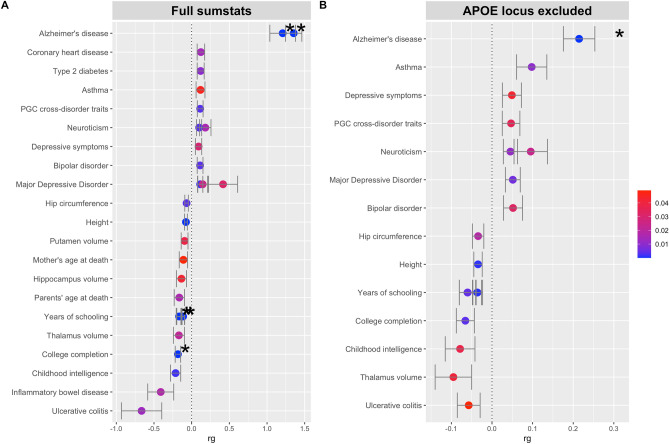
In just over a decade, advances in genome-wide association studies (GWAS) have offered an approach to stratify individuals based on genetic risk for disease. Using recent Alzheimer's disease (AD) GWAS results as the base data, we determined each individual's polygenic risk score (PRS) in the UK Biobank dataset. Using individuals within the extreme risk distribution, we performed a GWAS that is agnostic of AD phenotype and is instead based on known genetic risk for disease. To interpret the functions of the new risk factors, we conducted phenotype analyses, including a phenome-wide association study. We identified 246 loci surpassing the significance threshold of which 229 were not reported in the base AD GWAS. These include loci that showed suggestive levels of association in the base GWAS and loci not previously suspected to be associated with AD. Among these, there are loci, such as IL34 and KANSL1, that have since been shown to be associated with AD in recent studies. We also show highly significant genetic correlations with multiple health-related outcomes that provide insights into prodromal symptoms and comorbidities. This is the first study to utilize PRS as a phenotype-agnostic group classification in AD genetic studies. We identify potential new loci for AD and detail phenotypic analysis of these PRS extremes.
在短短十多年的时间里,全基因组关联研究 (GWAS) 的进展为基于遗传疾病风险对个体进行分层提供了一种方法。我们使用最近的阿尔茨海默病 (AD) GWAS 结果作为基础数据,确定了英国生物库数据集内每个个体的多基因风险评分 (PRS)。我们使用处于极端风险分布内的个体进行了一项与 AD 表型无关的 GWAS,而是基于已知的疾病遗传风险。为了解释新风险因素的功能,我们进行了表型分析,包括全表型关联研究。我们确定了 246 个超过显著阈值的位点,其中 229 个未在基础 AD GWAS 中报道。这些包括在基础 GWAS 中显示出提示性关联水平的位点和以前未怀疑与 AD 相关的位点。其中,有一些位点,如 IL34 和 KANSL1,在最近的研究中已经被证明与 AD 有关。我们还显示出与多个健康相关结果的高度显著遗传相关性,这些结果提供了对前驱症状和共病的深入了解。这是第一项利用 PRS 作为 AD 遗传研究中无表型分组分类的研究。我们确定了 AD 的潜在新位点,并详细分析了这些 PRS 极端值的表型。