Moonprasith Nantina, Date Jitsuhiro, Sako Takumi, Kida Takumitsu, Hiraoka Tatsuhiro, Yamaguchi Masayuki
School of Materials Science, Japan Advanced Institute of Science and Technology, 1-1 Asahidai, Nomi 923-1292, Japan.
Sirindhorn International Institute of Technology, Thammasat University, 99 Moo 18, Paholyothin, Khlong Luang 12120, Thailand.
Materials (Basel). 2022 Apr 20;15(9):2994. doi: 10.3390/ma15092994.
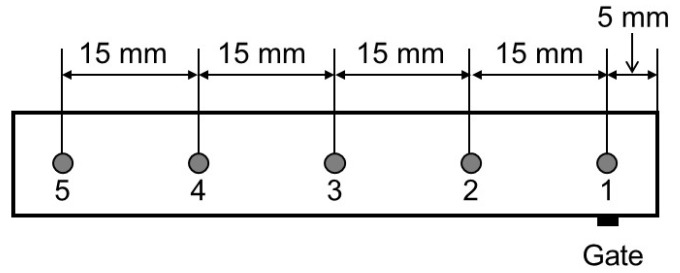
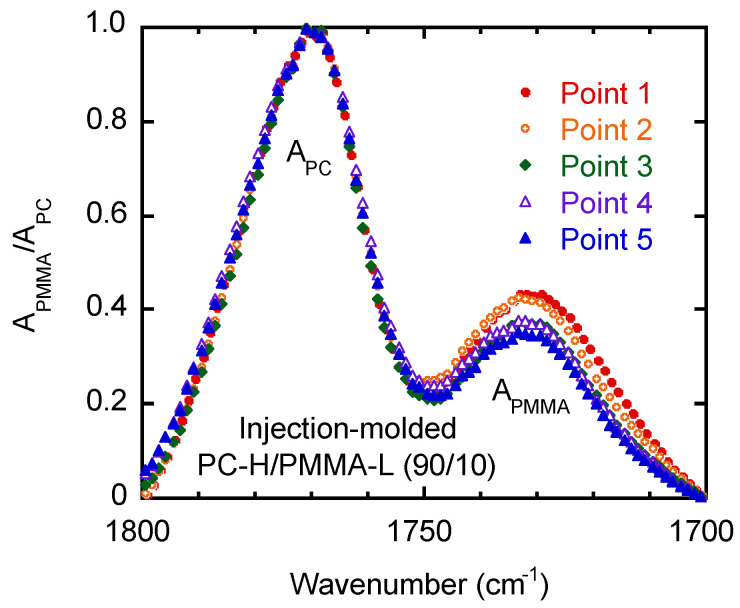
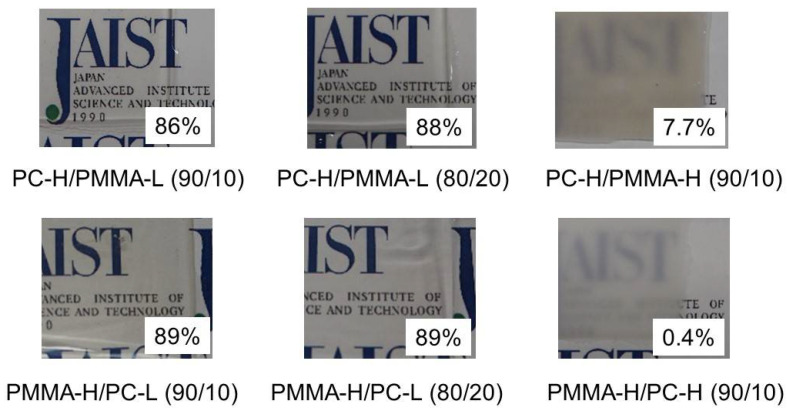
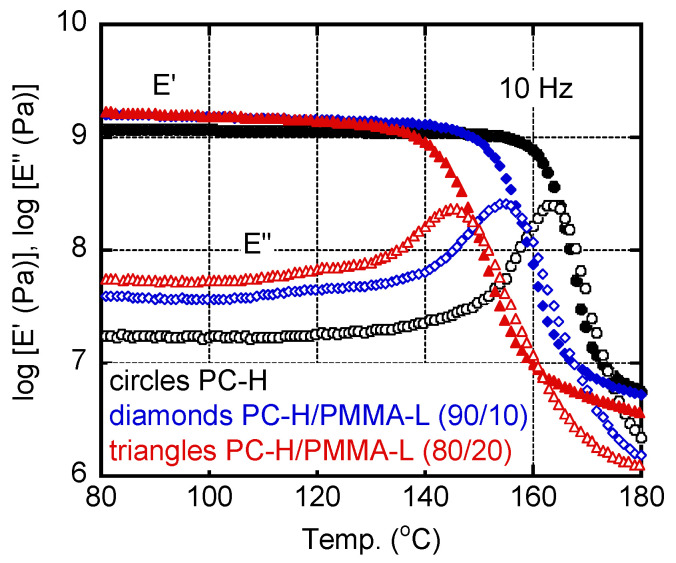
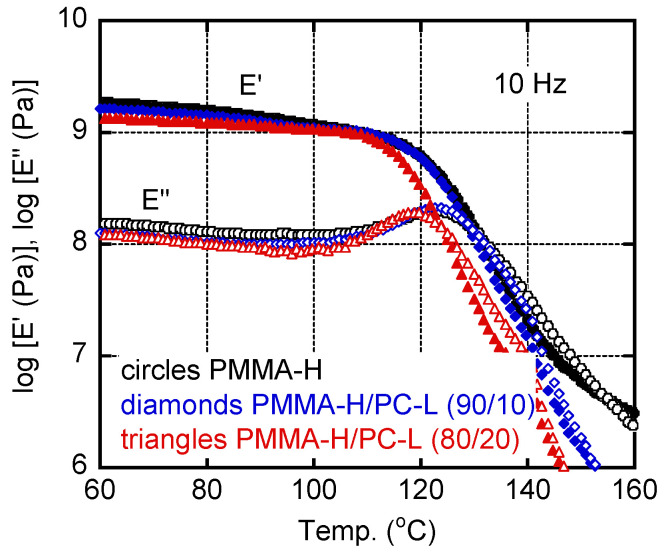
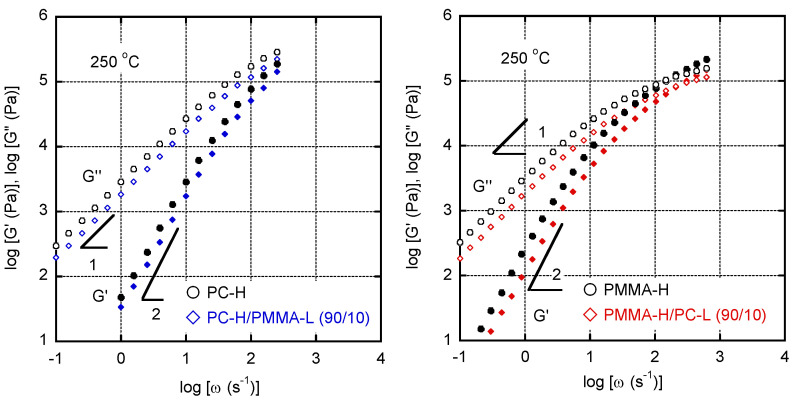
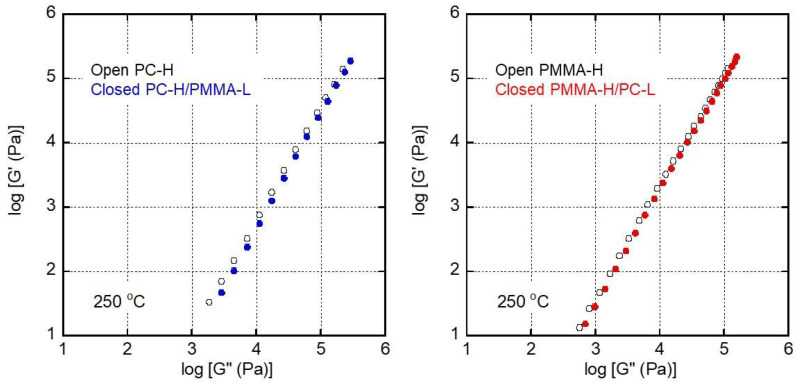
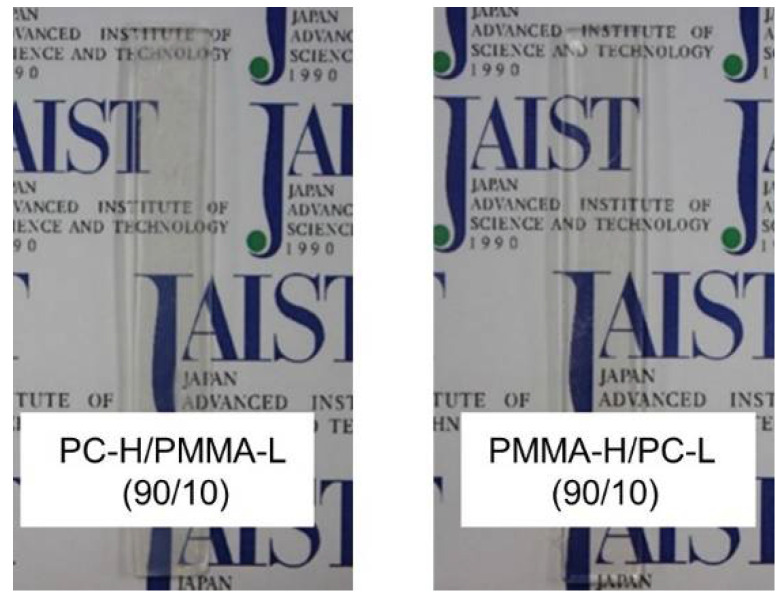
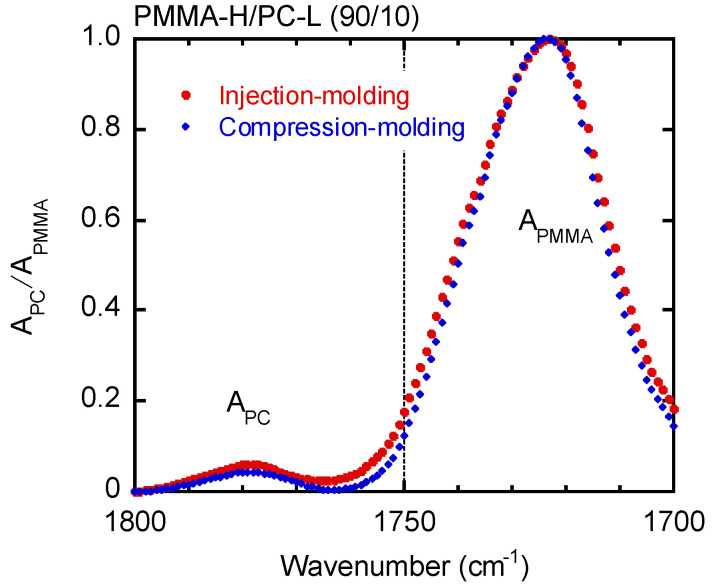
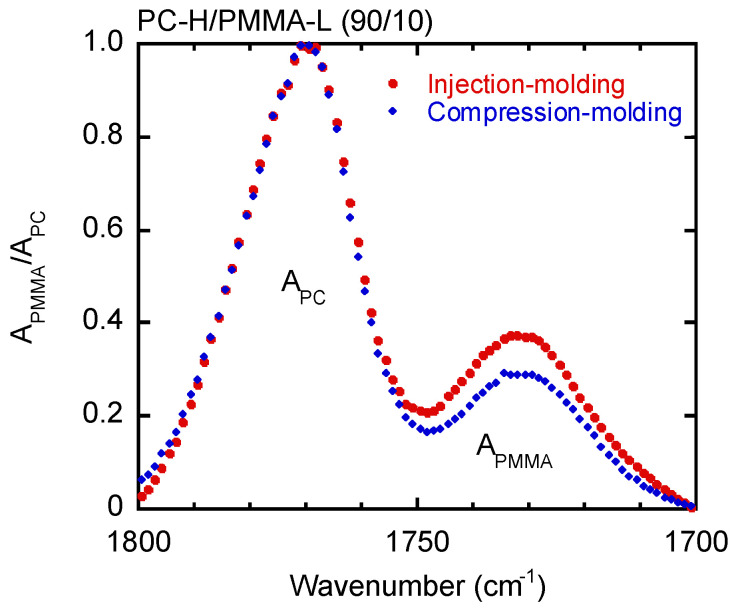
Miscible blends composed of bisphenol-A polycarbonate (PC) and poly(methyl methacrylate) (PMMA), in which one of them has low molecular weight, were employed to study the surface segregation behavior during flow. The blend samples showed typical rheological behaviors, such as simple polymer melts without a long-time relaxation mechanism ascribed to phase separation, demonstrating that they were miscible. After injection molding, the amounts of a low molecular weight component on the blend surface were found to be larger than the actual blend ratio. Because the injection-molded products were transparent despite a huge difference in refractive indices between PC and PMMA, they showed no phase separation. This result demonstrated that surface segregation of a low molecular weight component occurred under flow field, which expands the material design such as tough plastics with good scratch resistance and optical fibers with tapered refractive index.
由双酚 A 聚碳酸酯(PC)和聚甲基丙烯酸甲酯(PMMA)组成的可混溶共混物(其中一种具有低分子量)被用于研究流动过程中的表面偏析行为。共混物样品表现出典型的流变行为,例如没有归因于相分离的长时间松弛机制的简单聚合物熔体,表明它们是可混溶的。注塑成型后,发现共混物表面上低分子量组分的含量大于实际共混比例。由于尽管 PC 和 PMMA 之间的折射率存在巨大差异,但注塑产品是透明的,因此它们没有发生相分离。该结果表明,低分子量组分在流场下发生了表面偏析,这扩展了材料设计,例如具有良好耐刮性的坚韧塑料和具有渐变折射率的光纤。