Adje Yeba H, Brooks Kristina M, Castillo-Mancilla Jose R, Wyles David L, Anderson Peter L, Kiser Jennifer J
Department of Pharmaceutical Sciences, University of Colorado Anschutz Medical Campus, Aurora, CO, USA.
Division of Infectious Diseases, Department of Medicine, University of Colorado Anschutz Medical Campus, Aurora, CO, USA.
Ther Adv Infect Dis. 2022 May 13;9:20499361221095664. doi: 10.1177/20499361221095664. eCollection 2022 Jan-Dec.
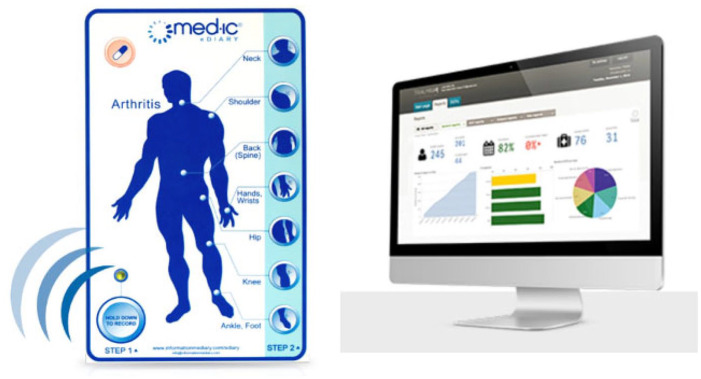
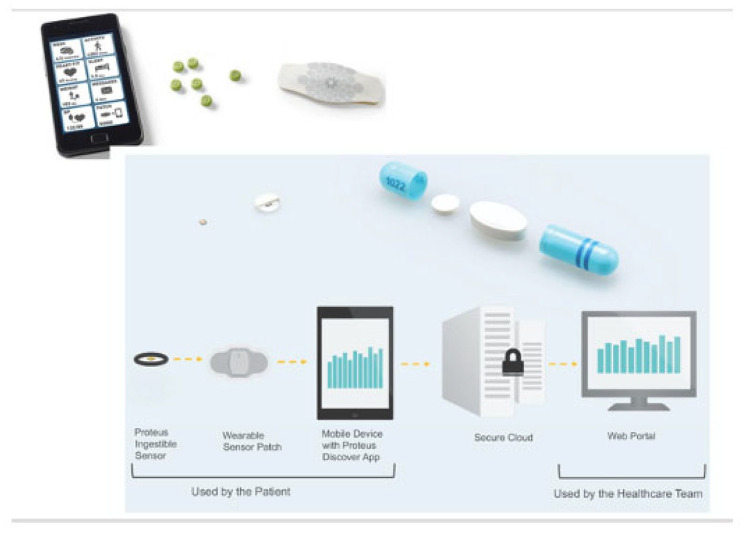
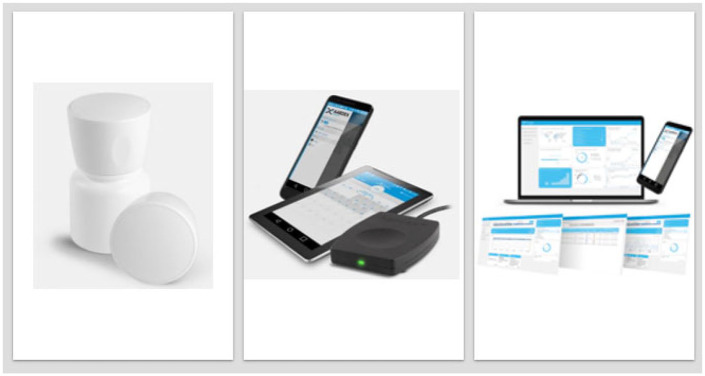
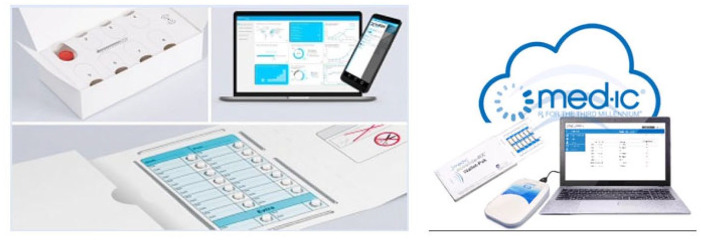
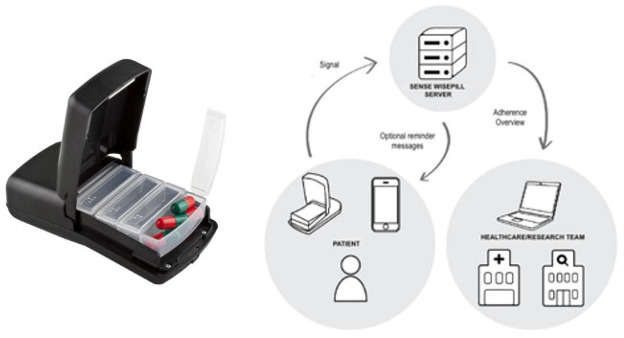
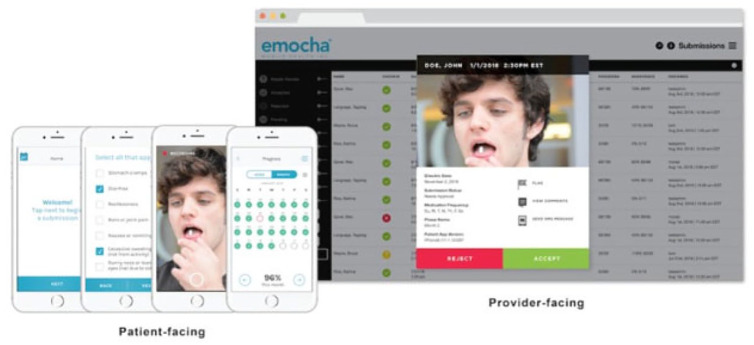
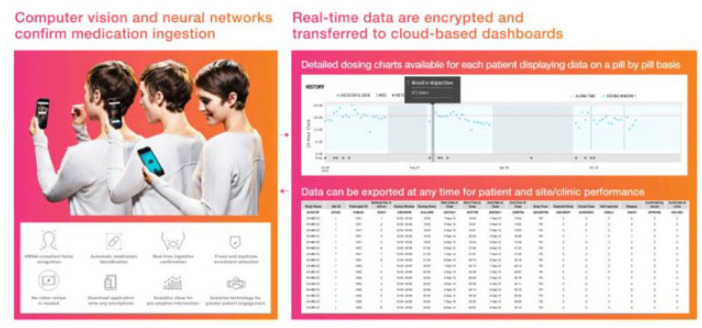
Direct-acting antivirals (DAAs) achieve high hepatitis C virus (HCV) cure rates and are forgiving to missed doses, but adherence-efficacy relationships have not been well defined. Traditional adherence measures (e.g. pill counts, self-report and pharmacy refills) over-estimate medication adherence. Newer technology-based tools have been used to provide more objective adherence data. Herein, electronic medication diaries (e-diaries), medication events monitoring system (MEMS) caps, electronic blister packs, electronic pill boxes, video-based directly observed therapy (vDOT), artificial intelligence platforms (AIPs), and ingestible sensor systems are described, and compared based on existing studies using DAA. Percent adherence, predictors of adherence, and HCV cure rates utilizing these technologies are included. DAA adherence with e-diaries was 95-96%, MEMS caps and ingestible biosensors were between 95% and 97%, blister pack weekly dosing ranged 73-98%, and daily dosing 73-94%, whereas electronic pill boxes ranged between 39% and 89%, vDOT was 98% and AIP 91-96%. Despite a wide range of adherence, high sustained virologic response (SVR) rates (86-100%) were observed across all studies utilizing these different technology-based tools. Current data support the forgiveness of DAA therapies to missed doses using tools that provide more quantitative adherence measures compared with self-report and provide insight on adherence-efficacy relationships for contemporary DAA.
直接作用抗病毒药物(DAAs)可实现较高的丙型肝炎病毒(HCV)治愈率,且对漏服药物的耐受性较好,但依从性与疗效之间的关系尚未明确界定。传统的依从性衡量方法(如药丸计数、自我报告和药房配药记录)会高估药物依从性。基于新技术的工具已被用于提供更客观的依从性数据。本文描述了电子药物日记(电子日记)、药物事件监测系统(MEMS)瓶盖、电子泡罩包装、电子药盒、基于视频的直接观察治疗(vDOT)、人工智能平台(AIP)和可摄入传感器系统,并根据使用DAAs的现有研究进行了比较。其中包括使用这些技术的依从率、依从性预测因素和HCV治愈率。使用电子日记的DAAs依从率为95%-96%,MEMS瓶盖和可摄入生物传感器的依从率在95%至97%之间,泡罩包装每周给药的依从率在73%-98%之间,每日给药的依从率在73%-94%之间,而电子药盒的依从率在39%至89%之间,vDOT为98%,AIP为91%-96%。尽管依从率范围很广,但在所有使用这些不同的基于技术的工具的研究中均观察到较高的持续病毒学应答(SVR)率(86%-100%)。目前的数据支持,与自我报告相比,使用能提供更定量的依从性衡量方法的工具时,DAAs疗法对漏服药物具有耐受性,并能深入了解当代DAAs的依从性与疗效之间的关系。