García-Descalzo Laura, García-López Eva, Cid Cristina
Centro de Astrobiología, Department of Planetology and Habitability, CSIC-INTA, Madrid, Spain.
Centro de Astrobiología, Department of Molecular Ecology, CSIC-INTA, Madrid, Spain.
Front Microbiol. 2022 May 3;13:841359. doi: 10.3389/fmicb.2022.841359. eCollection 2022.
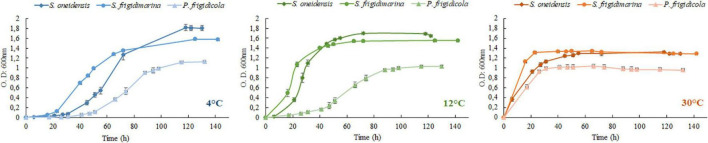
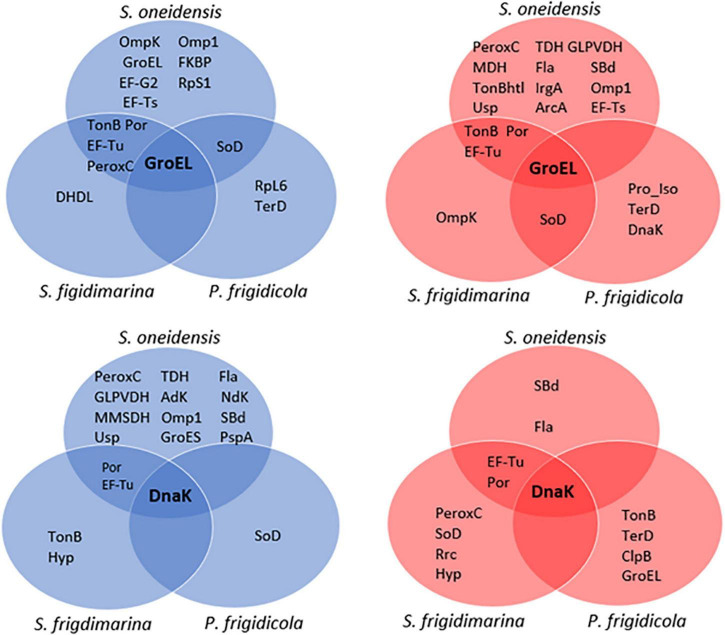
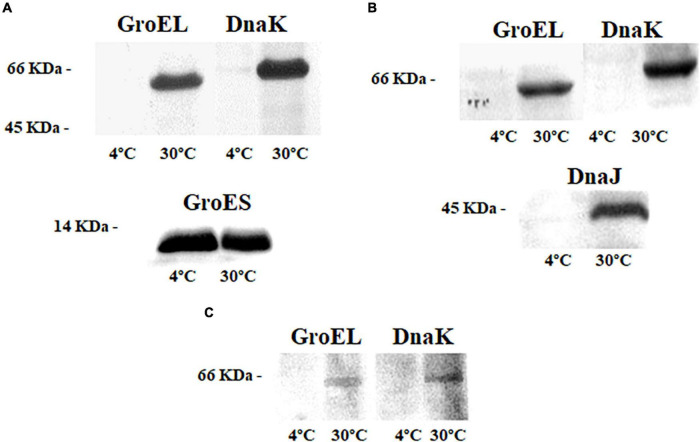
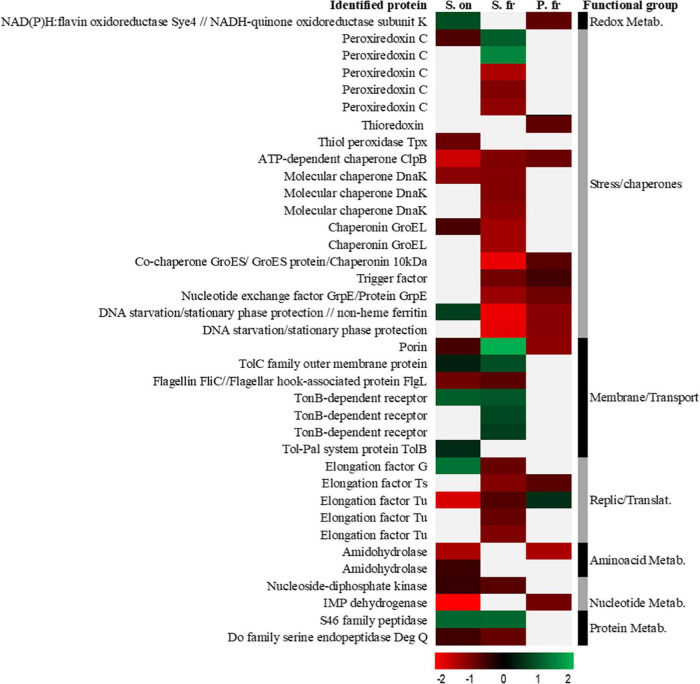
The old debate of nature (genes) vs. nurture (environmental variables) is once again topical concerning the effect of climate change on environmental microorganisms. Specifically, the Polar Regions are experiencing a drastic increase in temperature caused by the rise in greenhouse gas emissions. This study, in an attempt to mimic the molecular adaptation of polar microorganisms, combines proteomic approaches with a classical microbiological analysis in three bacterial species , , and . Both shewanellas are members of the same genus but they live in different environments. On the other hand, and share the same natural environment but belong to a different genus. The comparison of the strategies employed by each bacterial species estimates the contribution of genome vs. environmental variables in the adaptation to temperature. The results show a greater versatility of acclimatization for the genus with respect to . Besides, was the best-adapted species to thermal variations in the temperature range 4-30°C and displayed several adaptation mechanisms common with the other two species. Regarding the molecular machinery used by these bacteria to face the consequences of temperature changes, chaperones have a pivoting role. They form complexes with other proteins in the response to the environment, establishing cooperation with transmembrane proteins, elongation factors, and proteins for protection against oxidative damage.
关于气候变化对环境微生物的影响,自然(基因)与 nurture(环境变量)之间的古老争论再次成为热门话题。具体而言,由于温室气体排放增加,极地地区正经历着气温的急剧上升。本研究试图模拟极地微生物的分子适应性,将蛋白质组学方法与对三种细菌物种(希瓦氏菌属中的两种以及另一种细菌)的经典微生物分析相结合。两种希瓦氏菌属于同一属,但生活在不同环境中。另一方面,另外两种细菌共享相同的自然环境,但属于不同的属。对每种细菌物种所采用策略的比较估计了基因组与环境变量在温度适应中的作用。结果表明,相对于另一种希瓦氏菌属,某一希瓦氏菌属在适应环境方面具有更大的通用性。此外,在4至30°C的温度范围内,某一细菌是对热变化适应性最强的物种,并表现出与其他两个物种共有的几种适应机制。关于这些细菌用于应对温度变化后果的分子机制,伴侣蛋白起着关键作用。它们在对环境的反应中与其他蛋白质形成复合物,与跨膜蛋白、延伸因子以及抗氧化损伤的蛋白质建立合作关系。