Laboratory of Tissue and Cell Biology, Lab Teaching & Management Center, Chongqing Medical University, Chongqing, PR China.
Department of Gastrointestinal Surgery, The First Affiliated Hospital of Chongqing Medical University, Chongqing, PR China.
Pharm Biol. 2022 Dec;60(1):862-878. doi: 10.1080/13880209.2022.2063341.
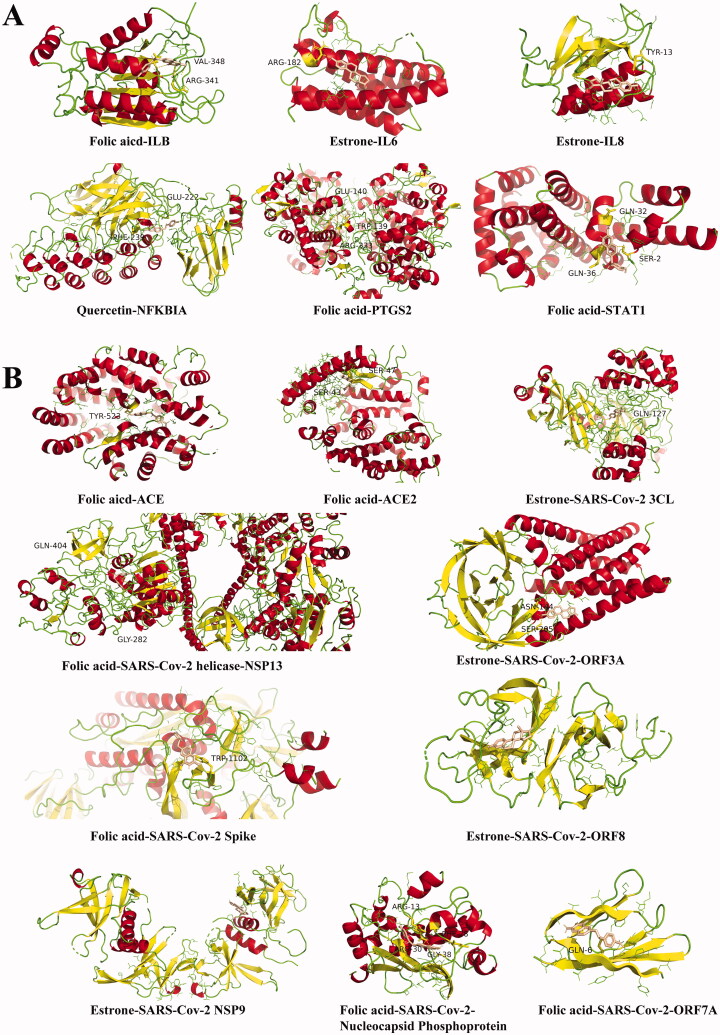
Coronavirus disease 2019 is a global pandemic. Studies suggest that folic acid has antiviral effects. Molecular docking shown that folic acid can act on SARS-CoV-2 Nucleocapsid Phosphoprotein (SARS-CoV-2 N).
To identify novel molecular therapeutic targets for SARS-CoV-2.
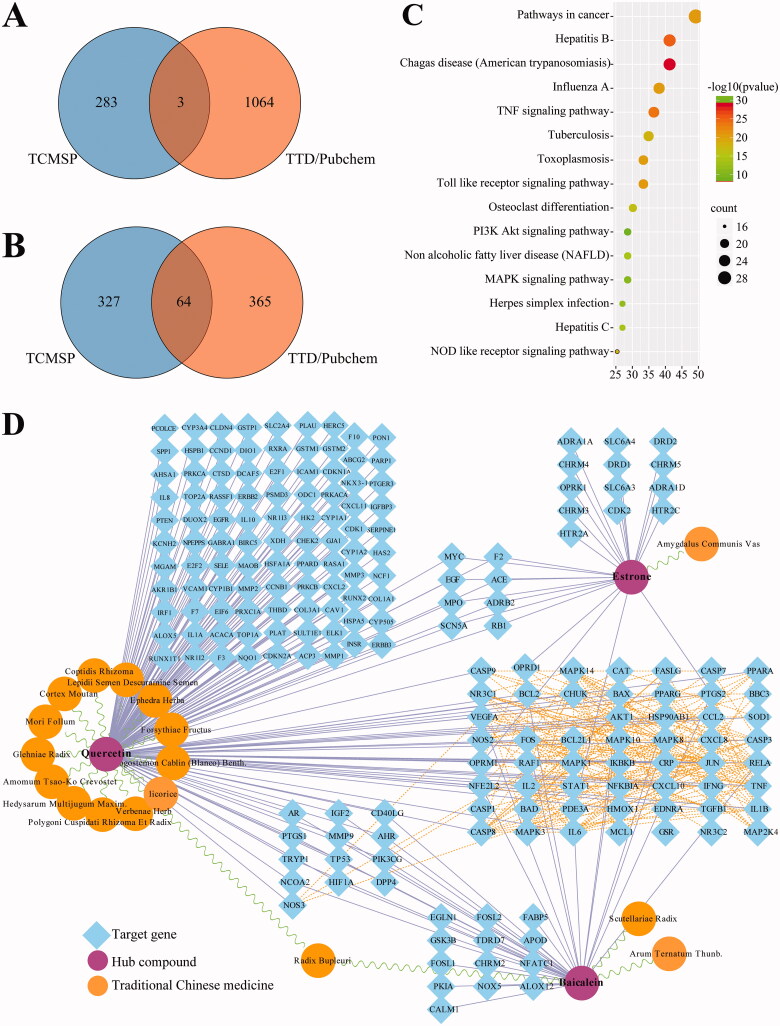
Traditional Chinese medicine targets and virus-related genes were identified with network pharmacology and big data analysis. Folic acid was singled out by molecular docking, and its potential target SARS-CoV-2 N was identified. Inhibition of SARS-CoV-2 N of folic acid was verified at the cellular level.
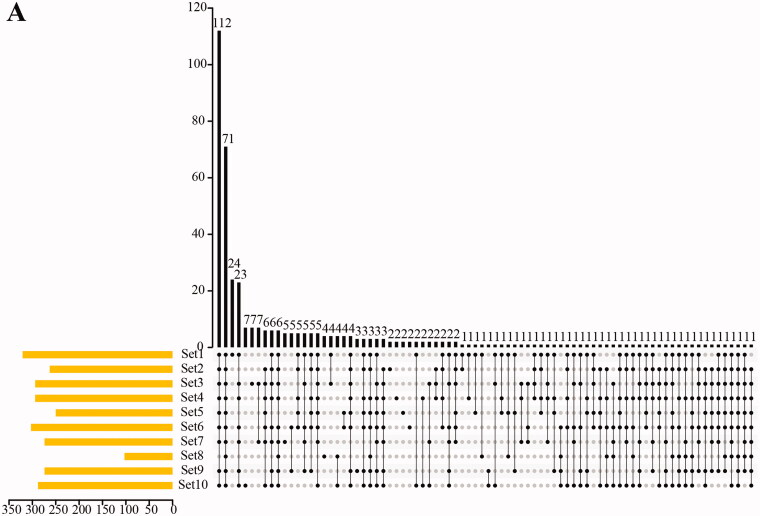
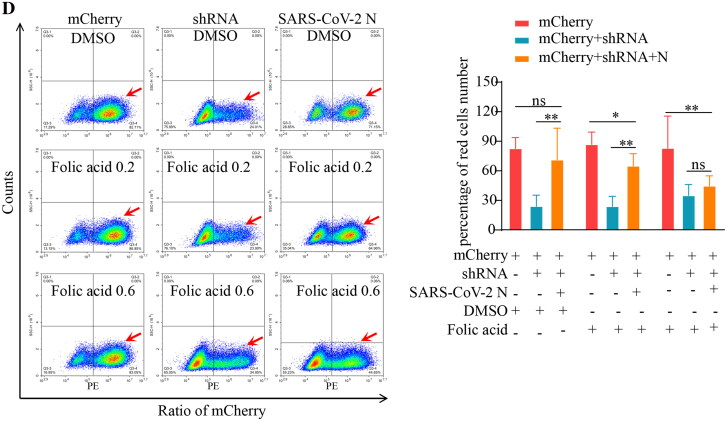
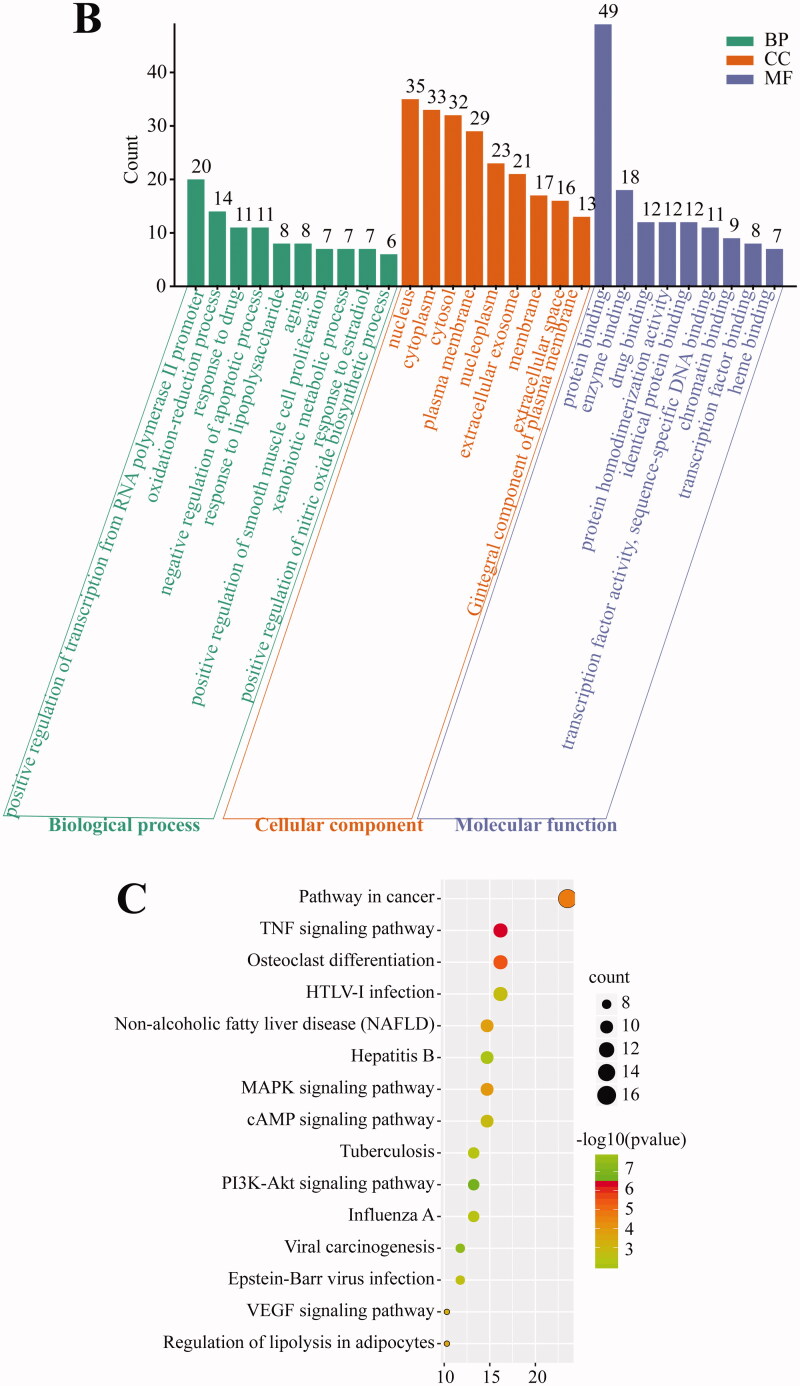
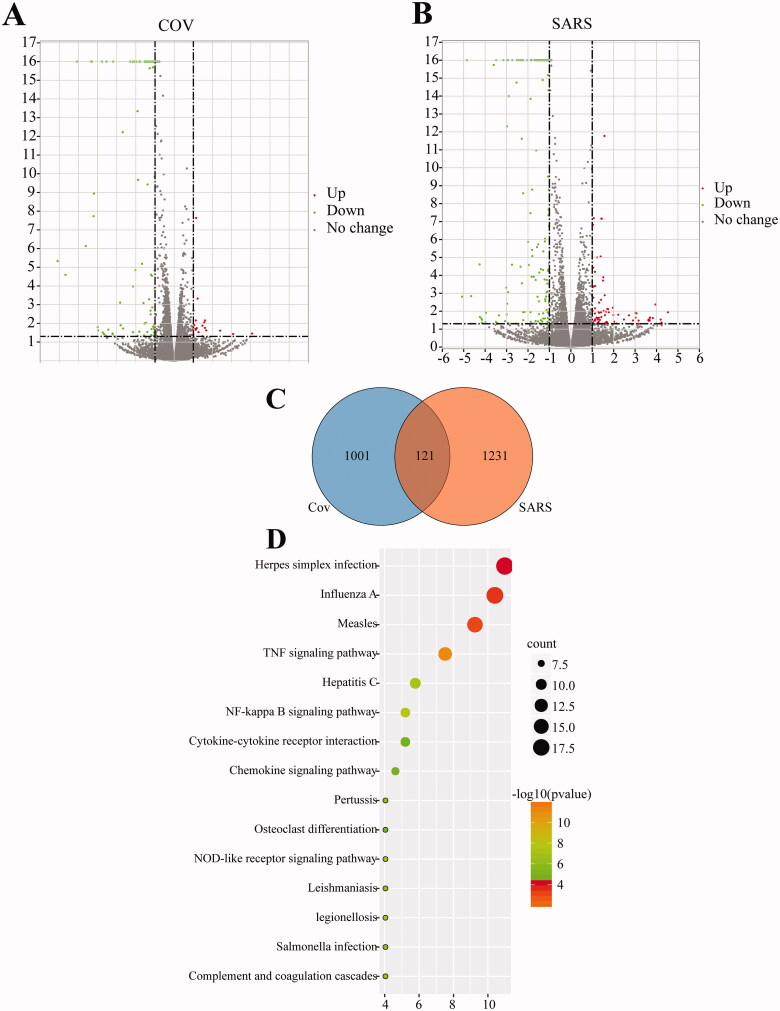
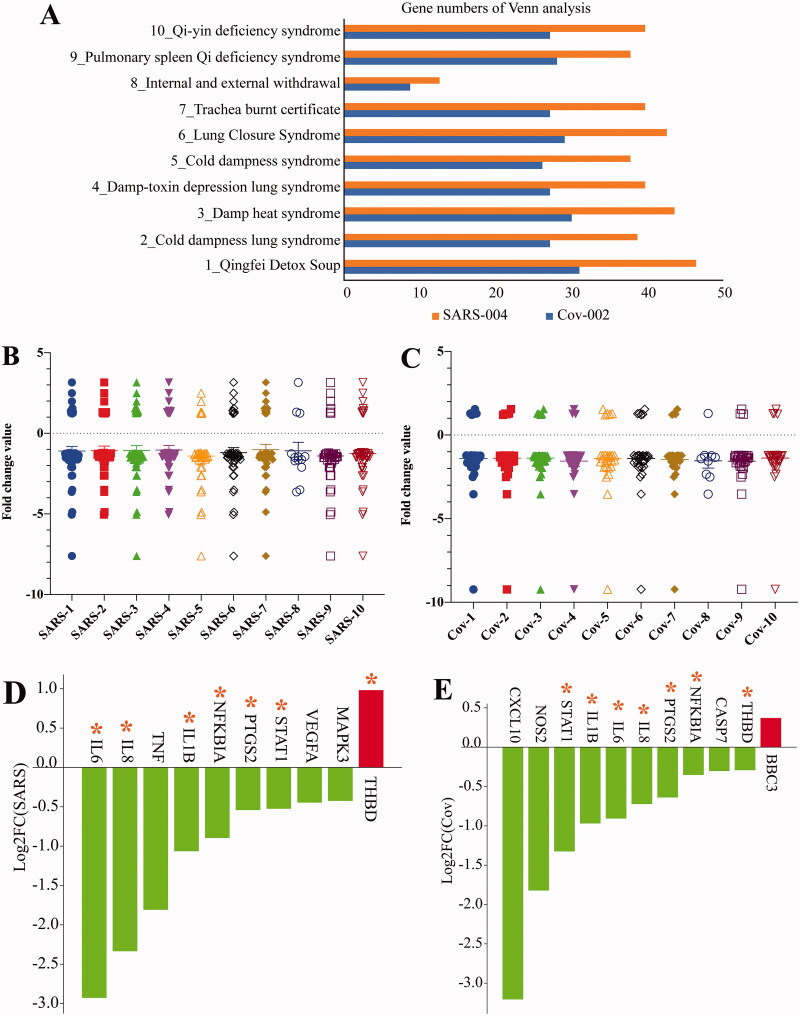
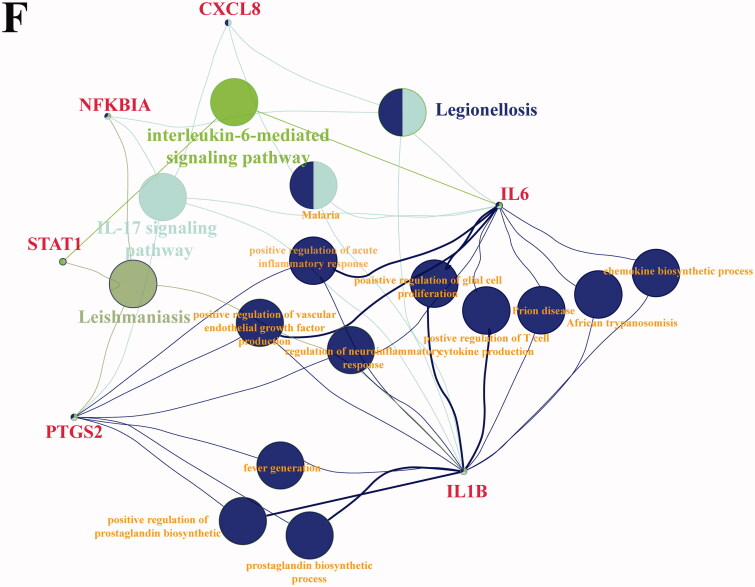
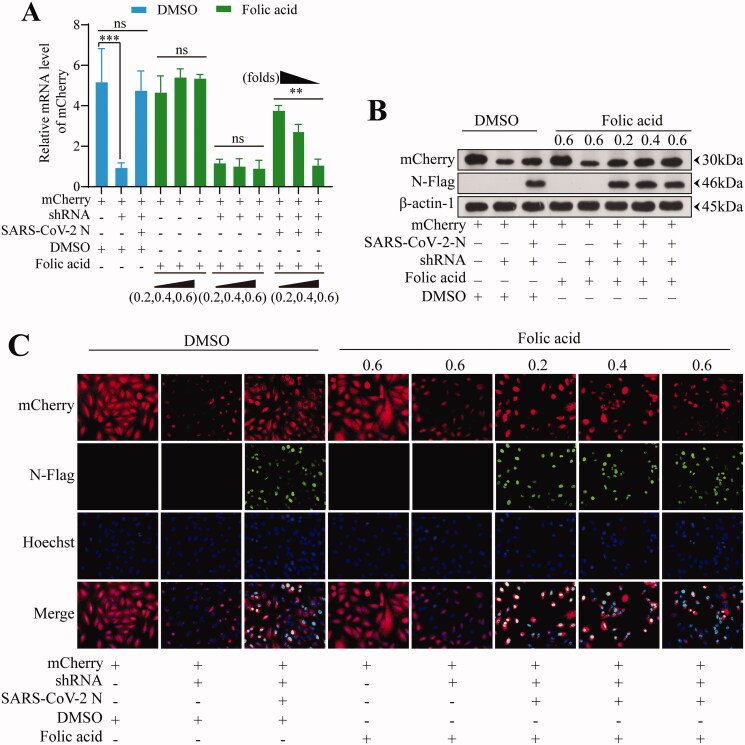
In total, 8355 drug targets were potentially involved in the inhibition of SARS-CoV-2. 113 hub genes were screened by further association analysis between targets and virus-related genes. The hub genes related compounds were analysed and folic acid was screened as a potential new drug. Moreover, molecular docking showed folic acid could target on SARS-CoV-2 N which inhibits host RNA interference (RNAi). Therefore, this study was based on RNAi to verify whether folic acid antagonises SARS-CoV-2 N. Cell-based experiments shown that RNAi decreased expression by 81.7% ( < 0.001). This effect was decreased by 8.0% in the presence of SARS-CoV-2 N, indicating that SARS-CoV-2 N inhibits RNAi. With increasing of folic acid concentration, expression decreased, indicating that folic acid antagonises the regulatory effect of SARS-CoV-2 N on host RNAi.
Folic acid may be an antagonist of SARS-CoV-2 N, but its effect on viruses unclear. In future, the mechanisms of action of folic acid against SARS-CoV-2 N should be studied.
2019 年冠状病毒病是一种全球性大流行疾病。研究表明,叶酸具有抗病毒作用。分子对接表明,叶酸可以作用于 SARS-CoV-2 核衣壳磷蛋白(SARS-CoV-2 N)。
寻找针对 SARS-CoV-2 的新型分子治疗靶标。
采用网络药理学和大数据分析方法确定中药靶点和病毒相关基因。通过分子对接筛选出叶酸,并确定其潜在的 SARS-CoV-2 N 靶标。在细胞水平上验证叶酸对 SARS-CoV-2 N 的抑制作用。
共有 8355 个药物靶点可能参与了 SARS-CoV-2 的抑制。通过对靶点与病毒相关基因之间的进一步关联分析,筛选出 113 个枢纽基因。对枢纽基因相关化合物进行分析,筛选出叶酸作为一种潜在的新药。此外,分子对接表明,叶酸可以作用于 SARS-CoV-2 N,从而抑制宿主 RNA 干扰(RNAi)。因此,本研究基于 RNAi 验证叶酸是否拮抗 SARS-CoV-2 N。基于细胞的实验表明,RNAi 使 表达降低了 81.7%(<0.001)。在存在 SARS-CoV-2 N 的情况下,该作用降低了 8.0%,表明 SARS-CoV-2 N 抑制了 RNAi。随着叶酸浓度的增加, 表达降低,表明叶酸拮抗 SARS-CoV-2 N 对宿主 RNAi 的调节作用。
叶酸可能是 SARS-CoV-2 N 的拮抗剂,但对病毒的作用尚不清楚。未来应研究叶酸对 SARS-CoV-2 N 的作用机制。