Molecular Toxicology Group, Department of Biology, University of Konstanz, Konstanz, Germany.
J Biol Chem. 2022 Jun;298(6):102037. doi: 10.1016/j.jbc.2022.102037. Epub 2022 May 17.
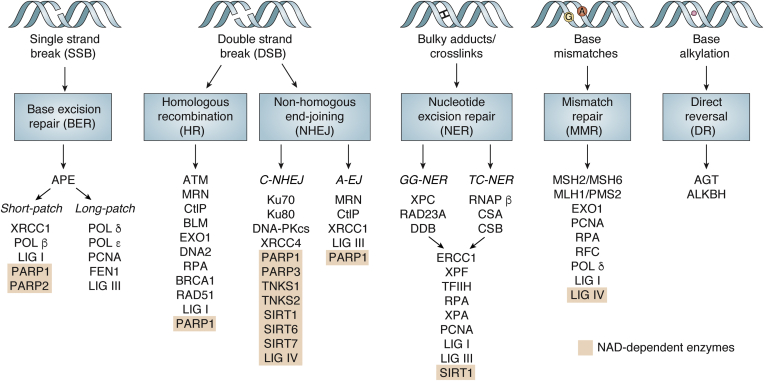
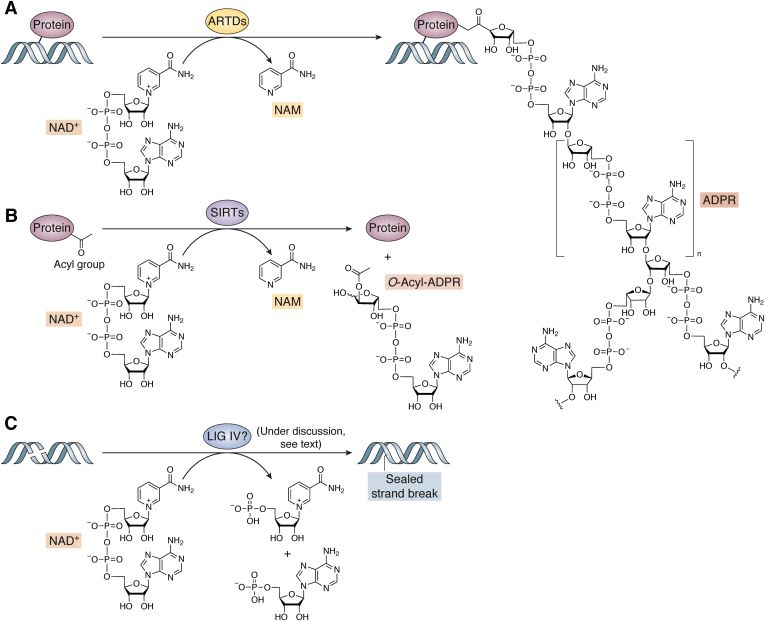
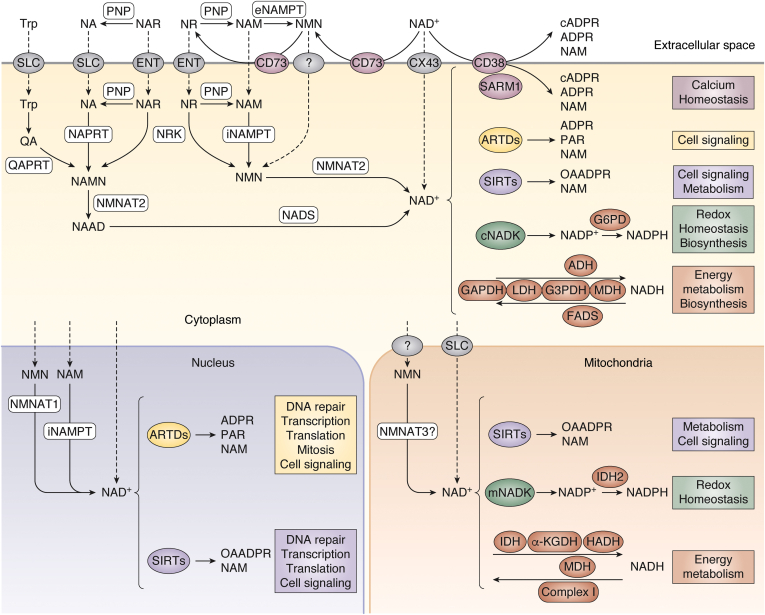
NAD is a versatile biomolecule acting as a master regulator and substrate in various cellular processes, including redox regulation, metabolism, and various signaling pathways. In this article, we concisely and critically review the role of NAD in mechanisms promoting genome maintenance. Numerous NAD-dependent reactions are involved in the preservation of genome stability, the cellular DNA damage response, and other pathways regulating nucleic acid metabolism, such as gene expression and cell proliferation pathways. Of note, NAD serves as a substrate to ADP-ribosyltransferases, sirtuins, and potentially also eukaryotic DNA ligases, all of which regulate various aspects of DNA integrity, damage repair, and gene expression. Finally, we critically analyze recent developments in the field as well as discuss challenges associated with therapeutic actions intended to raise NAD levels.
NAD 是一种多功能生物分子,作为各种细胞过程中的主要调节剂和底物,包括氧化还原调节、代谢和各种信号通路。在本文中,我们简明扼要地综述了 NAD 在促进基因组维持机制中的作用。许多依赖 NAD 的反应参与了基因组稳定性的维持、细胞 DNA 损伤反应以及调节核酸代谢的其他途径,如基因表达和细胞增殖途径。值得注意的是,NAD 是 ADP-ribosyltransferases、sirtuins 的底物,可能也是真核 DNA 连接酶的底物,它们都调节 DNA 完整性、损伤修复和基因表达的各个方面。最后,我们批判性地分析了该领域的最新进展,并讨论了与旨在提高 NAD 水平的治疗作用相关的挑战。