Department of Anesthesiology, Perioperative and Pain Medicine, Stanford University School of Medicine, Stanford, CA, 94305, USA.
J Med Case Rep. 2022 May 21;16(1):197. doi: 10.1186/s13256-022-03432-5.
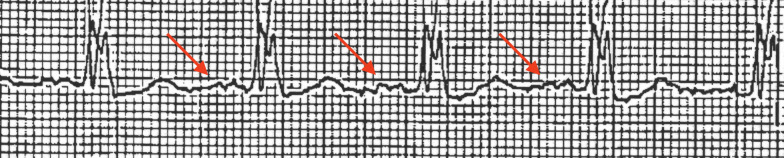
P wave morphology on electrocardiogram is often overlooked but indicates abnormal cardiac conduction from various etiologies. Split P waves on electrocardiogram have been reported previously but not in a perioperative setting.
A 69-year-old Caucasian male patient with widely split P waves on his preoperative electrocardiogram was scheduled for a reimplantation right total hip replacement under a combined spinal-general anesthetic technique. The patient was evaluated prior to surgery by a cardiologist and the preoperative anesthesia clinic without any comment on the abnormal P wave morphology on electrocardiogram. The patient was cleared to proceed with anesthesia and surgery. Following induction of general anesthesia, his cardiac rhythm changed to a Mobitz type II pattern. The surgical procedure was cancelled, and a permanent cardiac pacemaker was inserted.
Anesthesiologists should be aware that the presence of widely split P waves on electrocardiogram indicates the presence of atrial conduction abnormalities, likely from an ischemic or infiltrative process that can lead to more serious cardiac arrhythmias. P wave morphology should be observed and noted during the perioperative period for all patients.
心电图上的 P 波形态常常被忽视,但它表明了各种病因引起的异常心脏传导。以前曾有报道过 P 波分裂,但不是在围手术期。
一名 69 岁的白人男性患者术前心电图显示 P 波广泛分裂,拟在全身麻醉联合脊髓麻醉下进行右全髋关节再植入术。该患者在术前由心脏病专家和麻醉前诊所进行了评估,但心电图上异常 P 波形态并未引起任何关注。患者获准接受麻醉和手术。全麻诱导后,他的心律变为 II 型莫氏型。手术被取消,并插入了永久性心脏起搏器。
麻醉师应意识到心电图上广泛分裂的 P 波表明存在心房传导异常,可能是由缺血或浸润性过程引起的,可能导致更严重的心律失常。应在围手术期观察并记录所有患者的 P 波形态。