Xu Yilan, Ye Haige
Department of Hematology, The First Affiliated Hospital of Wenzhou Medical University-Zhejiang, Wenzhou, China.
Exp Hematol Oncol. 2022 May 21;11(1):31. doi: 10.1186/s40164-022-00283-0.
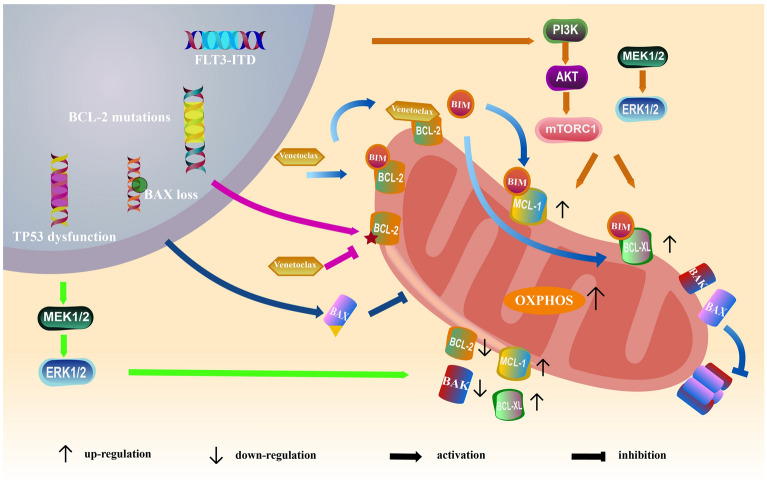
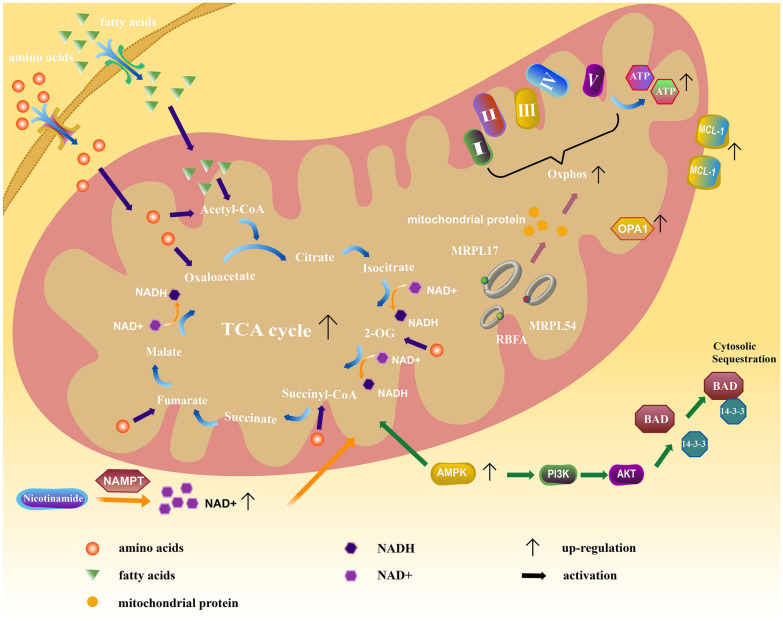
Venetoclax is a new type of BH3 mimetic compound that can target the binding site in the BCL-2 protein and induce apoptosis in cancer cells by stimulating the mitochondrial apoptotic pathway. Venetoclax is especially used to treat haematological malignancies. However, with the recent expansion in the applications of venetoclax, some cases of venetoclax resistance have appeared, posing a major problem in clinical treatment. In this article, we explored several common mechanisms of venetoclax resistance. Increased expression of the antiapoptotic proteins MCL-1 and BCL-XL plays a key role in conferring cellular resistance to venetoclax. These proteins can bind to the released BIM in the context of venetoclax binding to BCL-2 and thus continue to inhibit mitochondrial apoptosis. Structural mutations in BCL-2 family proteins caused by genetic instability lead to decreased affinity for venetoclax and inhibit the intrinsic apoptosis pathway. Mutation or deletion of the BAX gene renders the BAX protein unable to anchor to the outer mitochondrial membrane to form pores. In addition to changes in BCL-2 family genes, mutations in other oncogenes can also confer resistance to apoptosis induced by venetoclax. TP53 mutations and the expansion of FLT3-ITD promote the expression of antiapoptotic proteins MCL-1 and BCL-XL through multiple signalling pathways, and interfere with venetoclax-mediated apoptosis processes depending on their affinity for BH3-only proteins. Finally, the level of mitochondrial oxidative phosphorylation in venetoclax-resistant leukaemia stem cells is highly abnormal. Not only the metabolic pathways but also the levels of important metabolic components are changed, and all of these alterations antagonize the venetoclax-mediated inhibition of energy metabolism and promote the survival and proliferation of leukaemia stem cells. In addition, venetoclax can change mitochondrial morphology independent of the BCL-2 protein family, leading to mitochondrial dysfunction. However, mitochondria resistant to venetoclax antagonize this effect, forming tighter mitochondrial cristae, which provide more energy for cell survival.
维奈托克是一种新型的BH3模拟化合物,它可以靶向BCL - 2蛋白中的结合位点,并通过刺激线粒体凋亡途径诱导癌细胞凋亡。维奈托克尤其用于治疗血液系统恶性肿瘤。然而,随着维奈托克应用范围的近期扩大,出现了一些维奈托克耐药的病例,这在临床治疗中构成了一个重大问题。在本文中,我们探讨了几种常见的维奈托克耐药机制。抗凋亡蛋白MCL - 1和BCL - XL的表达增加在赋予细胞对维奈托克的抗性中起关键作用。在维奈托克与BCL - 2结合的情况下,这些蛋白可以与释放的BIM结合,从而继续抑制线粒体凋亡。由基因不稳定引起的BCL - 2家族蛋白的结构突变导致对维奈托克的亲和力降低,并抑制内源性凋亡途径。BAX基因的突变或缺失使BAX蛋白无法锚定到线粒体外膜以形成孔道。除了BCL - 2家族基因的变化外,其他癌基因的突变也可以赋予对维奈托克诱导的凋亡的抗性。TP53突变和FLT3 - ITD的扩增通过多种信号通路促进抗凋亡蛋白MCL - 1和BCL - XL的表达,并根据它们对仅含BH3蛋白的亲和力干扰维奈托克介导的凋亡过程。最后,维奈托克耐药的白血病干细胞中线粒体氧化磷酸化水平高度异常。不仅代谢途径而且重要代谢成分的水平都发生了变化,所有这些改变都拮抗维奈托克介导的能量代谢抑制,并促进白血病干细胞的存活和增殖。此外,维奈托克可以独立于BCL - 2蛋白家族改变线粒体形态,导致线粒体功能障碍。然而,对维奈托克耐药的线粒体拮抗这种作用,形成更紧密的线粒体嵴,为细胞存活提供更多能量。