Aryana I Gusti Putu Suka, Rini Sandra Surya, Soejono Czeresna Heriawan
Division of Geriatric Medicine, Department of Internal Medicine, Sanglah Hospital-Faculty of Medicine Udayana University, Bali, Indonesia.
Department of Internal Medicine, North Lombok Regional Hospital, West Nusa Tenggara, Indonesia.
Ann Geriatr Med Res. 2022 Jun;26(2):72-82. doi: 10.4235/agmr.22.0036. Epub 2022 May 23.
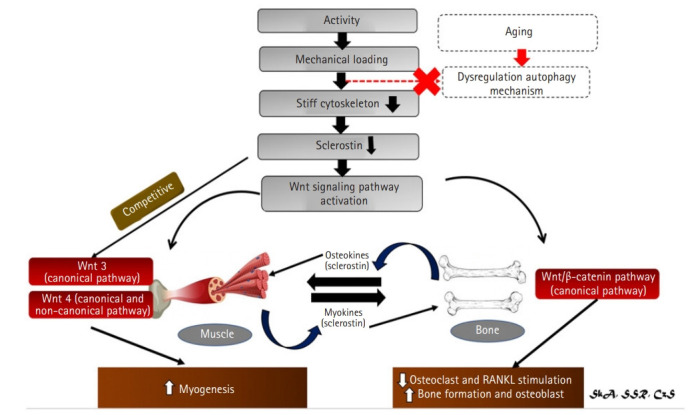
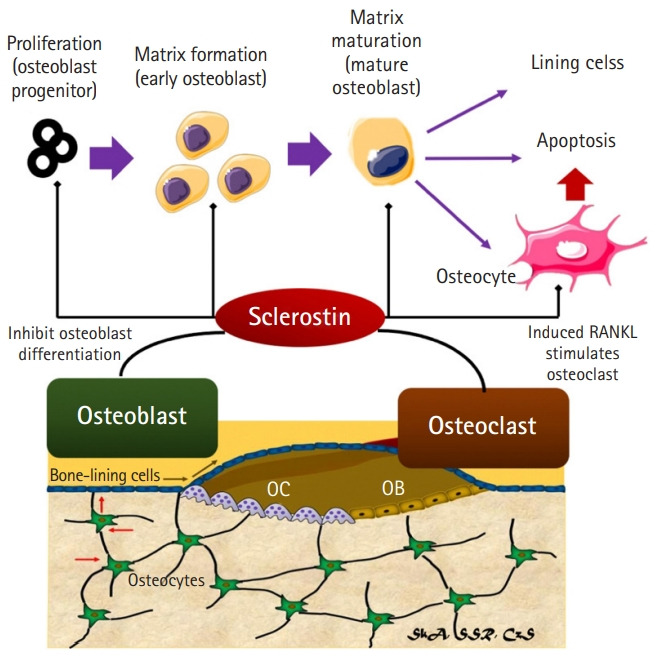
Loss of bone and muscle mass is a frequent aging condition and has become a growing public health problem. The term "osteosarcopenia" denotes close links between bone and muscle. Mechanical exercise was once thought to be the only mechanism of crosstalk between muscle and bone. Sclerostin is an important player in the process of unloading-induced bone loss and plays an important role in mechanotransduction in the bone. Furthermore, bones and muscles are categorized as endocrine organs because they produce hormone-like substances, resulting in "bone-muscle crosstalk." Sclerostin, an inhibitor of bone development, has recently been shown to play a role in myogenesis. This review discusses the importance of sclerostin in bone-muscle crosstalk.
骨量和肌肉量的流失是一种常见的衰老状况,并且已成为一个日益严重的公共卫生问题。术语“骨肌减少症”表示骨骼与肌肉之间存在紧密联系。机械运动曾被认为是肌肉与骨骼之间相互作用的唯一机制。硬化蛋白是卸载诱导的骨质流失过程中的一个重要因素,并且在骨骼的机械转导中发挥重要作用。此外,骨骼和肌肉被归类为内分泌器官,因为它们会产生类似激素的物质,从而导致“骨 - 肌肉相互作用”。硬化蛋白是一种骨发育抑制剂,最近已被证明在肌生成中发挥作用。本综述讨论了硬化蛋白在骨 - 肌肉相互作用中的重要性。