Wang Yan-Lu, Wang Wei-Kang, Wu Qi-Chao, Yang Hong-Jian
State Key Laboratory of Animal Nutrition, College of Animal Science and Technology, China Agricultural University, Beijing 100193, China.
Anim Nutr. 2022 Mar 24;9:335-344. doi: 10.1016/j.aninu.2022.02.003. eCollection 2022 Jun.
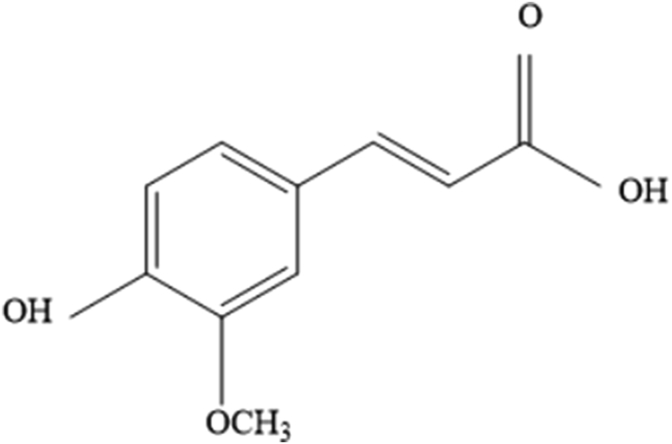
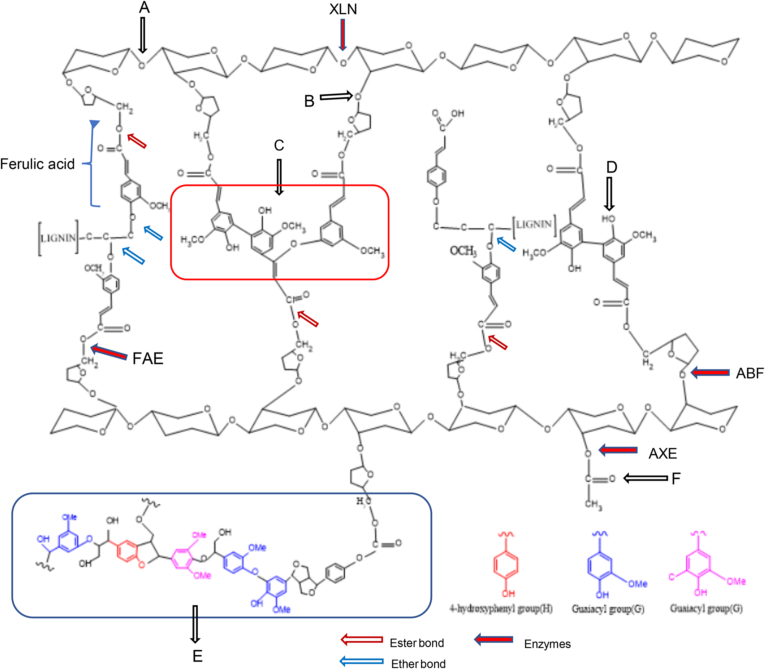
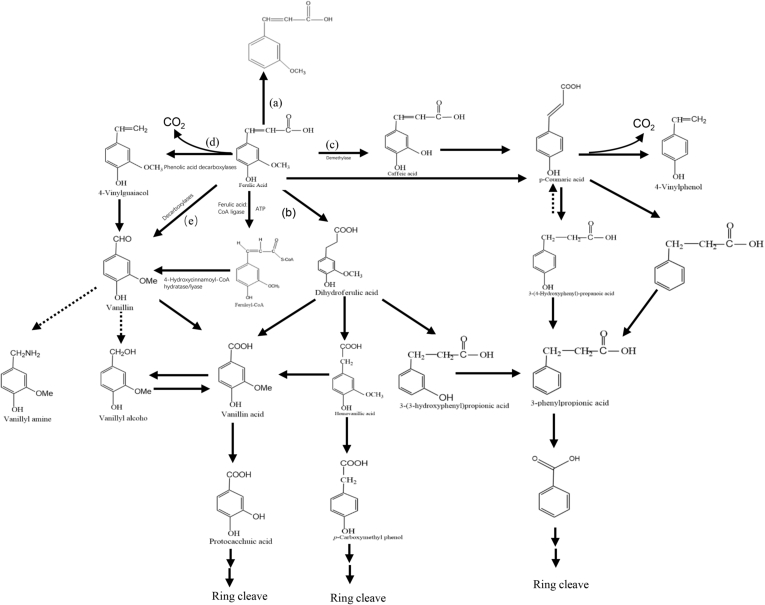
Ferulic acid (FA) is one of the most abundant hydroxycinnamic acids in the plant world, especially in the cell wall of grain bran, in comparison with forage and crop residues. Previous studies noted that FA was mainly linked with arabinoxylans and lignin in plant cell walls in ester and ether covalent forms. After forages were ingested by ruminant animals or encountered rumen microbial fermentation in vitro, these cross-linkages form physical and chemical barriers to protect cell-wall carbohydrates from microbial attack and enzymatic hydrolysis. Additionally, increasing studies noted that FA presented some toxic effect on microbial growth in the rumen. In recent decades, many studies have addressed the relationships of ester and/or ether-linked FA with rumen nutrient digestibility, and there is still some controversy whether these linkages could be used as a predicator of forage digestibility in ruminants. The authors in this review summarized the possible relationships between ester and/or ether-linked FA and fiber digestion in ruminants. Rumen microbes, especially bacteria and fungi, were found capable of breaking down the ester linkages within plant cell walls by secreting feruloyl and -coumaroyl esterase, resulting in the release of free FA and improvement of cell wall digestibility. The increasing evidence noted that these esterases secreted by rumen microbes presented synergistic effects with xylanase and cellulase to effectively hydrolyze forage cell walls. Some released FA were absorbed through the rumen wall directly and entered into blood circulation and presented antioxidant effects on host animals. The others were partially catabolized into volatile fatty acids by rumen microbes, and the possible catabolic pathways discussed. To better understand plant cell wall degradation in the rumen, the metabolic fate of FA along with lignin decomposition mechanisms are needed to be explored via future microbial isolation and incubation studies with aims to maximize dietary fiber intake and enhance fiber digestion in ruminant animals.
阿魏酸(FA)是植物界中含量最为丰富的羟基肉桂酸之一,与草料和作物残渣相比,在谷麸细胞壁中含量尤其丰富。以往研究表明,FA在植物细胞壁中主要以酯键和醚键共价形式与阿拉伯木聚糖和木质素相连。反刍动物摄入草料后,或草料在体外遭遇瘤胃微生物发酵时,这些交联结构会形成物理和化学屏障,保护细胞壁碳水化合物免受微生物攻击和酶解作用。此外,越来越多的研究表明,FA对瘤胃微生物生长具有一定毒性作用。近几十年来,许多研究探讨了酯键和/或醚键连接的FA与瘤胃养分消化率之间的关系,而这些连接是否可作为反刍动物草料消化率的预测指标仍存在一些争议。本文作者总结了酯键和/或醚键连接的FA与反刍动物纤维消化之间可能存在的关系。研究发现,瘤胃微生物,尤其是细菌和真菌,能够通过分泌阿魏酸酯酶和对香豆酸酯酶来分解植物细胞壁内的酯键,从而释放游离FA并提高细胞壁消化率。越来越多的证据表明,瘤胃微生物分泌的这些酯酶与木聚糖酶和纤维素酶具有协同作用,可有效水解草料细胞壁。一些释放出的FA直接通过瘤胃壁吸收并进入血液循环,对宿主动物发挥抗氧化作用。其他FA则被瘤胃微生物部分分解为挥发性脂肪酸,并对可能的分解途径进行了讨论。为了更好地理解瘤胃中植物细胞壁的降解过程,需要通过未来的微生物分离和培养研究来探索FA的代谢命运以及木质素分解机制,以期最大限度地提高反刍动物膳食纤维摄入量并增强纤维消化能力。