School of Veterinary Medicine, Utah State University, Logan, UT, United States.
Department of Animal, Dairy, and Veterinary Sciences, College of Agriculture and Applied Sciences, Utah State University, Logan, UT, United States.
Front Endocrinol (Lausanne). 2022 May 6;13:896356. doi: 10.3389/fendo.2022.896356. eCollection 2022.
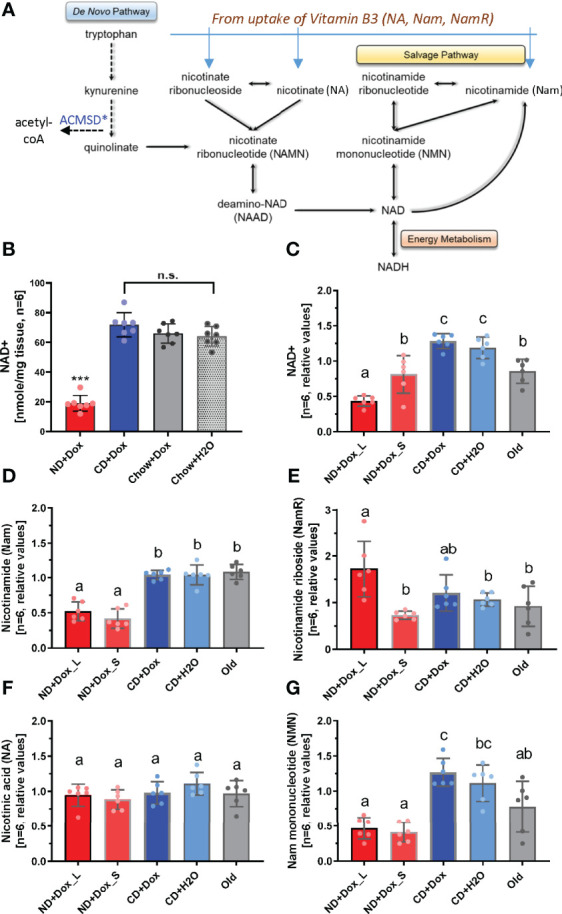
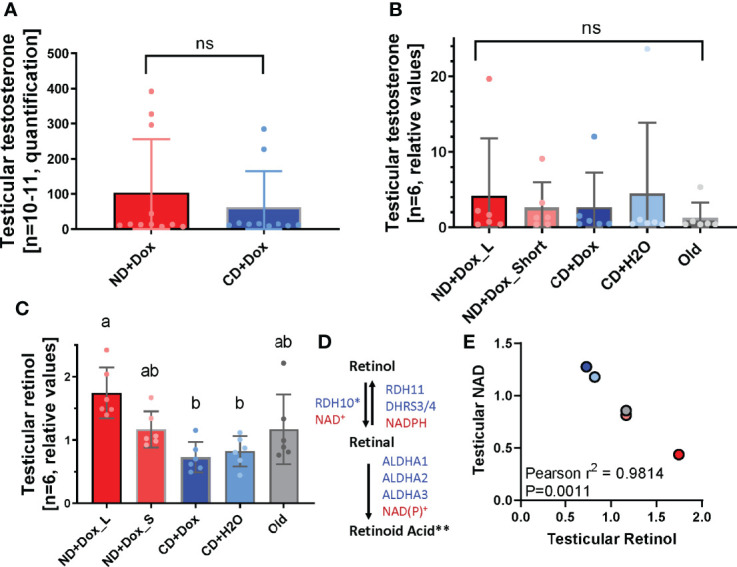
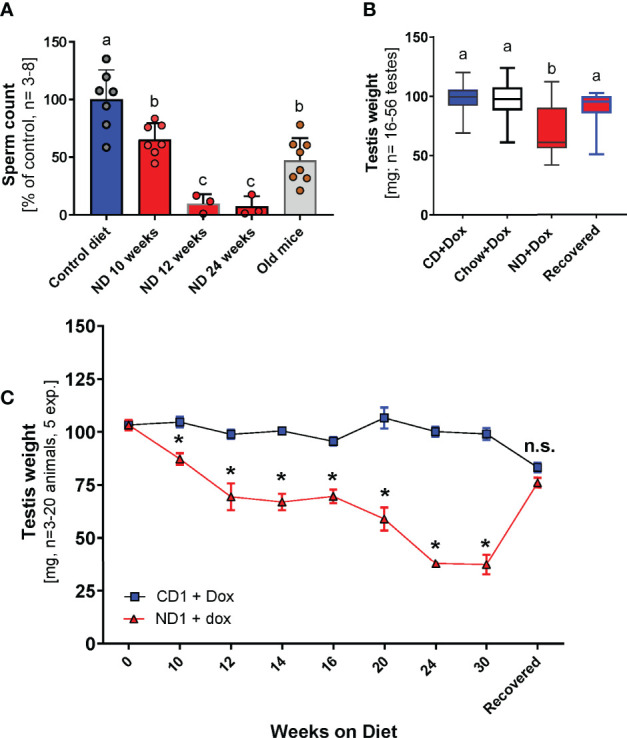
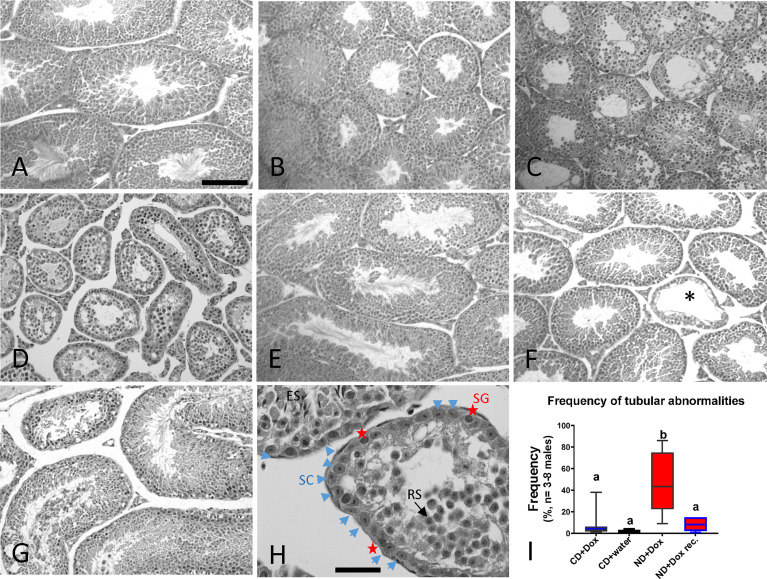
Advanced paternal age has increasingly been recognized as a risk factor for male fertility and progeny health. While underlying causes are not well understood, aging is associated with a continuous decline of blood and tissue NAD levels, as well as a decline of testicular functions. The important basic question to what extent ageing-related NAD decline is functionally linked to decreased male fertility has been difficult to address due to the pleiotropic effects of aging, and the lack of a suitable animal model in which NAD levels can be lowered experimentally in chronologically young adult males. We therefore developed a transgenic mouse model of acquired niacin dependency (ANDY), in which NAD levels can be experimentally lowered using a niacin-deficient, chemically defined diet. Using ANDY mice, this report demonstrates for the first time that decreasing body-wide NAD levels in young adult mice, including in the testes, to levels that match or exceed the natural NAD decline observed in old mice, results in the disruption of spermatogenesis with small testis sizes and reduced sperm counts. ANDY mice are dependent on dietary vitamin B3 (niacin) for NAD synthesis, similar to humans. NAD-deficiency the animals develop on a niacin-free diet is reversed by niacin supplementation. Providing niacin to NAD-depleted ANDY mice fully rescued spermatogenesis and restored normal testis weight in the animals. The results suggest that NAD is important for proper spermatogenesis and that its declining levels during aging are functionally linked to declining spermatogenesis and male fertility. Functions of NAD in retinoic acid synthesis, which is an essential testicular signaling pathway regulating spermatogonial proliferation and differentiation, may offer a plausible mechanism for the hypospermatogenesis observed in NAD-deficient mice.
高龄父亲越来越被认为是男性生育能力和后代健康的一个风险因素。虽然其潜在原因尚不清楚,但衰老与血液和组织 NAD 水平的持续下降以及睾丸功能下降有关。一个重要的基本问题是,与衰老相关的 NAD 下降在多大程度上与男性生育能力下降有关,由于衰老的多效性影响,以及缺乏一种合适的动物模型,使得这个问题难以解决,在这种动物模型中可以在生理上年轻的成年雄性动物中降低 NAD 水平。因此,我们开发了一种获得性烟酸依赖性(ANDY)的转基因小鼠模型,在这种模型中,可以使用缺乏烟酸的化学定义饮食来实验性降低 NAD 水平。本报告首次使用 ANDY 小鼠证明,在年轻成年小鼠(包括睾丸)中,全身性 NAD 水平降低到与老年小鼠中观察到的自然 NAD 下降相匹配或超过的水平,会导致精子发生中断,睾丸体积减小,精子数量减少。ANDY 小鼠与人类一样,依赖于饮食中的维生素 B3(烟酸)来合成 NAD。动物在无烟酸饮食上发展出的 NAD 缺乏可以通过烟酸补充来逆转。向 NAD 耗竭的 ANDY 小鼠提供烟酸可完全挽救精子发生,并使动物的睾丸重量恢复正常。这些结果表明,NAD 对正常精子发生很重要,并且其在衰老过程中水平的下降与精子发生和男性生育能力的下降在功能上相关。NAD 在视黄酸合成中的作用可能是 NAD 缺乏小鼠中观察到的少精子症的一个合理机制,视黄酸合成是调节精原细胞增殖和分化的重要睾丸信号通路。